

















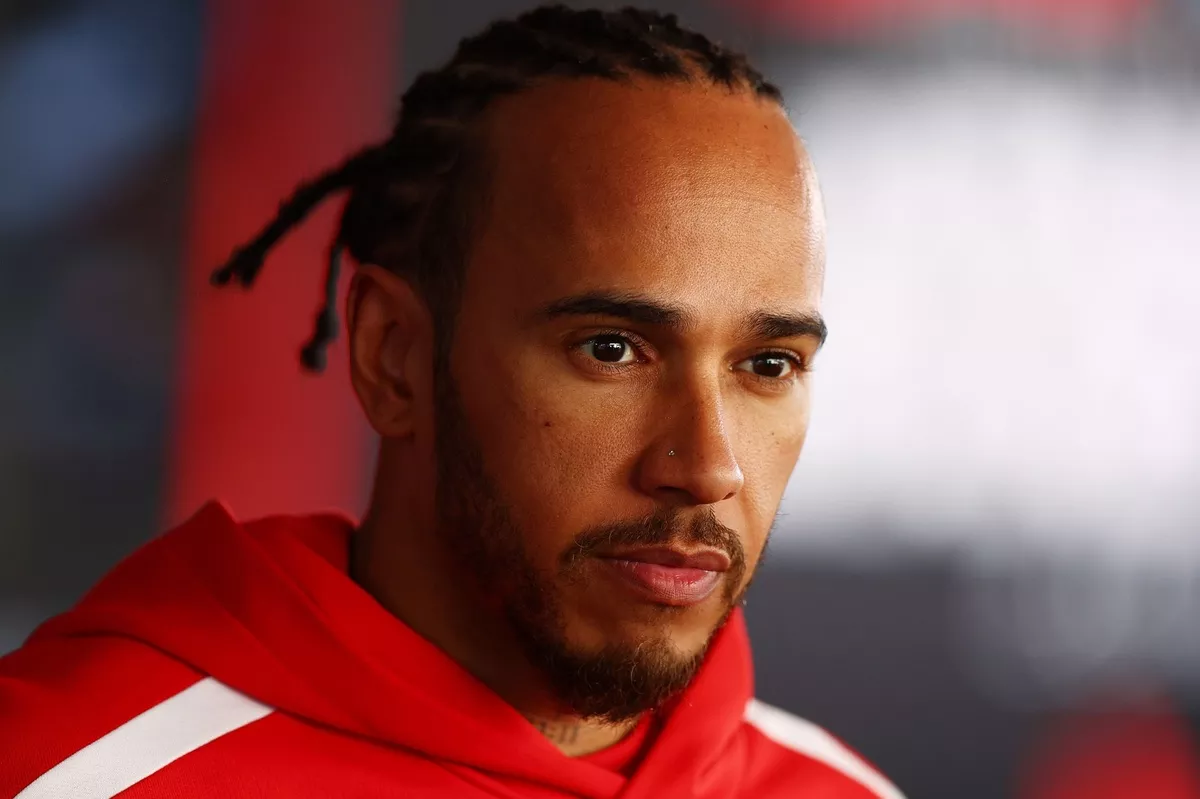
Lewis Hamilton fires back at critics after Ferrari F1 resurgence in 2026
Hamilton’s journey back to form in the ground-effect era
Lewis Hamilton, one of the most decorated drivers in Formula 1 history, has hit back at the critics who questioned his abilities in recent years after rediscovering his rhythm in the 2026 season. The seven-time world champion, now driving for Ferrari, faced significant challenges during the early stages of the ground-effect era. With cars that required drastically different driving styles, Hamilton struggled to adapt to the changes while simultaneously settling into a new environment at the iconic Maranello outfit, which he joined in 2025.
After a few turbulent seasons, 2026 has provided glimpses of the Lewis Hamilton who dominated the sport for over a decade. Currently fourth in the drivers’ championship standings, the Briton secured his first podium for Ferrari at the Chinese Grand Prix, showing that his talent and competitive instinct remain as sharp as ever. Despite his historic career, including seven world championships and 105 Grand Prix victories, Hamilton faced mounting criticism from pundits and former drivers who questioned whether he could maintain his status at the front of the grid.
“When you have difficult years, there’s lots of questions all over the place,” Hamilton told F1 in an exclusive interview. “Ultimately, I saw certain individuals who hadn’t had anywhere near the success that I’d had talking negatively, as they continue to do so today. And it felt great to be able to come back and come into this season and start off strong, to be able to show that I still have what it takes to compete at the front, and I’ll continue to try and show up and deliver in that way.”
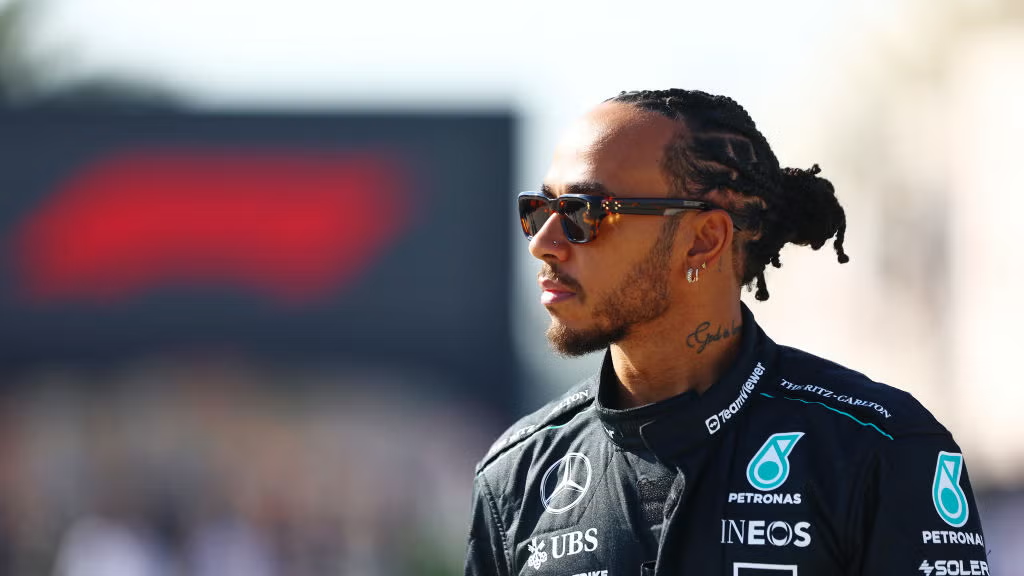
Adapting to the challenges of Ferrari and the new cars
The transition to Ferrari brought its own set of hurdles. While Hamilton is known for his ability to extract the maximum from any car, the Maranello team was in the early stages of adjusting their chassis and aerodynamics to match the demands of the new ground-effect cars. These vehicles, characterized by reduced aerodynamic grip and high sensitivity to setup changes, required drivers to adopt a very different approach to cornering, braking, and energy recovery.
Hamilton admitted that the learning curve was steep. “The first year at Ferrari was a process of understanding how the car behaves, how the new regulations affect handling, and how we can maximise performance,” he said. “It’s not just about driving fast; it’s about feeling every millisecond of feedback from the car and communicating that to the team. I had to relearn a lot of things in order to extract the performance we were aiming for.”
Despite these challenges, Hamilton’s relationship with Ferrari has grown stronger. “Already through the last couple of weeks, I’ve been messaging with the head of aero, for example, and I’m like, ‘Hey, have you seen this? Have you seen that on that car?’ So the communication is really great,” Hamilton explained. His proactive involvement highlights the collaborative effort between driver and team, which Hamilton believes is crucial to bridging the gap to Mercedes, who remain the benchmark in 2026.
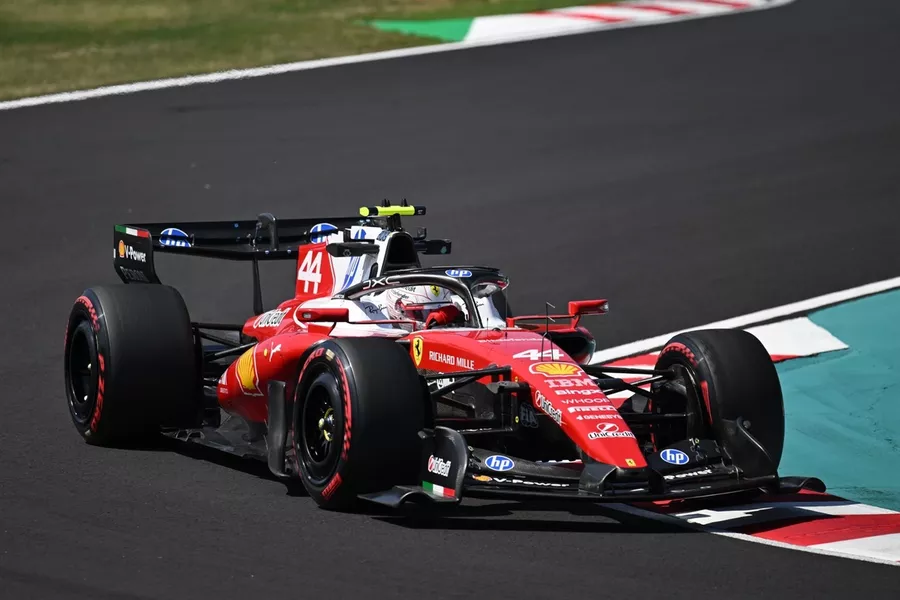
Ferrari pushing to catch Mercedes
Mercedes have dominated the early part of the ground-effect era, benefiting from a combination of consistent aerodynamics, engine performance, and a deep understanding of the hybrid systems. Hamilton, now driving for Ferrari, has been instrumental in helping the Italian team close the gap.
“Everyone’s flat out pushing, and it’s really inspiring to see. Whenever you work within a great organisation, and you go back to the factory and you see everyone heads down, just flat out pushing for every millisecond, it really motivates you,” Hamilton said. He emphasised that it is not just about the car on race day but also the culture and mentality within the team that drives success. Ferrari’s engineers, strategists, and aerodynamicists have been working tirelessly to ensure that Hamilton has a car capable of competing for podiums and ultimately challenging Mercedes for the championship.
Hamilton highlighted that even small adjustments, such as changes to brake bias, floor stiffness, and wing angles, can make significant differences on circuits where performance gaps are measured in tenths or hundredths of a second. “It’s a combination of teamwork, engineering, and driver input. We analyse every corner, every sector, and constantly look for ways to improve,” he added.
Responding to critics
Over the past few seasons, Hamilton endured criticism from fans, pundits, and former drivers who questioned his ability to adapt to the evolving technical landscape of F1. Some suggested that his best years were behind him, particularly after struggling with the unique characteristics of the ground-effect cars.
Hamilton, however, refused to be discouraged. “Criticism is part of the sport. When you have success, people expect it to continue. When you face challenges, suddenly everyone is quick to comment on what you’re doing wrong,” he said. “I’ve always believed that the best way to respond is on track, by showing that you can still perform, still compete, and still push yourself to the limit.”
He stressed that critics often overlook the nuances of adapting to a new car and team. “It’s easy for people to talk from the outside, but they don’t see the work we do behind the scenes, the testing, the simulations, the long hours trying to make sure every millisecond counts. I’ve been doing this for a long time, and I still have the drive to compete at the front.”
Reconnecting with his competitive spirit
Hamilton also revealed that regaining confidence in the car and his own abilities has been a psychological journey. “You can have all the physical skill, but if you don’t trust the car, if you don’t trust yourself, it can be hard to perform at your best. This year, I’ve been able to reconnect with that confidence and that instinct,” he explained. This renewed self-belief was evident in his performance at the Chinese Grand Prix, where he secured Ferrari’s first podium of the season, signaling a potential return to the form that has defined much of his career.
The Briton stressed that every race is an opportunity to refine both technique and strategy. “Every lap is a learning experience. You push, you analyse, and you adapt. That’s what keeps you competitive. Even after years in the sport, you’re always learning,” Hamilton said.
Looking ahead to the rest of the season
While Hamilton and Ferrari have made significant strides, the battle with Mercedes is far from over. Hamilton acknowledged that catching the Brackley outfit will require relentless focus, collaboration, and innovation. “We’re pushing every single day. It’s not easy, but we’re seeing progress. We understand where we are, and we’re committed to closing the gap,” he said.
Hamilton remains optimistic about his chances and is motivated to prove that he can still challenge for victories, even in the highly competitive environment of the ground-effect era. “My goal hasn’t changed: to perform at the highest level, to help Ferrari win races, and to keep pushing myself. I still have the fire, and I’m excited to see where we can go this season,” he concluded.


There are no comments yet. Be the first to comment!