




































































































































‘Like Any Job’ – Napoli’s Ex-Man City Star Kevin De Bruyne Suggests He Has Fallen Out of Love with Football ‘After 30 Years’
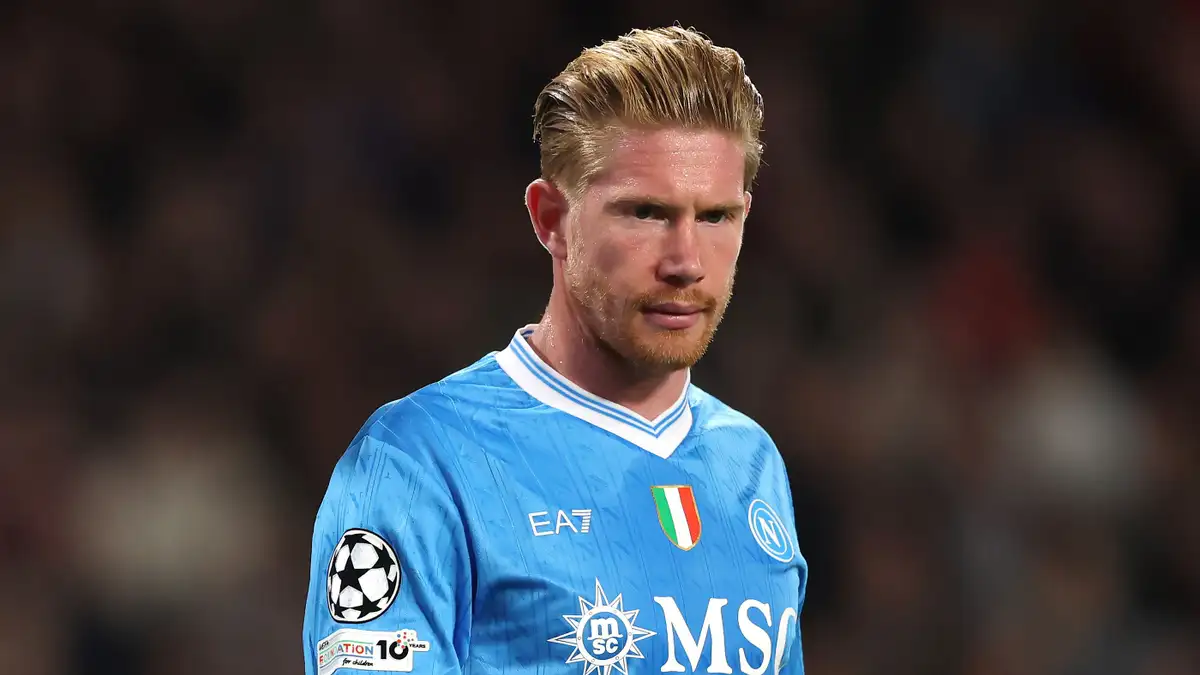
‘Like any job’ – Napoli’s ex-Man City star Kevin De Bruyne admits he may have fallen out of love with football after 30 years in the game
There are certain footballers we almost refuse to imagine as human.
Kevin De Bruyne has long been one of them.
For years, he looked like the perfect machine: all vision, timing, cold precision and ruthless efficiency. At Manchester City, he was the midfielder who always seemed to see the pass half a second before everyone else. The architect. The accelerator. The one who could turn a slow game violent with a single touch. He made elite football look clean, almost mathematical.
That is probably why his latest comments feel so jarring.
Not because they are dramatic. Not because they are scandalous. But because they are honest in a way football rarely is.
Now at Napoli after bringing an unforgettable chapter to a close at Manchester City, De Bruyne has admitted that his relationship with the game has changed. Deeply. Significantly. Maybe even permanently. Asked whether he still loves football the way he once did, the Belgian did not reach for the usual polished clichés about eternal passion and boyhood dreams. He did not pretend the fire burns exactly the same.
Instead, he said something refreshingly blunt.
“I don’t think I still love football as much as I did in the beginning.”
And just like that, one of the defining midfielders of his generation said out loud what many aging professionals probably feel but rarely dare to articulate.
After 30 years in the sport, the love has changed.
Maybe faded.
Maybe matured.
Maybe simply become something more complicated than pure romance.
De Bruyne even compared it to “any job” — a line that will probably raise eyebrows among fans who still cling to the idea that football should remain a permanent fairy tale for the men who play it. But if you listen carefully, it does not sound bitter. It does not sound cynical either. It sounds tired, maybe. Realistic, definitely. Human, above all.
And perhaps that is what makes it such a fascinating moment.
Because Kevin De Bruyne, one of the greatest midfielders of the modern era, has just peeled back the curtain on what happens when the dream becomes routine, when the obsession becomes labour, and when three decades inside the game start to feel less like magic and more like life.
Kevin De Bruyne says football has become ‘like any job’ after 30 years — and that honesty will hit hard
Football culture tends to romanticise everything.
We romanticise loyalty. We romanticise pain. We romanticise suffering. We romanticise the idea that players should love the game with the same intensity at 34 that they did at 14. And when they do not, or when they admit they do not, the reaction is often awkward, sometimes even hostile.
But De Bruyne’s comments deserve more nuance than outrage.
In truth, what he said is not shocking. It is just rare.
He has spent three decades in football. That is not a throwaway number. Think about it properly. Training grounds, academy pressure, early promise, setbacks, transfers, expectations, injuries, title races, tactical demands, endless recovery, travel, media obligations, criticism, praise, more training, more pressure, more repetition. Then do it all again. And again. And again.
At some point, it stops being just the game you fell in love with as a child.
It becomes your profession.
That is what De Bruyne is really describing.
Not hatred. Not contempt. Not some dramatic emotional collapse. Just the natural erosion of novelty. The way intense repetition changes your relationship with anything, even something you once adored. He even framed it in the simplest possible terms: “Sometimes it happens that you lose a bit of interest, like in any job.”
There is something disarming about that comparison.
Fans do not like hearing football described as work because it disrupts the fantasy. To the average supporter, football is escape, identity, community, joy, pain, obsession — but always from the outside. To the player, especially after 30 years, it can absolutely become work. High-paid work, privileged work, glamorous work at times, yes — but still work. Still obligation. Still pressure. Still routine.
And De Bruyne, to his credit, did not try to perform gratitude in a way that felt fake.
He simply told the truth as he sees it now.
That honesty may be uncomfortable, but it is also strangely refreshing.
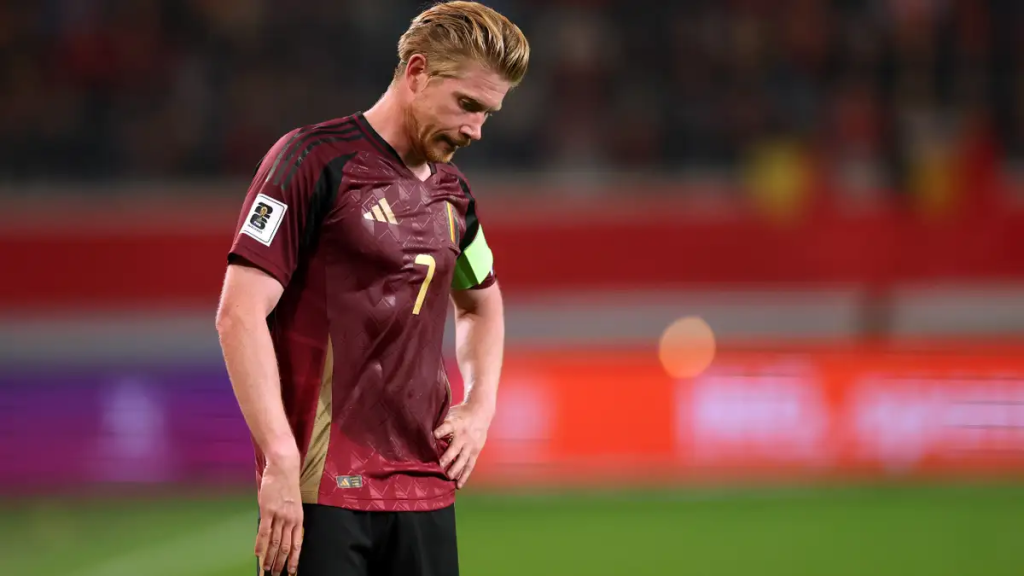
Napoli’s ex-Man City star Kevin De Bruyne is not quitting — he is just being brutally real about football
This is the key distinction that will probably get lost in some of the louder reactions.
Kevin De Bruyne is not announcing retirement.
He is not saying he hates football.
He is not walking away in disgust or disillusionment.
What he is saying is subtler than that — and arguably more interesting.
He is saying that the emotional relationship has changed.
That the pure, uncomplicated love he once felt at the beginning is no longer quite the same. That the spark of childhood has naturally dimmed under the weight of adulthood, routine and longevity. That the game, after 30 years, now feels more like a profession than a romance.
That is not a crisis. That is aging.
And in many ways, it is a very believable phase for a player like De Bruyne.
This is someone who has spent the best part of the last decade at the very top of the sport. At Manchester City, he was not just another elite player. He was one of the defining figures of an era. The demands on him were extraordinary — physically, tactically, mentally. Every season was built around expectations of trophies. Every touch was analysed. Every dip in form was debated. Every injury became a national story.
That level of intensity leaves a mark.
Even the players who seem most naturally suited to elite football are not immune to weariness. In fact, sometimes the most intelligent players feel it more sharply, because they process the burden differently. They understand the repetition. They understand the sacrifice. They understand how much of themselves the sport has consumed.
So when De Bruyne says the love is not what it used to be, it does not sound like a man betraying football.
It sounds like a man who knows exactly what football has cost him.
Why Kevin De Bruyne’s comments at Napoli feel so revealing after a legendary Manchester City career
There is also something symbolic about where he is saying all this.
Not at Manchester City, where every word would have been filtered through the machinery of a title race and the mythology of a club still defining its modern legends.
But at Napoli.
In Italy.
At a different stage of life.
At a different pace.
At a point in his career where the noise has changed and the spotlight, while still bright, no longer burns in quite the same way.
That matters.
Because players often become more honest once they leave the absolute center of the storm.
De Bruyne’s move to Napoli already felt like a fascinating career pivot. After ten years in Manchester, after everything he achieved in England, he could easily have taken a more comfortable route elsewhere. Instead, he chose another high-level challenge. Another demanding environment. Another football culture entirely. Another tactical universe, really.
And under Antonio Conte, of all managers.
If you wanted a soft landing, Conte would not exactly be your first pick.
That makes De Bruyne’s explanation for the move especially interesting. He said he wanted to continue playing at a high level, and Napoli gave him that chance. He described it as the best choice for everyone. That sounds like a player who still values competition, still wants relevance, still wants to feel sharp — even if the emotional relationship with the sport has evolved.
In other words: the love may be different, but the standards remain.
That is a crucial detail.
A player can feel less romantically attached to the game and still be deeply committed to performing. Those things are not contradictory. In fact, many great veterans survive precisely because they stop relying on pure passion and instead lean into discipline, professionalism and routine.
That is often what longevity actually looks like.
Life under Antonio Conte at Napoli proves Kevin De Bruyne still wants the highest level
If De Bruyne truly wanted to drift toward retirement, he would not have chosen Antonio Conte.
Simple as that.
Conte is not a manager for easing into the sunset. He is not there to provide a soft final chapter with scenic stadiums, warm applause and low-intensity afternoons. His football asks for commitment, physical sacrifice, tactical concentration and emotional endurance. Every day can feel like a test.
So the fact De Bruyne is still there, still adapting, still speaking positively about the experience, tells you plenty.
He admitted the move from Manchester to Naples was not easy. That makes perfect sense. Ten years in one city, one league, one footballing ecosystem — that becomes a life, not just a job. Uprooting all of that at 34 is a major adjustment, especially with family involved.
But the way he described it was quietly positive.
He said they have adapted. He said the family is fine. He said they are all happy.
That matters because it frames this phase not as a decline, but as a transition.
Yes, he may not feel football the way he once did.
Yes, the emotional intensity may have softened.
But he is still choosing challenge over comfort.
Still choosing serious football over symbolic football.
Still choosing a place where he has to earn every minute, every performance, every piece of respect.
That tells you the competitor is still very much alive.
And perhaps that is what makes his comments even more compelling. They are not the words of a retired man looking back with distance. They are the words of an active player still living the grind, still operating at a high level, and still willing to admit that the game can feel like work even while he continues to do it well.
Kevin De Bruyne’s ‘fallen out of love’ comments are less about football — and more about what happens to elite athletes over time
This story is bigger than De Bruyne, really.
It is about what happens when elite athletes stay elite for a very long time.
We love to talk about longevity as if it is purely a triumph. More seasons, more trophies, more records, more admiration. And yes, it is all of those things. But longevity also changes the texture of ambition. It changes the emotional chemistry of a career.
When you are young, everything feels urgent and electric.
Every game is a dream.
Every training session feels like a chance.
Every selection means something enormous.
By your mid-30s, especially after a career like De Bruyne’s, the experience is different.
You have seen the highest highs.
You have lifted the biggest trophies.
You have lived through injuries, pressure, reinvention, expectation and the constant cycle of proving yourself all over again.
At that point, motivation becomes more complex.
It is not always about love in the purest sense anymore.
Sometimes it is about pride.
Sometimes it is about standards.
Sometimes it is about family.
Sometimes it is about not wanting to leave on the wrong note.
Sometimes it is simply about the fact that you are still good enough, and walking away before your body tells you to feels premature.
That is why De Bruyne’s comments about not knowing what comes after football are so revealing too.
He admitted he has no clear post-career plan yet. First, he wants to enjoy his family because of the sacrifices they have made.
That sounds like a man who is already emotionally preparing for the next life, even if he is not yet ready to stop playing.
And that is a very familiar place for late-career greats to be.
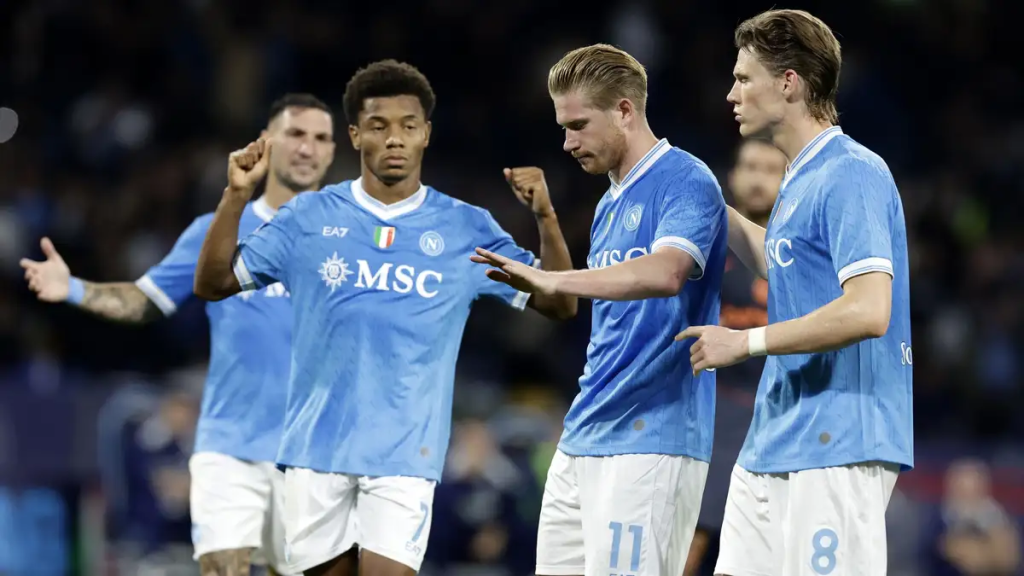
Could Napoli be Kevin De Bruyne’s last club? The Belgian is not ready to answer that yet
Naturally, the next question is the obvious one: if football now feels “like any job,” is the end close?
De Bruyne’s answer was cautious, but not bleak.
Could Napoli be his last club?
“I don’t know that. I don’t think about it now. I think I can still play for a few years, then when the body tells me to stop, I will do it. But for now I feel good.”
That is a fascinating answer because it balances realism with competitive belief.
He is not pretending he has endless years left. He is 34. He knows exactly where he is in the career cycle. He also knows that for players like him, retirement is often less about desire than about the body eventually drawing a hard line.
But the phrase “I think I can still play for a few years” is important.
That is not the language of a man counting down the days.
That is the language of someone who still believes he can contribute meaningfully.
And if his body holds up, there is every reason to believe him.
De Bruyne may no longer be the relentless Premier League force who could dominate transition games every three days, but football intelligence ages beautifully. Vision ages beautifully. Technique, weight of pass, rhythm control, spatial awareness — these are tools that can remain devastating even as physical explosiveness fades.
At Napoli, especially in the right structure, he can still be hugely influential.
So no, this is not a retirement confession.
It is more like a recalibration.
A player acknowledging that the emotional fuel source has changed, but the engine still runs.
‘Like any job’ — Kevin De Bruyne’s words may upset romantics, but they make him even more relatable
There will be people who hate these comments.
There always are.
Some fans will hear “I don’t think I still love football” and interpret it as disrespect. Others will say a player paid that much should never compare the game to ordinary work. A few will probably accuse him of sounding detached or ungrateful.
That misses the point completely.
If anything, these comments make Kevin De Bruyne more relatable, not less.
Because who among us does not understand what repetition can do to passion?
Who does not know what it feels like for something once thrilling to become routine?
Who has not loved a craft, a career, a project or a dream differently after 10, 20 or 30 years than they did at the start?
That is what he is talking about.
Not betrayal.
Not resentment.
Just the reality that time changes everything — even the things we once thought would never change.
And maybe there is something strangely admirable about De Bruyne saying that without dressing it up.
He could have given the easy answer.
He could have said he loves football more than ever.
He could have leaned into the mythology.
Instead, he chose truth.
And for a player whose greatness was always built on clarity, timing and precision, maybe that feels perfectly in character.
Kevin De Bruyne may have fallen out of love with football — but he is not done with it yet
If there is one takeaway from all of this, it is probably this:
Kevin De Bruyne may no longer love football the way he once did.
But he is not done with it.
Not yet.
He is still playing at a high level.
Still choosing difficult environments.
Still pushing through the demands of elite competition.
Still adapting to a new league, a new manager and a new phase of life.
Still talking like a player who knows his body, knows his limits, and knows there is still something left to give.
That matters.
Because the final years of a great player’s career are rarely as simple as fans want them to be. They are emotional, complicated, practical, physical and often deeply personal. The romance fades. The routine grows. The body changes. The mind shifts. Family matters more. Identity gets murkier. And yet the competitive instinct remains, sometimes stubbornly.
That is where De Bruyne seems to be now.
Not in love the way he was at the beginning.
But still committed.
Still capable.
Still relevant.
Still good enough to matter.
And maybe that is the most honest version of late-career greatness there is.


There are no comments yet. Be the first to comment!