












Man Utd Trip to Ireland Causes Chaos as GAA Team Forced to Abandon Plans for Training Camp at Luxury Facility
Man Utd Trip to Ireland Causes Chaos for Armagh as GAA Team Are Forced to Scrap Luxury Facility Training Camp Plans
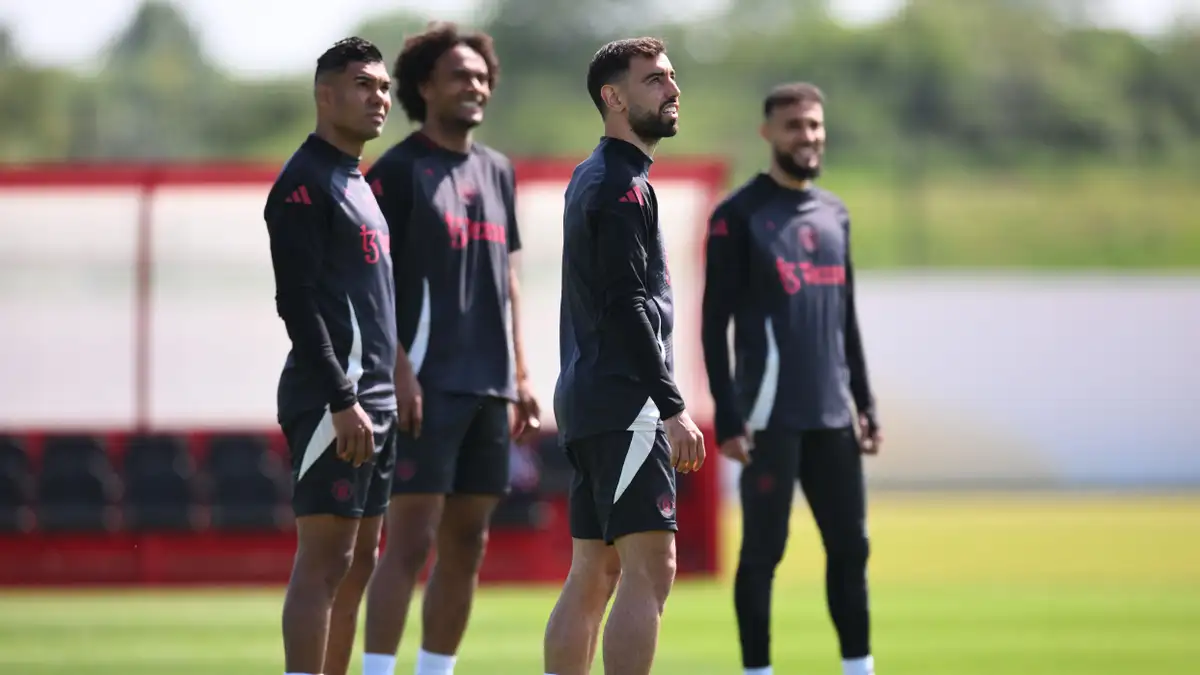
Manchester United’s decision to head to Ireland for a mid-season reset was supposed to be a straightforward, low-risk move — a few days away from the pressure of Old Trafford, a chance for Michael Carrick to keep the squad locked in, and a timely break before the run-in that could yet define the club’s season.
Instead, before the players have even unpacked a training bib, the trip has already stirred controversy.
What was framed by United as a focused team-building exercise ahead of the final stretch of the Premier League campaign has had an unexpected knock-on effect across the Irish sporting landscape. And not just anywhere. It has disrupted the plans of Armagh, one of the heavyweights of Gaelic football, leaving the reigning All-Ireland county champions scrambling after being forced to abandon their own scheduled training camp at the same venue.
That venue is Carton House, the well-known luxury resort in County Kildare, and what should have been a routine logistical crossover has now become a talking point on both sides of the Irish Sea.
Because for Armagh, this was not just an inconvenience.
It was a serious interruption at a critical point in their preparation.
And for Manchester United, it’s another example of how even a simple training trip can become part of the wider noise that seems to follow the club wherever it goes.
Man Utd’s trip to Ireland was designed as a smart reset — but it has already caused chaos
On paper, United’s plan made sense.
With a rare 24-day gap between their last league outing at Bournemouth on March 20 and their next scheduled clash against Leeds on April 16, the coaching staff had a window that barely exists in the modern calendar. For a club that has spent most seasons juggling Europe, domestic cups and endless media scrutiny, a clear stretch of time is a luxury.
That break created an obvious opportunity.
Rather than leave players scattered or risk losing momentum, the club opted to bring the squad together for an intensive four-day camp in Ireland, beginning on April 6. It is not glamorous in the way a Dubai getaway or a high-profile commercial trip might be, but maybe that is exactly the point.
This is not a United side chasing brand expansion right now.
This is a United side chasing control.
Under Michael Carrick, there has been a noticeable tightening of standards, a clearer sense of structure, and — perhaps most importantly — a visible calm after the turbulence of the first half of the season. The trip to Ireland fits that mood. Short flight, familiar environment, less circus, more football.
But football clubs rarely operate in a vacuum.
And while United were planning a quiet regrouping, Armagh had already made plans of their own.

GAA team Armagh forced to abandon training camp at luxury facility after pitch row
This is where the story becomes messy.
According to reports from Irish News, Armagh — the 2024 All-Ireland county football champions — had booked a training camp at Carton House weeks in advance. The timing mattered. Having failed to reach the Division One league final, they used the gap in their own schedule to organise a camp that would help sharpen the squad ahead of the start of the new season.
It was meant to be valuable preparation.
Instead, it turned into a wasted journey.
Armagh arrived on Friday morning expecting to begin work, only to discover that the pitches had been lined and prepared for association football, not Gaelic football. That may sound minor to outsiders, but in practical terms it changes everything. Different markings, different setup, different session structure. At elite level, especially in a short training camp, details matter.
The team reportedly asked if the pitch could be re-lined in time for the afternoon session.
While waiting, they adapted as best they could and completed a running session.
Then came the problem.
The venue informed them that the pitch would not be re-lined.
Armagh, clearly trying to salvage the camp, even suggested they would do the work themselves. That request was also refused.
At that point, the decision became unavoidable.
Rather than stay in a facility that could not properly accommodate their needs, Armagh pulled the plug, packed up, and made the two-hour trip back home.
For a top-level county team, that is not just frustrating. It is disruptive, costly, and deeply avoidable-looking from the outside.
Why the Carton House situation matters more than it first appears
There’s a temptation with stories like this to treat them as a funny scheduling clash.
Big football club books a luxury base, local team gets bumped, everyone shrugs and moves on.
But that reading would miss the bigger picture.
In GAA culture, especially for a county like Armagh, training camps are not decorative extras. They are planned carefully, often around narrow windows in a packed amateur-elite hybrid calendar where players balance top-level sport with jobs, travel, family responsibilities and community commitments.
That matters.
Unlike fully professional footballers, many inter-county GAA players don’t live inside a controlled club ecosystem where every minute is centrally managed. So when a camp is arranged, it tends to be because the management sees genuine value in the timing, the venue, and the environment.
To lose that at short notice — after booking it in advance, after travelling, after arriving ready to work — is more than a minor annoyance.
It can throw off an entire week of preparation.
And that’s why this story has landed the way it has in Ireland.
Not because Manchester United deliberately set out to create a problem, but because a famous Premier League club’s presence appears to have indirectly upended the plans of one of Ireland’s most respected county sides.
That naturally creates tension.
Manchester United will argue the Ireland trip is about focus, not luxury
From United’s point of view, the explanation is simple.
The club announced that the squad will travel to the Republic of Ireland on April 6 for what it described as an intensive training camp in Dublin. The official line was clear enough: this is about bringing the group together before the final seven Premier League fixtures, with everyone inside the club determined to finish the season strongly.
That wording tells you a lot.
This is not being sold as a sunshine escape.
This is not one of those PR-heavy mid-season breaks where social media fills up with poolside recovery shots and vague talk of “recharging.”
It’s framed as work.
And frankly, that fits the current mood around the team.
Since Ruben Amorim was dismissed in January, Michael Carrick has steadied the ship in a way few fully expected. There has been a visible improvement not just in results, but in rhythm, clarity and body language. Players look more settled. The football has become more practical. The emotional temperature has dropped.
Sometimes, in a season that feels unstable, that is half the battle.
Carrick seems to understand that this group doesn’t need more noise. It needs cohesion.
A short, focused camp away from the daily Old Trafford spotlight may be exactly the kind of move that helps sustain momentum.
Why Man Utd chose Ireland instead of Saudi Arabia or Dubai
In another season, this kind of break might have looked very different.
There had been talk that Manchester United could look at warm-weather training camps in the Middle East, or even arrange lucrative friendly matches in Saudi Arabia, especially after their early exits from domestic cup competitions left the calendar looking strangely open.
That sort of trip would have been financially attractive.
Commercially, it makes obvious sense. Big-name club, massive global fanbase, a free week in the schedule — the ingredients are there.
But football doesn’t exist in a bubble, and neither does geopolitics.
Reports suggest United were unable to organise those Saudi friendlies, while the broader instability caused by the ongoing regional tensions involving Israel, Iran and the United States made the prospect of heading to Dubai far less appealing than it might have been in previous years.
That matters because clubs now weigh more than weather and facilities.
They weigh optics.
They weigh logistics.
They weigh security.
In that context, Ireland becomes the sensible option.
Close enough to travel easily, familiar enough to avoid unnecessary disruption, and private enough to actually get some work done. For Carrick, that probably matters more than sunshine.
And for a squad with seven huge league games left, substance is probably more valuable than glamour.
Michael Carrick’s 70% win rate has changed the mood around Old Trafford
The most important reason this trip matters is simple: Manchester United still have something big to play for.
That didn’t feel likely not so long ago.
When Ruben Amorim left in January, United were sitting sixth in the table, drifting, inconsistent and once again looking like a club unsure of its direction. The season risked becoming another forgettable chapter — too good to collapse completely, not good enough to genuinely threaten the elite.
Then came Michael Carrick.
And whatever happens next, he deserves credit for changing the feel of the campaign.
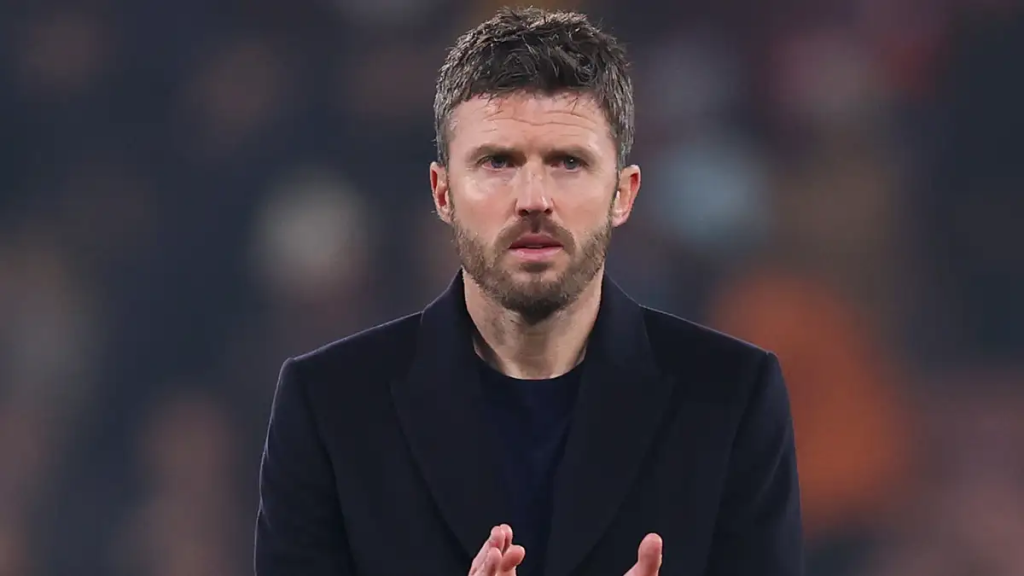
Under Carrick, United have won seven, drawn two, and lost just one. That’s a 70% win rate, and more importantly, it has translated into real movement in the table. They now sit third in the Premier League, holding a one-point lead over Aston Villa in fourth and a five-point cushion over Liverpool in fifth.
That is not comfort, but it is control.
The top-four race remains tight, and even fifth may yet be enough for a return to the Champions League, depending on coefficient outcomes and final qualification places. But United won’t want to leave that to chance.
They want certainty.
They want to walk back into Europe’s top competition on their own terms.
And if they do, this training camp may later be remembered as one of those small but meaningful decisions that helped hold the season together.
The Ireland trip could help Man Utd finish strongly — but the optics are awkward
Here’s the truth: both things can be true at once.
Manchester United’s trip to Ireland can be a smart football decision and an awkward public-relations story.
From a sporting perspective, it makes sense.
Carrick has a rare break.
He wants his players together.
He wants standards maintained.
He wants a controlled environment before a decisive final run.
That is hard to criticise.
But from the outside, the optics are messy because a giant global club has arrived in the picture and a local champion has ended up inconvenienced. Whether United are directly at fault or not, the story naturally lands with a familiar undertone: the big machine rolls in, and someone smaller gets pushed aside.
That may not be entirely fair.
It may be more a venue-management issue than a Manchester United issue.
In fact, based on the reporting, the real questions may sit more with Carton House than with Carrick’s squad. If Armagh booked in advance and arrived to find a pitch prepared for a different sport, that points to a breakdown somewhere in planning, communication or prioritisation.
Still, perception matters.
And United, perhaps more than any club in England, live under a microscope where even indirect disruption becomes headline material.
Carrick’s strong finish could turn an interim spell into the permanent Man Utd job
There is another layer to this, too.
Every session in Ireland will be watched not just for what it means to the players, but for what it might mean to Michael Carrick.
He is no longer just the safe pair of hands filling the gap.
He is the frontrunner.
With Thomas Tuchel tied down to England and Luis Enrique expected to continue at Paris Saint-Germain, the external market has narrowed. At the same time, Carrick has done the one thing that always matters most at Old Trafford:
He has made results hard to argue with.
Players seem to trust him.
The dressing room looks more stable.
The football has become more efficient.
And crucially, the team has started winning the kind of matches it had been making complicated earlier in the season.
If United finish in the top four — or even secure Champions League football via fifth — the case for keeping Carrick becomes much stronger.
A successful Ireland camp, followed by a composed finish to the season, would only add to that momentum.
Man Utd trip to Ireland causes chaos — but the real verdict will come in the final seven games
For now, the headline is dramatic and the situation is undeniably awkward:
Man Utd’s trip to Ireland has caused chaos, with a GAA team forced to abandon plans for a training camp at a luxury facility.
That part is real.
Armagh have every right to feel frustrated after a carefully planned camp at Carton House collapsed over something as basic as pitch markings and access. For one of Irish sport’s biggest county teams, it is a disruptive blow at exactly the wrong time.
But football, as always, moves fast.
If Manchester United return from Ireland sharper, tighter and more unified — and if they turn that into a strong finish under Michael Carrick — then this story may quickly become a strange footnote in a much bigger narrative.
Because the real stakes are not in County Kildare.
They’re in the final seven league games.
They’re in the race for the Champions League.
They’re in the question of whether Carrick has done enough to make the job his.
And if United get over the line, the club will probably say the Ireland trip was worth it.
Whether Armagh feel the same about how it unfolded is another matter entirely.


There are no comments yet. Be the first to comment!