



































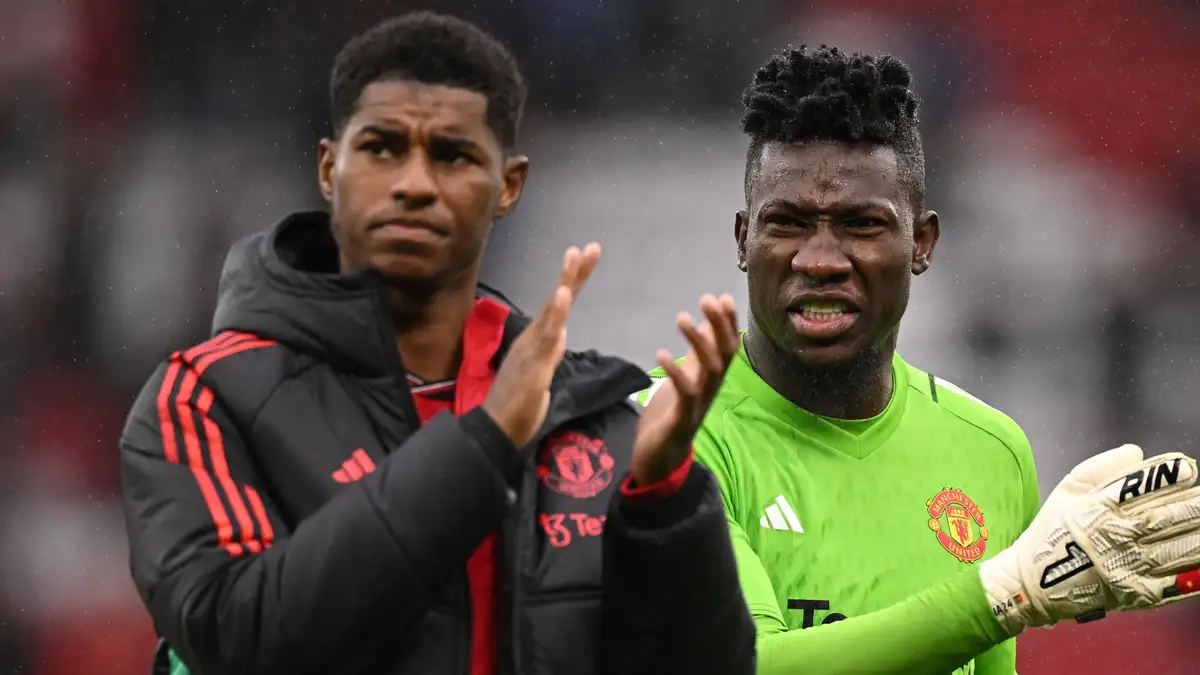
Manchester United Plan to Axe Five High Earners to Free Up More Than £1m on Wage Bill
Manchester United Prepare to Axe Five High Earners as Old Trafford Begins a Ruthless Summer Reset
There are summers at Manchester United when the noise is all about glamour. A marquee signing here, a dramatic unveiling there, and the familiar promise that this time the rebuild is finally real.
And then there are summers like this one.
No fireworks. No fantasy. No pretending everything can be fixed with one expensive name and a glossy social media campaign.
This one looks far more brutal — and, if we’re being honest, far more overdue.
United are preparing what can only be described as a serious financial and sporting reset at Old Trafford, with plans in motion to axe five high earners and clear more than £1 million per week from the wage bill. It’s not just about balancing the books, either. This is a move designed to create breathing room for a proper squad overhaul, reduce the strain of lingering transfer debt, and finally start aligning the club’s spending with something that resembles long-term football logic.
That phrase — football logic — has not always sat comfortably with Manchester United in recent years.
For too long, the club has carried the weight of bloated contracts, misjudged renewals, expensive sentiment, and a transfer strategy that often looked reactive rather than coherent. Big wages were handed out too easily. Underperforming players were protected by contracts the club later regretted. And every summer, the same cycle repeated itself: another “rebuild” layered on top of the previous unfinished one.
Now, though, the mood feels different.
This is not about adding one or two pieces around a stable core. This is about clearing out salary, reshaping the dressing room, and forcing a new era to begin with harder decisions than the club has often been willing to make.
If the plan holds, five senior names are expected to leave, and the combined effect could be one of the most significant wage-bill reductions United have attempted in the modern era.
It won’t be painless.
But it might finally be necessary.
Five high earners set to be axed as Manchester United reshape the wage bill
The headline is simple enough: Manchester United want five high earners off the books.
The reality, of course, is messier.
When a club of United’s size starts trimming the wage bill, it is never just about numbers on a spreadsheet. Every player carries baggage — tactical, emotional, commercial, symbolic. Some represent failed gambles. Some are victims of circumstance. Some simply no longer fit what the next version of the team is supposed to look like.
But the intended scale of the clear-out tells you everything about the seriousness of the operation.
At the centre of it is Casemiro, whose departure at the end of the season is now effectively viewed as a done deal. There was a time when his arrival felt like a statement — experience, pedigree, leadership, and the kind of elite-level edge United badly needed in midfield. And for spells, he delivered exactly that. But football moves quickly, and so do physical demands in the Premier League. The legs go before the reputation does, and by the time everyone admits it, the wage bill is already carrying the cost.
Casemiro’s exit is not just a football decision. It is a financial release valve.
Then there is Jadon Sancho, a player whose United story still feels like one of the most frustrating sagas of the post-Ferguson era. Huge talent, huge fee, huge wages — and yet somehow, it never truly clicked. Whether it was the tactical fit, the confidence, the environment, or a mix of all three, the gap between expectation and reality remained too wide for too long. Now, with his current situation moving toward a permanent separation, United are clearly ready to close that chapter and move on.
The other names on the list reflect a more aggressive willingness to cut through difficult cases.
Marcus Rashford, currently out on loan, is no longer being treated as untouchable. That alone tells you how much has changed. For years, Rashford was the face of the local core, the academy product, the emotional bridge between supporters and squad. But sentiment does not protect anyone forever, especially when form, consistency, and long-term fit come under scrutiny. If United are truly willing to move him on permanently, it is one of the clearest signs yet that this reset is not cosmetic.
Rasmus Hojlund being discussed in the same breath is also significant. Whether that ultimately happens or not, the fact his future can even be questioned suggests the club are prepared to revisit recent investment if the project demands it. Hojlund still has age on his side, but modern football has become ruthless about timelines. If the technical staff feel he is not the long-term answer — or if the market presents an opportunity — United may decide sentiment around “potential” is no longer enough.
And then there is Andre Onana, whose proposed departure feels like the kind of awkward correction elite clubs sometimes have to make quickly. Goalkeepers live under a harsher microscope than almost anyone, and when confidence slips, it becomes impossible to hide. If United can move Onana on and reset that position without creating another drawn-out saga, they may view it as a necessary clean break.
Taken together, these are not fringe names.
These are recognisable, expensive, senior figures.
And that is exactly the point.
Why Manchester United need to free up more than £1m on the wage bill
At first glance, a club like Manchester United trimming over £1 million per week from the wage bill might sound dramatic, but not necessarily urgent.
Except it is urgent.
Very urgent.
Because beneath the headlines and the global brand, United are dealing with a financial reality that is more complicated than many supporters like to admit. The club can still spend, yes. It can still attract names, yes. But it can no longer operate like a machine that simply absorbs every mistake without consequence.
That era is over.
The current wage structure has become part of the problem rather than a reflection of success. Too many players have been paid like guaranteed difference-makers without consistently performing like them. Too many contracts have outlived the logic that created them. And in a modern environment shaped by tighter regulations, debt obligations, and competitive pressure, bloated payrolls don’t just look inefficient — they actively limit what comes next.
That’s why this summer is not about saving money for the sake of optics.
It’s about restoring flexibility.
If United can take five heavy salaries off the books, they don’t just reduce cost. They reopen the transfer strategy. They make room for targeted recruitment. They create space for new contracts that actually reflect the future rather than the past.
And crucially, they stop paying premium wages to players who no longer define the team.
That sounds obvious. At United, it has rarely been handled that cleanly.
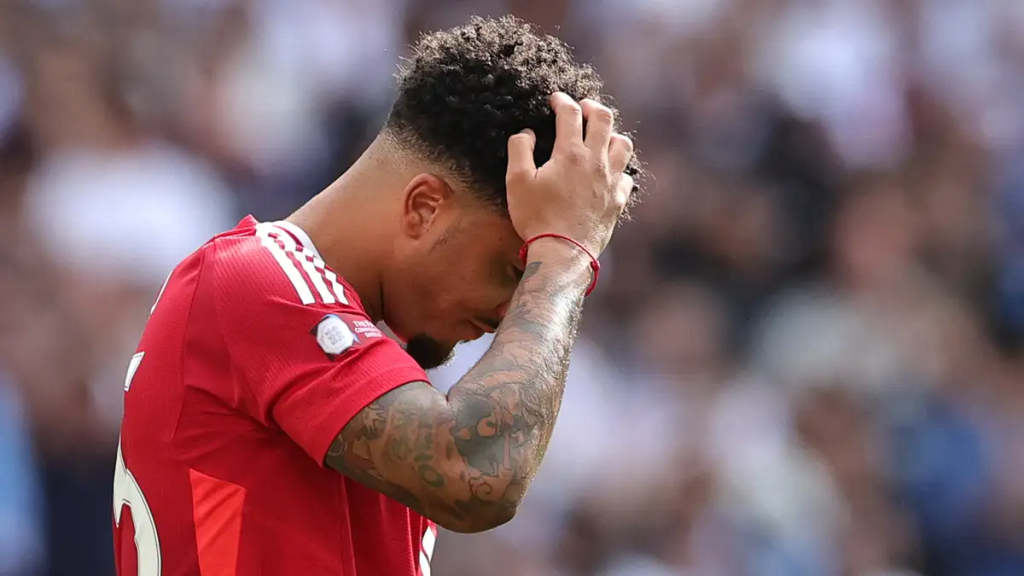
Champions League qualification creates fiscal urgency for Man Utd
One of the more fascinating twists in this whole story is that success itself could create a financial headache.
Normally, when a club pushes toward the Champions League, the mood is simple: qualification means prestige, money, better transfer pull, and a stronger platform for the following season.
At United, it’s a little more complicated.
Because qualifying for the Champions League reportedly triggers a 25% salary increase for much of the squad. That clause might make sense in theory — reward players for reaching elite competition, align pay with performance, incentivise results. But in practice, when a squad is already expensive and not every contract represents value, that automatic rise can become a problem very quickly.
Suddenly, good news on the pitch creates more pressure off it.
And when you combine that with significant transfer debt — reportedly around £190 million due this year — you begin to understand why United’s hierarchy see the exits of players like Casemiro and Sancho not as luxury decisions, but as structural necessities.
This is not “nice to have” trimming.
This is the kind of clearing work that makes the rest of the summer possible.
If they fail to do it, the knock-on effect could be severe. Targets become harder to fund. Contract talks become tighter. Internal compromises become more frequent. And once a club starts negotiating from financial pressure instead of strategic control, mistakes tend to multiply.
United have lived that story enough already.
Old Trafford’s reset is not just about exits — it’s about redistributing power and wages
One thing that often gets lost in these “clear-out” stories is that wage reduction is not just about cutting deadwood.
It’s about deciding who the club wants to reward next.
That matters at a place like Manchester United, where every contract carries a symbolic message. Pay someone too much too early, and you distort the hierarchy. Keep paying veterans beyond their functional value, and you block evolution. Fail to reward the right young core, and you create tension that can linger for years.
That’s why this summer feels as much about redistribution as reduction.
Take Harry Maguire, for example. The expectation is not necessarily that he leaves, but that his terms are adjusted. That alone says a lot. A player who once embodied a major transfer investment and captaincy status is now part of a wider effort to make the wage structure more rational. If he stays on reduced wages and with a clearer role, that can actually be smart business — provided everyone understands the reality of where he fits.
And then there is Kobbie Mainoo.
This is where the money saved becomes interesting.
Because the club will almost certainly want to direct some of those savings toward a new, improved deal for one of the brightest young players at Old Trafford. That is how a healthy squad cycle should work. You trim excess at the top end, clear contracts that no longer make sense, and create space to reward the players who genuinely look like the future.
That’s a much better use of money than endlessly subsidising past decisions.
Manchester United’s recruitment priorities start with replacing Casemiro
If Casemiro goes, and all signs suggest he will, then the most obvious summer task becomes clear:
Find the next midfield anchor.
Not just a body in the role. Not just a stopgap. A real long-term successor.
And that is easier said than done.
Because replacing Casemiro is not simply about finding another defensive midfielder who can tackle. United need someone who can screen the back line, handle transitions, progress the ball under pressure, cover ground consistently, and ideally still have enough mobility to survive in a Premier League that punishes static midfielders brutally.
That’s why the reported shortlist makes sense.
Elliott Anderson is an intriguing option — younger, energetic, technically sharp, and capable of operating in a more modern midfield structure. He would represent a different kind of bet, less about instant pedigree and more about development within a system.
Sandro Tonali, if genuinely attainable, would be a statement in a different direction. More proven, more rounded, and with the kind of tactical intelligence that fits a possession-based or transition-flexible side. The obvious question would be cost, availability, and whether the deal is realistic in a market where elite central midfielders are always heavily protected.
Then there is Adam Wharton, a name that increasingly appears whenever English clubs start dreaming about intelligent midfield rebuilds. Composed, progressive, mature beyond his years, and already carrying the kind of profile top clubs love. He would not come cheap, and that in itself tells you how important the wage clear-out becomes. You cannot chase profiles like Wharton while still carrying too much financial baggage elsewhere.
And even beyond the Casemiro replacement, there may be another midfield problem brewing.
Manuel Ugarte’s uncertainty could force Manchester United into a second midfield signing
The possibility of Manuel Ugarte moving on adds another layer of urgency.
His time at United has not unfolded the way many expected. When he arrived from Paris Saint-Germain, there was hope that his aggression, ball-winning instincts, and bite in midfield would give the side a much-needed edge. On paper, it looked like a useful fit.
In practice, it has been far less convincing.
If Ugarte is genuinely pushing for more regular minutes and the club are open to a sale, then suddenly the midfield rebuild goes from targeted to expansive. Instead of replacing one senior figure, United may need two central midfielders — and that is a very different summer plan.
Two midfield signings at the right level are expensive.
Very expensive.
Which, again, circles back to the wage bill.
Every major move in this window seems to lead back to the same truth: if United want to act decisively, they first need to create room to breathe.

Man Utd’s plan to axe five high earners may be ruthless — but it might finally be smart
For years, Manchester United have often behaved like a club trying to patch cracks without ever truly stripping the wall back.
A bad season? Buy another star.
A tactical issue? Change the manager.
A dressing-room imbalance? Hand out another contract and hope it settles things.
A failed transfer? Loan him, delay the decision, revisit it next summer.
That cycle has been expensive.
Worse than expensive, actually — it has been repetitive.
Which is why this latest plan, ruthless as it sounds, might be one of the more sensible things the club has attempted in years.
Axe five high earners.
Free up more than £1m on the wage bill.
Stop carrying contracts that belong to a previous version of the team.
Use the savings to fund the next core, not protect the last one.
That is not glamorous.
But it is football reality.
And if United are serious about building a squad capable of competing properly again — not just for headlines, but for sustained standards — then this is exactly the kind of uncomfortable summer they need.
The challenge, of course, is execution.
Planning a clear-out is easy on paper.
Actually moving expensive players, finding buyers, negotiating permanent deals, restructuring contracts, and avoiding last-minute compromise — that is where United have stumbled before.
So the idea is right.
Now they have to prove they can carry it through.
Manchester United’s summer reset could define the next era at Old Trafford
In many ways, this feels bigger than a transfer window.
It feels like a test of whether Manchester United have finally learned something.
Not from one season, but from years of financial excess, strategic drift, and football decisions that too often served reputation more than reality.
If they pull this off — if the five exits happen, if the wage bill drops meaningfully, if the recruitment is smart, if the midfield is rebuilt properly, and if the money saved goes toward the right players rather than the next flashy gamble — then this could be remembered as the summer the club finally started behaving like a serious modern operation again.
That doesn’t guarantee success.
Nothing at United is ever that simple.
But it would at least suggest that the club understands what the real problem has been: not just who they buy, but how they build.
And right now, building properly means cutting first.
Which is why the plan to axe five high earners may sound harsh.
At Old Trafford, though, it may simply be the overdue beginning of a long-promised reset.


There are no comments yet. Be the first to comment!