

































‘Maybe he wants my job’ – Ruben Amorim delivers glowing review of ‘leader’ Bruno Fernandes’ attitude despite Man Utd captain sitting out with injury
Ruben Amorim praises leader Bruno Fernandes as Man Utd captain stays influential despite injury absence
Ruben Amorim might still be relatively new in the Manchester United dugout, but it did not take him long to understand exactly why Bruno Fernandes wears the captain’s armband at Old Trafford. Even while sidelined with what is set to be the longest injury lay-off of his United career, Fernandes has remained firmly at the heart of everything going on behind the scenes.
The Portuguese midfielder picked up a soft tissue injury during United’s defeat to Aston Villa, ruling him out of the packed festive schedule. For a player who has built a reputation on near-perfect availability since arriving in January 2020, the timing could hardly be worse. Yet Amorim’s comments this week made it clear that Fernandes’ influence goes far beyond the pitch.
“He’s always speaking,” Amorim said, half-joking, half-admiring. “I don’t know if he wants my job, but he’s a leader.” It was said with a smile, but the message behind it was serious: Fernandes remains deeply invested in United’s progress, even when he cannot contribute with boots on the grass.
Bruno Fernandes facing longest injury spell of his Man Utd career
Fernandes’ durability has been one of his defining traits since joining United. Season after season, he has been the constant, the player managers could rely on regardless of form, fixtures or fatigue. Until now, he had never missed more than three Premier League matches in a single campaign.
This injury changes that. Amorim has already confirmed that Fernandes will miss at least four league games, starting with the wins and losses over the festive period. He sat out the Boxing Day clash against Newcastle, which United edged 1-0, and will also miss upcoming fixtures against Wolves and Leeds United. A trip to Burnley on January 8 is also expected to come too soon.
The hope inside the club is that Fernandes can return in time for the Manchester derby on January 17. That match is circled in red on the calendar, both for its significance and for the symbolic boost of welcoming the captain back into the side.
For now, however, United must cope without their main creative outlet and emotional reference point on the pitch.
Manchester United v Newcastle United – Premier League
‘Always speaking’: why Fernandes remains central off the pitch
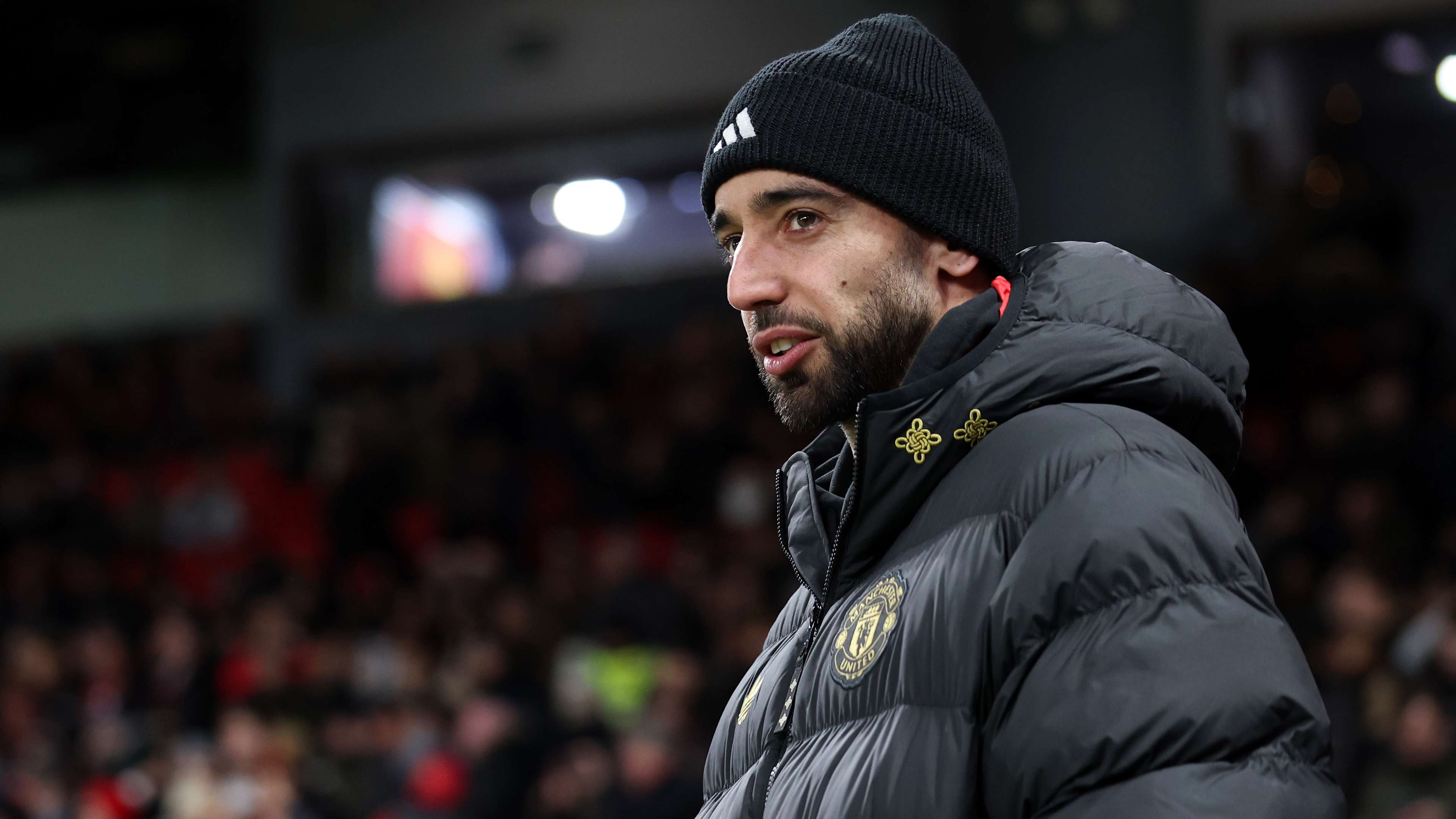
What impressed Amorim most was not simply Fernandes’ presence at matches, but his daily commitment away from the spotlight. Despite being unable to train fully, the United captain continues to attend sessions after completing his recovery work, watching teammates, observing drills, and offering feedback.
“He cannot be the guy that when he is not playing, he’s not talking,” Amorim explained. “That’s why he’s the captain.”
The manager acknowledged that Fernandes can be an emotional figure, someone whose frustration is sometimes visible in gestures and reactions. “He has bad things sometimes, the way he moves his arms,” Amorim admitted, in a moment of honesty. “But he has a lot of good things.”
Those “good things” are the unseen habits: leadership in the corridors, conversations on the training ground, presence in the dressing room. Amorim hinted that much of Fernandes’ value happens out of public view, the kind of influence supporters rarely see but coaches value deeply.
“He’s watching the trainings even after treatment,” Amorim said. “There are a lot of things that you guys don’t see, but that he does all the time.”
A captain setting standards during a transitional period
United are still in a period of adjustment under Amorim. The squad is learning new ideas, new principles and, at times, new systems. In such moments, leadership becomes even more important. Fernandes, despite being unavailable, has effectively acted as an extension of the coaching staff.
It is no coincidence that Amorim joked about Fernandes wanting his job. The comment reflected admiration for a player who thinks like a manager, who analyses sessions, who cares about structure and behaviour as much as results.
For a head coach trying to implement an identity, having a captain who buys into the process — and reinforces it when he is not even playing — is invaluable. Fernandes’ attitude sets a tone for younger players and squad members who might otherwise drift when sidelined.
Amorim explains tactical flexibility and formation shift
United’s win over Newcastle also marked a tactical talking point. For the first time under Amorim, the team lined up with a recognisable back four, a notable shift given his earlier insistence that he would not abandon his preferred system.
In the past, Amorim had famously joked that “not even the Pope” could convince him to change formation. This week, however, he explained the reasoning behind the adjustment and was keen to stress that it was not a response to external pressure.
“When I came here, I understood that maybe I didn’t have the players to play well in that system,” he said. “It was the beginning of the process.”
Crucially, Amorim emphasised that the principles remain unchanged. The shape may vary, but the identity does not. “We are trying to build an identity and today is a different moment,” he said. “They understand why we are changing.”
‘Not because of pressure’: Amorim draws a clear line
Amorim was particularly firm on one point: the decision to change system was not driven by media criticism or fan noise. For him, reacting to that kind of pressure would undermine his authority.
“If the players understand that I’m changing because of you [the media], I think that is the end for the manager,” he said bluntly.
Instead, Amorim framed the shift as a natural evolution. As players return from injury and become more comfortable with the ideas, United will not be locked into one structure. “When all the players return, we are not going to play all the time with three defenders,” he explained.
It was a rare insight into the long-term vision: flexibility built on understanding, rather than panic-driven adjustments.
‘No excuses’ against Wolves as momentum beckons
FBL-ENG-PR-WOLVES-MAN UTD
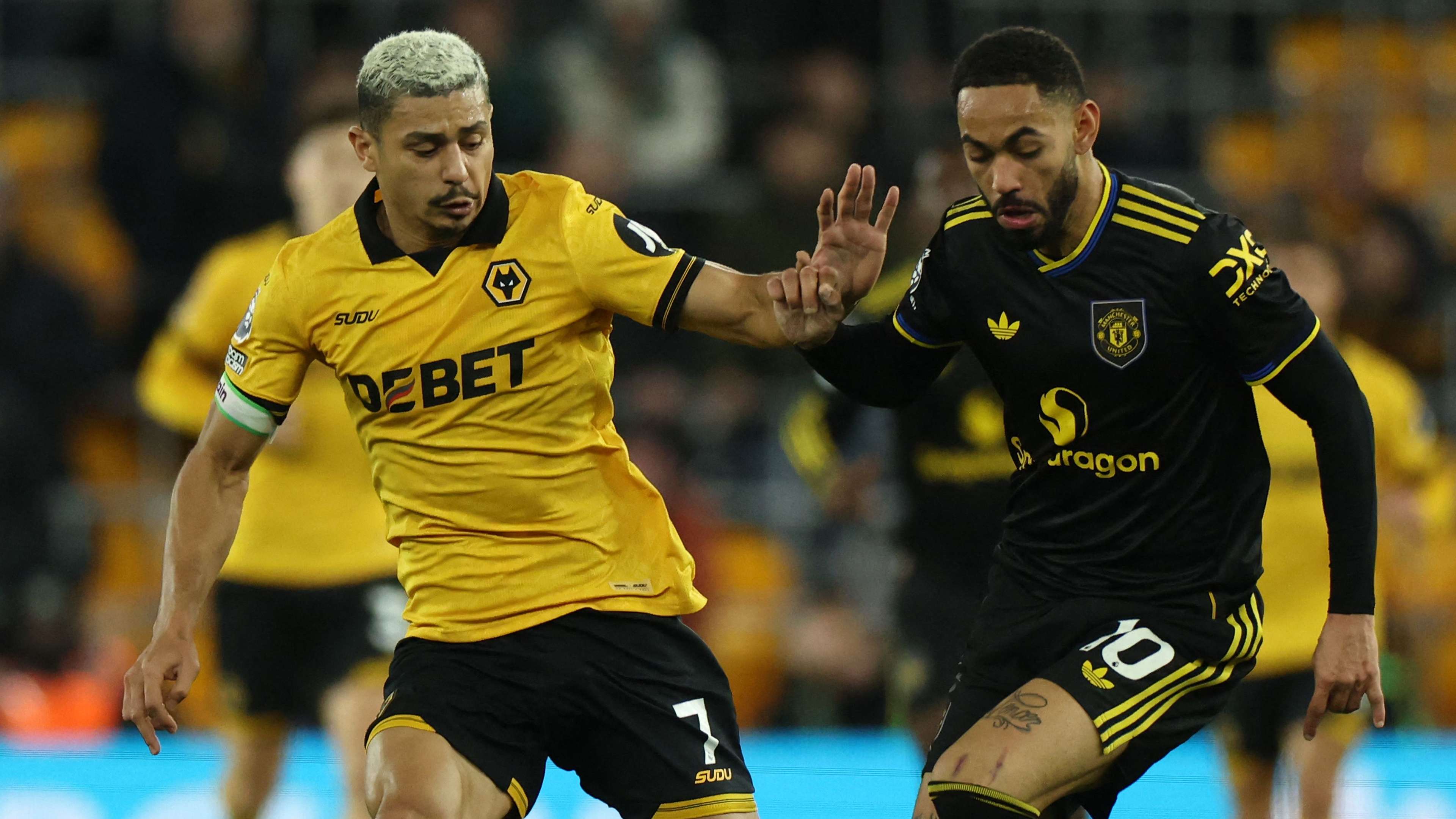
United now face a golden opportunity to build momentum. Their next Premier League fixture is at home to Wolves, a side enduring a historically poor campaign. With just two points all season, Wolves have the worst record at this stage not only in the Premier League era, but across Europe’s top 14 leagues.
On paper, it is as close to a must-win as United will get. Amorim, however, was careful not to sound complacent. He pointed to Wolves’ recent performance against Arsenal, where they came close to earning a point, as a reminder that nothing comes easy in this league.
“In the Premier League, you never know,” he said. “They have their problems, we have our problems.”
Still, the message was clear. “There are no excuses,” Amorim insisted. “We need to win.”
Fernandes’ influence still shaping Man Utd’s direction
As United prepare for that match, Fernandes will once again be watching from the sidelines, offering words, observations and encouragement. His absence on the pitch is undeniable, but his presence within the squad remains strong.
In many ways, this injury spell has only underlined why Fernandes is so important to Manchester United. Not just as a creative force or goal contributor, but as a leader who sets standards regardless of circumstance.
Amorim’s glowing review felt genuine, almost personal. In a squad searching for consistency and identity, Fernandes continues to embody what the manager wants his team to be: engaged, demanding and committed.
If United can navigate this period without him and emerge stronger, Fernandes’ unseen contribution may prove just as important as any goal or assist he has delivered over the years.


There are no comments yet. Be the first to comment!