




















































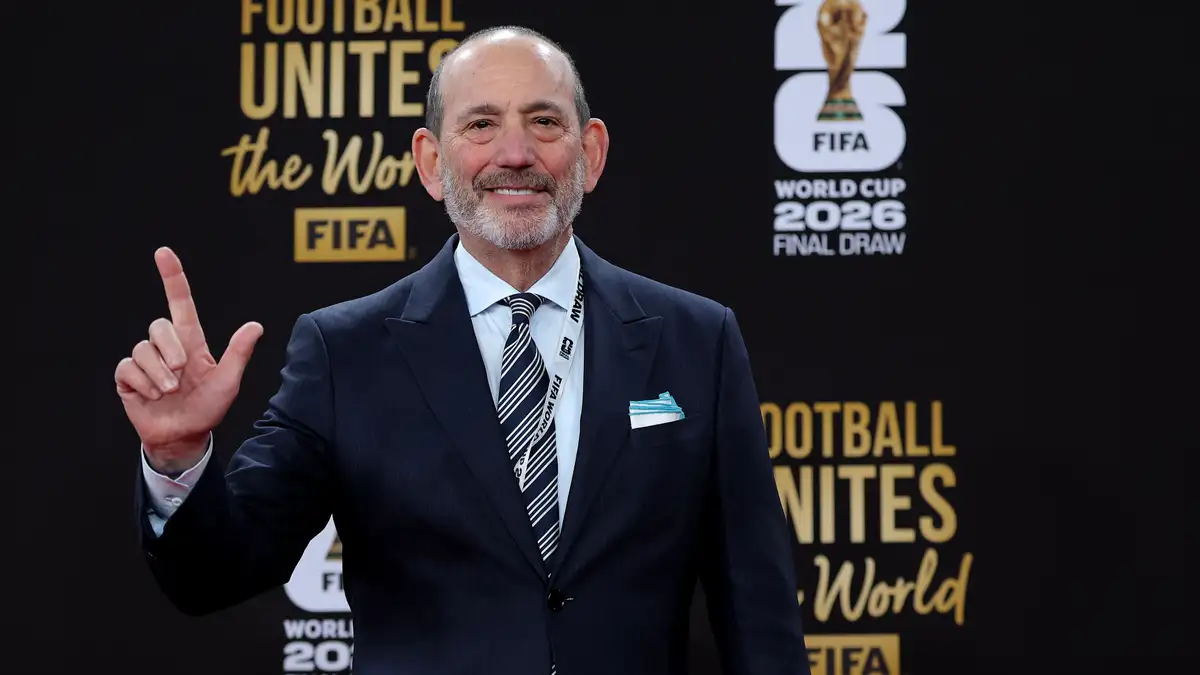
‘Maybe You Merge with Another League’ – MLS Commissioner Don Garber Opens Up on Promotion-Relegation, the League’s Future, and Why More Global Stars Could Follow After the 2026 World Cup
Don Garber Shares Candid Views on Promotion-Relegation, Says MLS Could Become a True Destination for New Stars After the 2026 World Cup
For years, Major League Soccer has lived with the same old labels.
A retirement league.
A commercial project.
A place where fading stars came for sunshine, sponsorships, and one final payday.
Those lines used to stick because, for a long time, there was at least some truth to them. The league had ambition, sure, but it also had limits — financial, cultural, competitive. If you were honest about where MLS stood in the global game, it was still trying to prove it belonged in serious football conversations, especially outside North America.
That is why Don Garber’s latest comments matter.
Because whether you agree with his tone or not, the MLS commissioner is speaking from a place of confidence the league simply did not have 15 or 20 years ago. And when he says things like “Maybe you merge with another league” while discussing the long-debated topic of promotion-relegation, or suggests that the league could continue attracting the next wave of global stars after the 2026 World Cup, he is not just tossing out provocative headlines.
He is telling you how MLS now sees itself.
Not as a league begging for relevance.
But as a league increasingly convinced it can shape the next phase of football in North America — and maybe even challenge old assumptions about where elite players are willing to go in the prime or near-prime years of their careers.
That may sound like commissioner talk. And yes, some of it is. That comes with the territory.
But beneath the soundbites, there is a real story here.
Because Garber’s remarks on promotion-relegation, on Lionel Messi, on future superstar recruitment, and even on the league’s mistakes with Freddy Adu, all point to one thing: MLS believes the post-2026 era could be its biggest leap yet.
Whether that belief is justified is another debate.
But it is absolutely the conversation now.
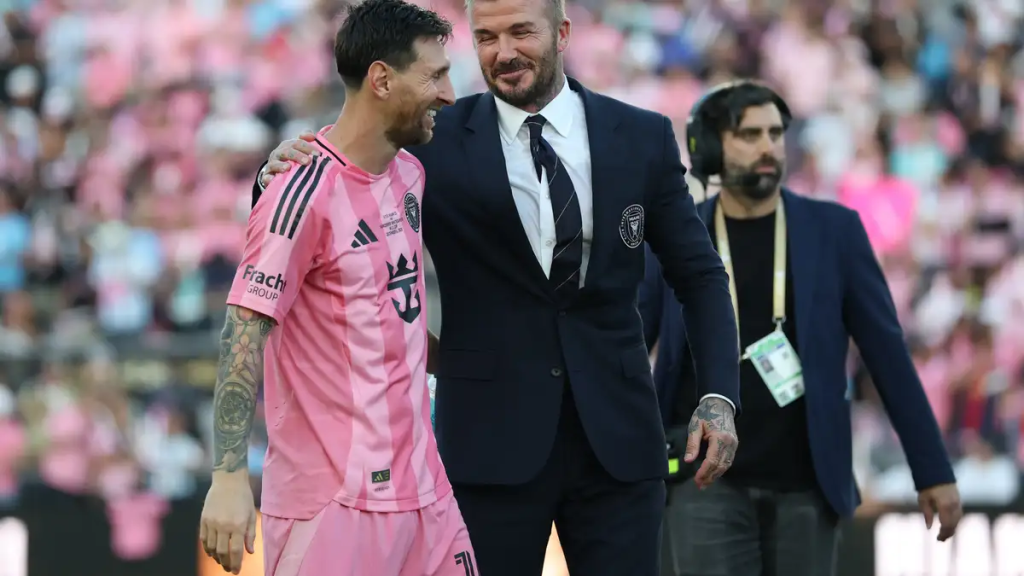
Don Garber says MLS is no longer chasing stars — stars are starting to call them
One of the most revealing parts of Garber’s comments was not actually the headline-grabbing line about merging leagues.
It was the confidence with which he described the modern transfer landscape.
There was a time, and not even that long ago, when MLS had to sell itself hard to every major name it approached. The pitch was usually familiar: lifestyle, growth market, opportunity to be the face of the sport in the United States, maybe some commercial upside if the player was interested. But in pure football terms, the league was still fighting uphill. It wasn’t enough to be a big name. You had to be willing to choose something unconventional.
Now, Garber says, that dynamic has changed.
In his words, it used to be hard to get the big-name players to come. Now, it’s not that hard. In fact, he went even further, joking — but only half-joking — that “they’re calling us.”
That’s a striking shift in tone.
And honestly, it reflects something many people around the game have quietly accepted since Lionel Messi arrived at Inter Miami.
MLS no longer feels like a side route.
It feels like a real option.
That doesn’t mean it is competing financially with every state-backed league or emotionally with every European giant. Of course not. But it does mean the league’s image has evolved. It is no longer just a late-career detour for names with one foot out the door. It is now a place where top players can still feel visible, commercially powerful, and genuinely relevant.
That’s a huge difference.
And once perception shifts, football moves quickly.
Why Lionel Messi changed the entire conversation around MLS and Don Garber knows it
Let’s be honest: none of this conversation happens in the same way without Lionel Messi.
You can talk about academy growth, media rights, expansion fees, stadium infrastructure, and all the rest — and all of that matters — but the symbolic breakthrough was Messi choosing Inter Miami over the alternatives.
That was the moment.
That was the league announcing, without saying it outright, that it could now win a global race for the biggest footballer of his generation.
And Garber clearly knows the value of that.
He referenced the noise around Barcelona, the links to Saudi Arabia, and the fact that in the end, MLS won. That matters not just because Messi arrived, but because of what it represented. He wasn’t dragged there. He wasn’t exiled there. He chose it.
That gave the league credibility in a way no marketing campaign ever could.
And Garber’s broader point is simple: if Messi can choose MLS in a competitive global market, then why should there be a ceiling on who comes next?
It’s a fair question.
The obvious caveat is that Messi is unique. His commercial profile, his family priorities, the Miami setting, the Apple partnership ecosystem, the global visibility of the move — it was a perfect storm. You can’t just copy and paste that.
But Garber is right about one thing: after Messi, the impossible no longer sounds impossible.
That’s powerful.
Don Garber defends how MLS has handled Messi — and he’s probably right
Another interesting piece of the interview was Garber’s response to criticism that MLS hasn’t fully maximised Messi from a marketing standpoint.
That complaint pops up often.
There are fans and analysts who think the league should be squeezing every possible drop out of Messi’s presence — more interviews, more media appearances, more centralised promotion, more obvious use of him as the face of everything.
Garber pushed back on that, and to be fair, he made a sensible point.
His argument was basically this: Messi has already done plenty, and forcing him into every possible promotional lane is not only unnecessary, it might be counterproductive. If he’s doing ads, filming promos, helping the league commercially, showing up on the pitch, winning trophies, and still playing with real intensity, then maybe the smartest move is not to over-manage him.
That feels right.
Because one of the reasons Messi’s move has landed so well is that it hasn’t felt fake.
He’s not just there for photo ops.
He’s playing hard.
He looks engaged.
He looks invested.
And that matters more than whether he sits down for five extra media interviews a month.
Garber’s stance here actually shows a bit of maturity from the league. Earlier versions of MLS might have overexposed a star like that because they were desperate for visibility. The modern version seems more comfortable letting the football and the aura do some of the work.
That’s probably a healthier instinct.
After the 2026 World Cup, Don Garber believes MLS can become a destination for a new generation of stars
This is where the conversation gets really ambitious.
Garber is clearly thinking beyond Messi.
And not just in the vague “the future is bright” way commissioners often talk. He’s openly imagining a post-2026 World Cup version of MLS that can attract another transformational figure — maybe even someone still near the top of world football rather than on the back nine of a career.
That’s why his name-drops stood out.
He floated the idea of someone like Vinicius Jr. or Kylian Mbappé as the kind of player who could take the league to another level.
Now, obviously, let’s be realistic.
That doesn’t mean those moves are imminent. It doesn’t even mean they’re likely in the short term. European superclubs still dominate the competitive hierarchy, and players at that level are not casually walking away from Champions League football in their absolute peak years.
But the point Garber is making is bigger than those names.
He is saying the category of player MLS should dream about has changed.
That matters.
Because the 2026 World Cup, hosted in the United States, Canada, and Mexico, is not just another tournament for MLS. It is potentially a once-in-a-generation accelerant. If the event lands the way the league hopes — bigger audiences, more youth engagement, stronger club identities, broader sponsor confidence, more international visibility — then the post-tournament environment could be ideal for a fresh recruitment push.
And if there is one thing modern football has taught us, it’s that prestige follows momentum.
MLS wants 2026 to be momentum on a continental scale.
Christian Pulisic, star power, and the kind of signing that could truly move MLS
Garber also made a point that probably deserves more attention than the glamorous European names.
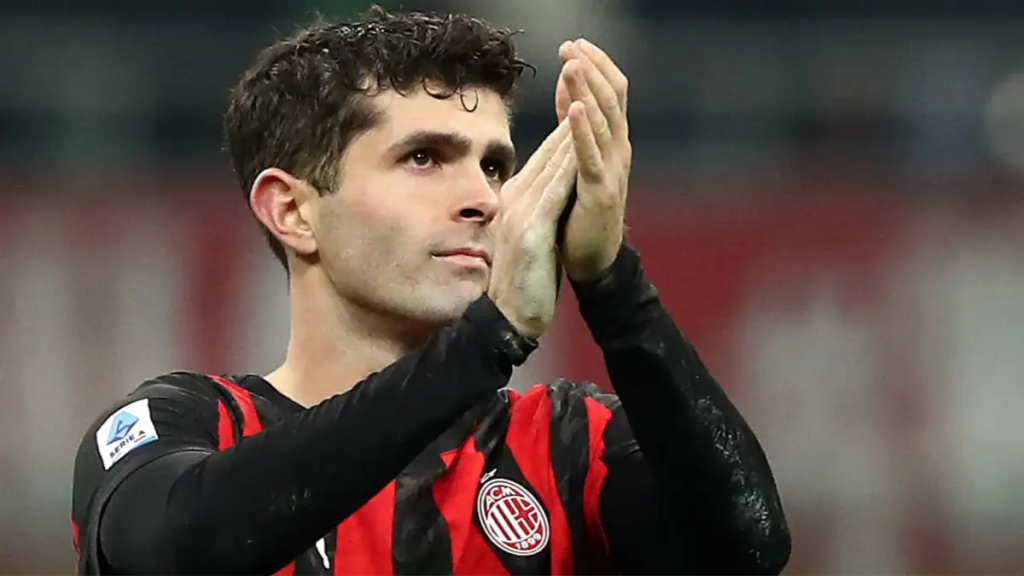
He admitted that Christian Pulisic would be a game-changer for the league.
And honestly? He’s right.
As fun as it is to speculate about Mbappé or Vinicius Jr., the player who might genuinely shift the emotional connection between MLS and the American audience in a more immediate way is someone like Pulisic.
Why?
Because he’s not just a famous footballer.
He’s the face of U.S. soccer.
A homegrown symbol with global credibility.
That combination is rare.
If a player like Pulisic were to return while still highly relevant at the top level, it would hit differently. It would not just be a transfer. It would be a cultural moment. It would tell American fans that the best American player sees the domestic league as a serious stage, not just a final stop.
That’s a different kind of validation.
And Garber clearly understands that.
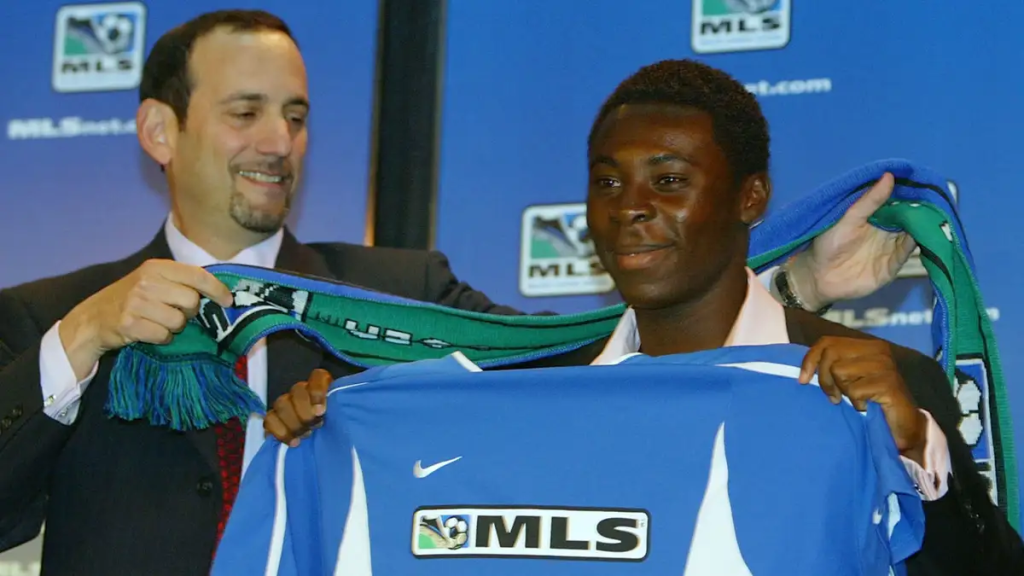
Don Garber admits MLS got Freddy Adu wrong — and that honesty matters
One of the more human moments in the conversation came when Don Garber spoke about Freddy Adu.
For a lot of older fans, Adu remains one of the most haunting “what if?” stories in American soccer.
He was marketed as a phenomenon before he was ready.
Pushed into the spotlight at 14 years old.
Turned into a symbol before he had the foundation to carry it.
And Garber’s admission — that MLS didn’t handle Freddy Adu well — is significant.
Because he’s not wrong.
The league, the clubs, the sponsors, the media… everybody wanted something from Adu. They wanted a saviour, a commercial breakthrough, a homegrown icon, proof that American soccer could produce a star kid worthy of global attention. And in that rush, the player got swallowed by the expectation.
Garber saying “he wasn’t ready, and the league wasn’t ready” is probably one of the more honest things he’s said publicly in years.
It also ties into the Messi conversation in an interesting way.
Back then, MLS needed a star so badly that it risked overloading one.
Now, with Messi, Garber is saying the league can afford to be patient and let the star breathe.
That contrast tells you how much MLS has matured.
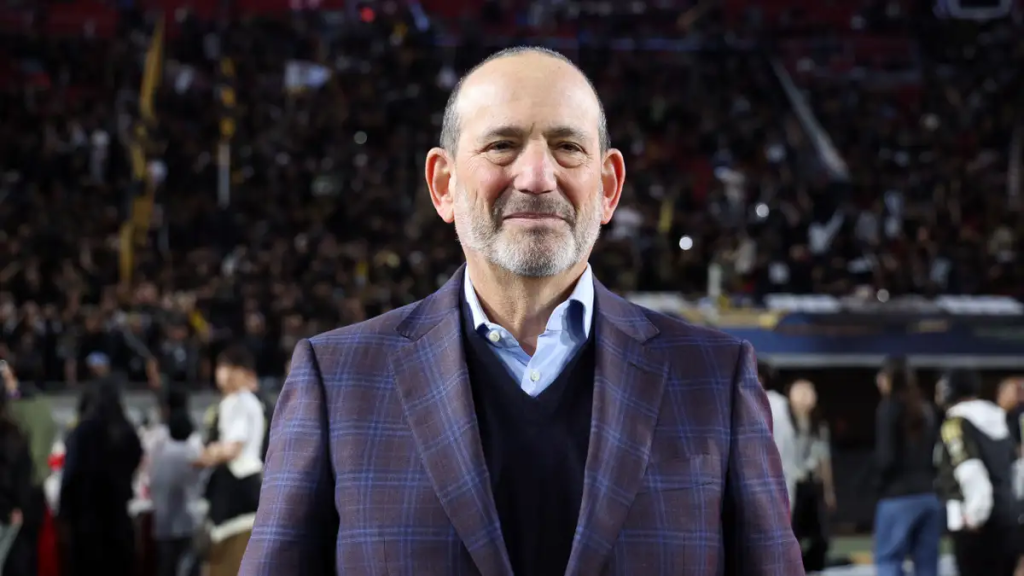
Promotion-relegation in MLS? Don Garber no longer says never — and that alone is a major shift
Now to the part everyone will latch onto.
Promotion-relegation.
For years, this was one of the easiest debates in American soccer because the answer from Don Garber was always effectively the same: no chance.
Not just no.
A hard no.
A structural no.
A philosophical no.
But now?
That language has softened.
And that matters.
Garber openly admitted he used to say “Never, ever, ever”, but that he won’t say that anymore. That is not a commitment, of course. It is not even close. But it is still a meaningful shift because commissioners don’t casually reopen doors they have spent years keeping locked.
Why the change?
Because the league is changing.
Expansion keeps stretching the map.
The number of clubs keeps growing.
The scale of the operation is getting harder to compare to the old MLS model.
And once you start imagining 32 teams, multiple conferences or divisions, and overlapping ambitions with other North American competitions, the conversation naturally becomes more complicated.
That doesn’t mean pro-rel is around the corner.
But it does mean the league no longer treats the idea as unserious.
That, by itself, is news.
“Maybe you merge with another league” — what Don Garber might really mean about MLS’s future
The line that jumped out most was classic Garber:
“Maybe you have 32 teams, you need two divisions, and you have to have promotion-relegation. Maybe you merge with another league.”
That is the kind of quote that can mean everything and nothing at the same time.
But it is still fascinating.
Because buried inside that hypothetical is a bigger truth: MLS is starting to imagine structural futures that would have sounded impossible a decade ago.
Two divisions?
Promotion-relegation?
A merger with another league?
These are not small ideas.
Now, does that mean it’s likely? Not necessarily.
A merger would be massively complicated — commercially, legally, politically, and competitively. You’re talking about ownership models, expansion fees, franchise valuations, broadcast rights, sanctioning bodies, player rules, and a dozen other headaches before you even get to the football.
But the fact Garber is willing to say it out loud tells you the league’s mindset has changed.
It is no longer just defending the status quo.
It is at least willing to imagine what comes after it.
That is important.
Because whether people love MLS or mock it, one thing is undeniably true: the league has always been shaped by controlled evolution. Slow, often frustrating, sometimes overly corporate — but evolution nonetheless.
And now the next frontier may be structural rather than simply commercial.
Don Garber’s MLS vision after 2026 is ambitious, imperfect, and impossible to ignore
In the end, Don Garber’s latest comments land somewhere between commissioner optimism and genuine strategic insight.
There is hype in there, sure.
There always is.
But there is also something more interesting.
He is telling us that MLS sees itself entering a new phase — one where promotion-relegation is no longer laughed out of the room, where Lionel Messi is not the end of the star era but the beginning of a new recruitment standard, and where the 2026 World Cup could be the springboard for the biggest jump in league history.
Will all of that happen?
Probably not exactly as imagined.
Football never unfolds that neatly.
But the ambition is real.
And that alone is worth paying attention to.
Because a league that once spent years begging for credibility is now openly talking about global superstars, structural reinvention, and maybe even merging with another league.
That’s not the language of survival anymore.
That’s the language of a competition trying to decide how big it wants to become.


There are no comments yet. Be the first to comment!