
































































































































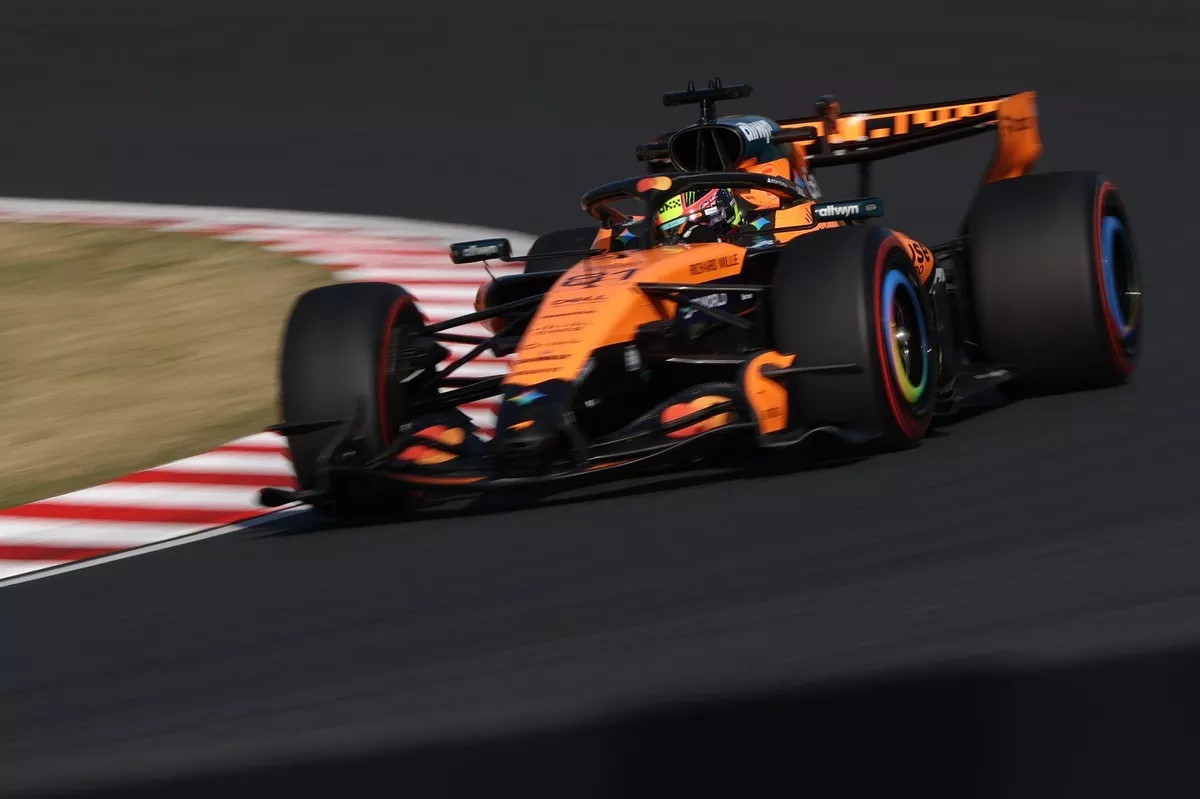
McLaren adamant there will be no repeat of China failures in F1 Japanese GP
McLaren adamant there will be no repeat of China failures in F1 Japanese GP as Andrea Stella backs Mercedes response
For a team that began the year with genuine championship ambition, McLaren’s 2026 campaign has veered into the kind of early-season nightmare that would have felt unthinkable only a few weeks ago. There are bad weekends in Formula 1, there are messy weekends, and then there are the sort of weekends that leave an entire paddock blinking in disbelief. Shanghai fell squarely into that final category.
By the time the dust settled on the Chinese Grand Prix, McLaren had managed the sort of statistical anomaly that nobody at Woking wanted attached to their name. Oscar Piastri, remarkably, still had not started a grand prix all season. Lando Norris did not even make it to the grid in China. And in the cold language of F1 records, it was the first time since the notorious 2005 United States Grand Prix at Indianapolis that neither McLaren had started a race.
That alone is enough to underline the scale of the embarrassment. But what makes the whole thing feel even more jarring is that this is not some underfunded backmarker struggling to keep parts on the car. This is McLaren. A team with one of the strongest technical operations on the grid, a top-tier works power unit partner, and two drivers expected to be involved in the front-running conversation this season.
So when team principal Andrea Stella says there will be no repeat of the China failures in the F1 Japanese GP, it is more than just a standard pre-weekend reassurance. It is a statement McLaren absolutely need to make — and, more importantly, one they now have to prove on track.
China failures left McLaren reeling before the F1 Japanese GP
To call China “challenging” is probably the diplomatic version. In truth, it was brutal.
McLaren arrived in Shanghai hoping to reset the tone of their season after an already awkward start in Australia. Instead, they left with one of the most bizarre and damaging weekends in recent memory. Piastri’s car suffered a battery-related electrical issue that kept him from taking the start. Norris, meanwhile, suffered a separate but equally destructive fault that ended up causing permanent damage to his battery pack, meaning his car was never going to make the grid either.
Two cars. Same broad system. Same weekend. Different failures.
That last detail matters, because it is what makes the whole episode so unusual. Teams can usually live with a one-off component failure. They can even rationalise a single gremlin as bad luck, especially early in a long season. But two separate battery-related faults on the electrical side of the power unit in the same race weekend? That is the kind of thing that sends engineers into full forensic mode.
Stella himself acknowledged just how rare the situation was. In F1, where modern operations are built around layers of redundancy, simulation, and almost obsessive quality control, for both cars to be taken out before the race start is almost surreal.
And yet that is exactly where McLaren found themselves.
Andrea Stella says there will be no repeat of China failures in Japan
The encouraging part for McLaren, if there is one, is that Stella has sounded notably firm in his confidence ahead of Suzuka.
Rather than leaving room for vague uncertainty or the usual “we are still evaluating all scenarios” language, the McLaren boss has been direct: the team understand the source of the problem, they have worked closely with Mercedes-Benz High Performance Powertrains, and they believe the necessary remedial measures are already in place.
That is not the sort of confidence a team principal usually throws around lightly when power unit reliability is involved.
Stella made it clear that both incidents were linked to the electrical side of the Mercedes power unit package, specifically faults involving the battery, but he also stressed that they were not identical failures. That distinction is important because it suggests McLaren and HPP were not dealing with a single obvious systemic collapse, but two separate issues that happened to manifest within the same subsystem at almost the same moment in the season.
In some ways, that makes it even more extraordinary.
Still, Stella’s faith in Mercedes HPP has been absolute. He described the company’s standards as extremely high and suggested there is complete trust that once a fault is understood, the process inside HPP is thorough, disciplined, and decisive. In simple terms: McLaren believe the problem has been found, the lesson has been learned, and Japan should be normal service resumed.
That is the hope. At Suzuka, hope will need to become evidence.
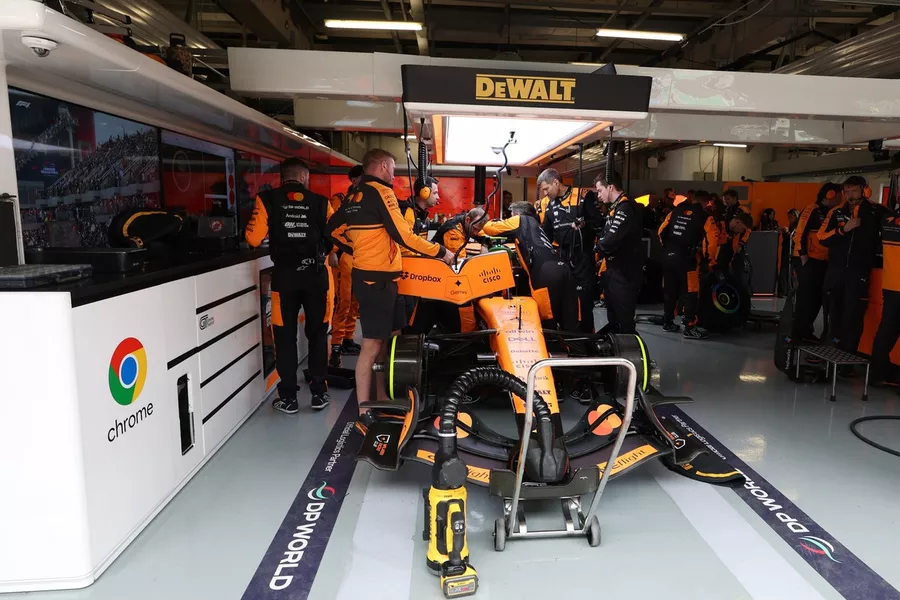
What actually went wrong in China? The battery faults explained
The technical details are what make the China failure story especially frustrating from McLaren’s point of view.
On the surface, both cars suffered battery faults. But under the skin, the stories diverged.
Piastri’s issue was reportedly linked to an auxiliary component attached to the battery. In other words, the battery itself was not necessarily terminally compromised. It was a related piece of hardware causing the problem, and in principle, that type of failure is often more manageable. Painful, yes. Season-threatening, no.
Norris’s case was far nastier.
His battery fault is understood to have escalated after McLaren attempted an in-garage fix involving an ECU swap. The initial software issue apparently pushed the system into a state that ended up causing irreversible battery damage. That turned a recoverable technical headache into a race-ending mechanical dead end.
That sort of chain reaction is exactly the kind of scenario teams hate most. Not just because the car is lost for the race, but because the failure becomes layered: an original fault, an attempted intervention, and then a secondary consequence that makes the situation worse. It complicates diagnosis. It raises uncomfortable questions about process. And it invites scrutiny over whether the first response in the garage was the right one.
That said, F1 teams often have to make split-second calls under pressure, especially when parc fermé restrictions and race-day timelines leave very little margin. It is easy to criticise in hindsight. Harder to fix in real time.
Why the timing could not be worse for McLaren’s 2026 title defence
The bigger problem here is not just one bad weekend. It is the shape of the season so far.
Championship campaigns are not always won in the first few races, but they can absolutely be damaged there. And McLaren’s title defence — or at the very least, their attempt to remain in the championship conversation — has already taken a serious early hit.
Piastri has yet to complete a race lap this season. That sentence alone is staggering.
Norris, who many expected to be a central figure in the fight at the front, has already seen one weekend effectively wiped out before the lights even went out. In a sport where momentum matters almost as much as points, McLaren are spending the opening phase of the year not building pressure on rivals, but trying to simply get both cars to the start line.
That is not where serious contenders are supposed to be in March.
And that is why Suzuka suddenly carries more emotional weight than it might otherwise have done. This is not just another race. It feels like a reset point. A pressure valve. A chance to stop the early narrative from hardening into something uglier.
Because if Japan goes wrong too, the questions will become louder — and much less forgiving.
McLaren’s history makes the China failures even more remarkable
Formula 1 has a long memory, and McLaren’s recent embarrassment only looks stranger when placed against its own history.
The comparison to the 2005 United States Grand Prix is the obvious one, but that was a very specific and very political race. McLaren were one of several Michelin-powered teams that withdrew after the formation lap amid the tyre controversy at Indianapolis. It was embarrassing, certainly, but it was not a pure reliability collapse in the conventional sense.
To find something that feels more directly comparable, you have to go all the way back to 1966 — McLaren’s maiden Formula 1 season.
That alone is extraordinary.
Back then, Bruce McLaren was scrambling for competitive engine solutions, trying everything from a downsized Ford-based concept to the famously unpredictable Serenissima V12. It was a period of experimentation, improvisation, and very little certainty. One story from that era remains wonderfully absurd: a local priest in Sasso Marconi reportedly blessing each engine block before it was loaded into the McLaren truck.
That image, half-romantic and half-chaotic, belongs to another age of Formula 1 entirely.
And yet here we are in 2026, with McLaren again talking about exceptional reliability failures before the start of a grand prix — only now the modern equivalent is not spiritual intervention, but faith in Mercedes-Benz High Performance Powertrains and a pile of post-race data.
There is something almost poetic about that contrast.
Why Andrea Stella’s calm matters as much as the technical fix
One thing Stella has generally done well since taking the reins at McLaren is manage tone.
F1 team principals are part engineer, part diplomat, part crisis manager. In moments like this, what they say publicly matters. Panic spreads fast in the paddock. So does blame. If a team principal sounds rattled, the whole organisation can look vulnerable within hours.
Stella has not sounded rattled.
He has sounded frustrated, yes. He has openly admitted the China weekend was exceptional and deeply disappointing. But his messaging has been disciplined: the issue is understood, the partner is trusted, and the team expects a regular weekend in Japan.
That phrase — a regular weekend — might be the most revealing of all.
McLaren are not talking about domination. They are not trying to overcompensate with bravado. They are simply desperate to get back to normality. Get both cars through practice. Get both cars to qualifying. Get both cars onto the grid. Let Piastri finally complete a race lap. Let Norris actually start from where he qualifies.
At this stage, that alone would count as progress.
Oscar Piastri needs the F1 Japanese GP more than anyone
If there is one driver who needs Suzuka to go smoothly, it is Piastri.
Through no real fault of his own, the Australian has become the accidental symbol of McLaren’s disastrous opening phase. He spun on the laps to the grid in Australia. He then failed to start in China. He has not completed a race lap this season, which is an absurd statistic for a driver of his quality.
That kind of run can start to feel psychologically heavy, even if the underlying reasons are not down to driver performance.
Racing drivers live on rhythm. They need laps, starts, race management, tyre feel, small moments of adaptation. Every missed Sunday compounds the sense that you are beginning from behind. And in a season where every race matters, sitting on the sidelines while rivals collect data and points is brutal.
Stella’s comments reflected that. There was a clear sense that McLaren are not just looking forward to a cleaner weekend as a team — they are especially eager to get Piastri into an actual grand prix at last.
That matters, both competitively and emotionally.
Final word: McLaren must back up the talk at Suzuka
There is no shortage of confidence in Formula 1 on a Thursday.
Every paddock has its share of assurances, explanations, and carefully worded optimism before a car turns a wheel. But this week, McLaren’s insistence that there will be no repeat of the China failures in the F1 Japanese GP carries more weight than most.
Because after what happened in Shanghai, they do not really have the luxury of another technical disaster.
Andrea Stella has done his part. He has fronted the issue, explained the broad cause, and backed Mercedes HPP with total conviction. The technical side, by all accounts, has been investigated. The remedies have been implemented. The confidence is there.
Now it has to translate.
McLaren do not need a miracle at Suzuka. They do not even necessarily need a win. What they need, above all else, is competence. Reliability. A clean weekend. Both cars on the grid, both cars in the race, both drivers finally allowed to show what this package can actually do when it is not sabotaged by freak electrical drama.
Because right now, their 2026 story is not about pace, potential, or title credentials. It is about survival.
And for a team with championship ambitions, that is already a dangerous place to be.


There are no comments yet. Be the first to comment!