









McLaren in the New F1 Era: Can They Compete or Are They Destined to Be Best of the Rest?
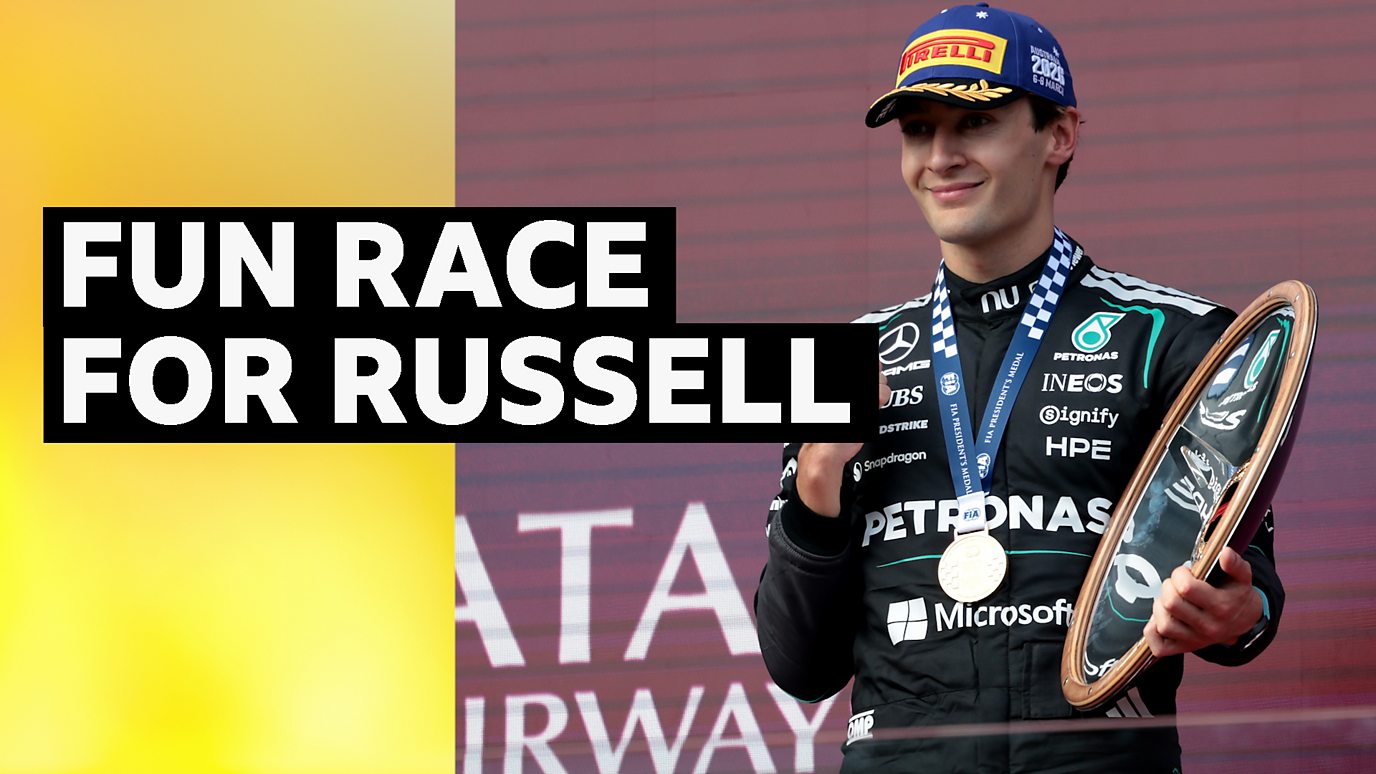
The opening race of Formula 1’s bold new era delivered excitement, uncertainty — and a sobering reality check for one of the grid’s recent dominant forces. As Mercedes celebrated a commanding one-two finish at the Australian Grand Prix, a very different mood settled over the McLaren garage.
For the past two seasons, McLaren had set the benchmark. Now, after just one race under Formula 1’s radically revised 2026 regulations, a difficult question is already being asked across paddocks and fan forums alike: can McLaren compete for wins again, or will they spend this season as merely the best of the rest?
The answer, as always in Formula 1, lies somewhere between engineering complexity, political nuance, and the unforgiving mathematics of lap time.
McLaren and the “Best of the Rest” Question After Australia
Melbourne rarely tells the full story of a season, but it often reveals trends — and for McLaren, the early signs were uncomfortable.
The fastest papaya-colored car qualified more than eight-tenths of a second behind George Russell’s pole-setting Mercedes. Over a race distance, the gap became even more striking, with reigning world champion Lando Norris finishing more than 50 seconds behind the winner.
That is not a margin explained by strategy or bad luck. That is performance.
After dominating large stretches of the previous regulations cycle, McLaren suddenly looked like a team trying to understand its own machinery rather than mastering it.
Team principal Andrea Stella didn’t attempt to hide the reality. Data overlays showed Mercedes gaining time consistently through specific corners and, crucially, along energy deployment zones — the new battleground of Formula 1’s hybrid-heavy regulations.
In 2026, speed is no longer purely aerodynamic. It’s computational.
And right now, Mercedes appear to hold the stronger algorithm.
Why the New Engine Rules Have Changed Everything

The sport’s biggest regulation overhaul introduced power units split almost evenly between internal combustion and electrical energy. On paper, the rules apply equally to all teams. In practice, knowledge is power — literally.
Although manufacturers must supply identical engine hardware to customer teams, they are not required to share every detail about how to exploit that hardware.
That distinction is proving decisive.
Mercedes’ works team clearly understands how to extract maximum performance from the energy recovery system, particularly across long acceleration zones like the stretch between Turns Six and Nine in Melbourne — where McLaren consistently lost time.
Formula 1 cars are now driven as much by software strategy as mechanical grip. Energy harvesting, deployment timing, and predictive simulations determine competitiveness before a car even leaves the garage.
Stella hinted at frustration when discussing McLaren’s situation, explaining that the team often learns about performance characteristics only after running the car on track — an approach fundamentally at odds with modern F1 methodology.
“In Formula 1, you normally simulate everything beforehand,” he suggested. “You know what the car will do.”
Right now, McLaren doesn’t always know.
That uncertainty alone can cost tenths of a second — an eternity in Formula 1 terms.
Can McLaren Close the Gap This Season?
Despite the alarming deficit, there are genuine reasons for optimism inside Woking.
First, the McLaren chassis itself is not fundamentally flawed. Engineers believe the car is slightly overweight, meaning relatively straightforward development work could unlock immediate lap-time gains without major aerodynamic redesigns.
Second, knowledge gaps tend to shrink over time.
Energy management systems evolve through data collection, and McLaren will inevitably learn more about optimizing the Mercedes power unit as races accumulate. The question is whether Mercedes’ early advantage becomes a self-reinforcing cycle.
In modern F1, learning compounds performance. The more data a team gathers while leading, the easier it becomes to stay ahead.
If Mercedes continues improving faster than McLaren can understand the system, the championship fight could drift out of reach early.
But if development reaches diminishing returns — a common phenomenon under stable regulations — McLaren may yet rejoin the front.
The next four to six races could define their entire season.
Chaos on Track: Drivers Still Adapting
Lando Norris described racing under the new rules as “chaos,” and it wasn’t exaggeration.
Drivers must now constantly balance energy usage, battery deployment, and traditional racecraft. Managing electrical power has become as critical as managing tyre wear.
The increased complexity introduces unpredictability. Mistimed deployment or unexpected energy depletion can dramatically alter overtaking opportunities — or even create dangerous closing speeds between cars.
Several drivers privately admit they are still learning how to race these machines properly.
That uncertainty could benefit McLaren.
In chaotic environments, strong drivers and adaptable teams often outperform pure technical superiority. Norris, widely regarded as one of the grid’s most intelligent racers, may yet extract results beyond the car’s raw pace.
Aston Martin’s Engine Problems Add Context to the Grid
While McLaren search for performance, Aston Martin face an even steeper climb.
Their new partnership with Honda has endured a disastrous start, with power deficits and vibration issues severely limiting competitiveness. Even design genius Adrian Newey has acknowledged the car falls short of expectations, while Fernando Alonso has openly questioned whether improvements will arrive quickly enough to match the timeline of his career.
The situation highlights how fragile competitiveness can be under new regulations.
Compared to Aston Martin’s struggles, McLaren’s issues appear solvable rather than structural.
The Bigger Debate: Has Formula 1 Gone Too Complex?
The 2026 regulations were designed to attract manufacturers — and in that sense, they succeeded. Audi, Ford, and General Motors have committed to the sport, while Honda reversed plans to exit.
Yet the racing itself has sparked debate.
Some critics argue Formula 1 risks drifting away from pure driving competition toward energy-management simulations. Hybrid complexity has introduced strategic depth but also confusion for fans accustomed to simpler performance hierarchies.
Ironically, shifting automotive markets may already be reshaping future plans. With global electrification slowing and sustainable fuels gaining traction, insiders believe the next engine formula after 2030 could rebalance toward internal combustion power.
For now, though, teams must master the current hybrid-heavy reality.
And Mercedes have mastered it first.
Calendar Uncertainty Could Offer McLaren an Opportunity
External factors may also influence the competitive picture.
With Middle Eastern races potentially under threat due to geopolitical tensions, Formula 1 could face an unexpected gap in the calendar. While additional testing would not be permitted, extended factory development time could allow struggling teams to accelerate upgrades.
McLaren’s engineering strength has historically shone during in-season development cycles.
If there is one team capable of turning early disappointment into mid-season resurgence, recent history suggests it might be them.
So — Can McLaren Compete?
The honest answer after Melbourne is complicated.
Right now, McLaren are not genuine title contenders. Mercedes hold a clear advantage in understanding the new hybrid systems, and that knowledge gap translated into an enormous performance difference in Australia.
But Formula 1 seasons are rarely decided in March.
McLaren possess elite drivers, strong technical leadership, and a car that appears fundamentally sound. If they unlock energy deployment performance and shed excess weight, the gap could shrink quickly.
For now, they sit in an uncomfortable position — fast enough to lead the chasing pack, yet not fast enough to challenge the front.
Best of the rest? Possibly.
But in a season defined by new technology, evolving software, and drivers still learning how to race their machines, the competitive order remains far from settled.
And if Formula 1 has taught us anything, it’s this: the first race rarely writes the final chapter.


There are no comments yet. Be the first to comment!