





































































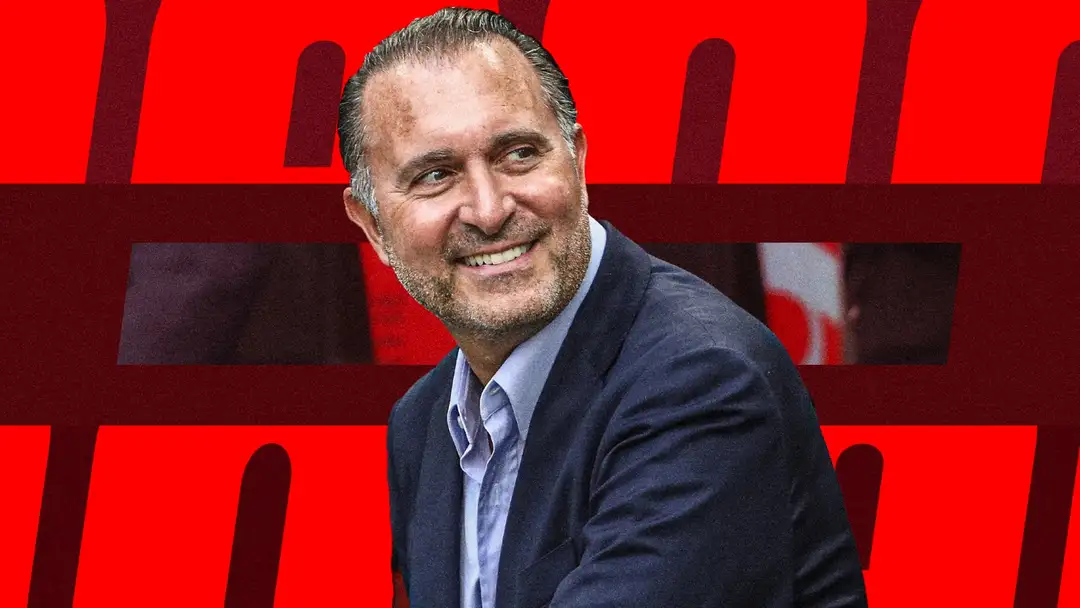
Midnight Decision Looms: AC Milan Weigh NBA Europe Bid as Cardinale’s Vision Enters Crucial Phase
European sport rarely stands still, but moments arrive when an entire landscape feels on the brink of transformation. Tonight marks one of those moments. As the deadline for applications to join NBA Europe approaches midnight, AC Milan finds itself at the centre of one of the most ambitious cross-sport projects ever proposed on the continent — a venture that could reshape how football institutions expand beyond their traditional boundaries.
Behind the scenes, discussions have intensified, calculations have grown more complex, and ambitions have collided with financial reality. For Milan owner Gerry Cardinale and the RedBird Capital group, the decision is not simply about basketball. It is about long-term positioning, global branding, and whether Milan should become a founding pillar of a new sporting ecosystem.
AC Milan and NBA Europe: Inside Cardinale’s Strategic Gamble
The seeds of this project were planted months ago, but January’s London summit provided the clearest indication yet that NBA Europe was moving from concept to reality. Representatives from Milan and Olimpia Milano joined NBA executives and key stakeholders in the British capital, where detailed presentations outlined the proposed league’s structure, economics, and long-term ambitions.
Those present revealed just how seriously Milan is treating the opportunity. Ettore Messina and Christos Stavropoulos attended on behalf of Olimpia Milano, while Milan’s delegation included Massimo Calvelli — International CEO of RedBird Development Group — alongside Zlatan Ibrahimović, whose presence underlined the symbolic importance of the project within the club’s broader vision.
The NBA’s proposal is bold. Twelve major European cities are expected to form permanent franchises, joined by four additional teams qualifying through sporting merit via continental competitions and an end-of-season tournament. Unlike traditional European basketball structures, the league would operate under a franchise-style model familiar to American sports, blending stability with commercial scalability.
For Milan, participation would represent more than diversification. It would signal entry into a new era where elite football clubs evolve into multi-sport entertainment brands, mirroring institutions like Real Madrid that have historically balanced success across disciplines.
What Is NBA Europe and Why It Matters
NBA Europe is envisioned as a joint initiative between the NBA and FIBA, designed to create a sustainable and commercially powerful basketball league capable of rivaling — or potentially replacing — the EuroLeague’s current dominance.
NBA deputy commissioner Mark Tatum previously described the concept as a hybrid competition combining established basketball organizations, newly created franchises, and football clubs seeking to expand into basketball investment.
NBA Commissioner Adam Silver recently reinforced the long-term ambition behind the plan, emphasizing that the project is intended not as disruption for its own sake but as structural growth for European basketball.
The financial model reflects that ambition. Prospective franchises are expected to pay an entry fee reportedly around — or even exceeding — €500 million. In return, participating clubs would become co-owners of the league, while the NBA retains a controlling 50 percent stake.
Such numbers immediately transform the conversation. This is not merely a sporting decision; it is a corporate investment comparable to purchasing a major media asset.
For RedBird, whose portfolio already blends sport, entertainment, and media ventures, the appeal is obvious. NBA Europe promises global exposure, centralized commercial rights, and long-term revenue predictability rarely found in traditional European competitions.
The Deadline Pressure: Milan’s Bid Under the Microscope
With applications due by midnight, urgency now defines the situation. Sources close to the process suggest Gerry Cardinale intends to submit a bid, though the precise structure remains unclear.
Inter Milan and Olimpia Milano are also reportedly exploring participation, setting up a fascinating scenario in which historic city rivals could become partners — or competitors — within a new sporting framework.
Yet the financial commitment remains staggering. A €500 million entry fee represents only the beginning. Operational costs, infrastructure investment, marketing expenditure, and roster construction would demand sustained funding over several seasons before profitability becomes realistic.
For Milan’s ownership, the decision involves balancing ambition with caution. RedBird understands that entering too early carries risk, but arriving too late could mean missing a once-in-a-generation opportunity.
Financial and Political Doubts Surround NBA Europe
Despite the excitement, uncertainty continues to hover over the project.
Financial concerns are obvious. Even for investment groups accustomed to large-scale ventures, committing half a billion euros to an untested European league requires confidence not only in basketball’s growth potential but also in fan adoption across diverse markets.
Political dynamics add another layer of complexity. NBA Europe was initially framed as an alternative to the EuroLeague, creating tension within European basketball governance. However, recent developments suggest a shift toward cooperation rather than confrontation.
Adam Silver has publicly expressed a preference for collaboration, stating that European basketball’s long-term health would benefit from alignment between existing institutions rather than fragmentation.
If negotiations succeed, NBA Europe could evolve into a three-pillar structure involving the NBA, FIBA, and the EuroLeague — a compromise that would fundamentally reshape the sport’s power balance.
Such a scenario would reduce risk for investors like Milan but also alter the competitive landscape dramatically.
Why Football Clubs Like AC Milan Are Central to NBA Europe
One of the most intriguing aspects of NBA Europe is the involvement of football giants. Clubs such as Manchester City and Paris Saint-Germain have reportedly explored participation, recognizing basketball as an untapped avenue for global expansion.
Football clubs already possess worldwide fanbases, advanced commercial departments, and elite marketing infrastructures. By attaching basketball franchises to established brands, the league hopes to accelerate visibility and financial growth.
Milan fits perfectly into that model.
With its historic identity, global recognition, and growing American ownership influence, the club represents exactly the type of institution the NBA wants involved — a bridge between European sporting tradition and modern entertainment economics.
Zlatan Ibrahimović’s presence at discussions symbolized this blend of heritage and innovation. Milan’s leadership appears determined not simply to follow trends but to help shape them.
A Defining Moment Before Midnight
As the clock ticks toward the application deadline, Milan faces a defining strategic decision. Joining NBA Europe could position the club at the forefront of a new sporting frontier, expanding its identity beyond football and into a broader entertainment ecosystem.
Yet risks remain undeniable. Financial exposure, uncertain competitive structures, and unresolved political negotiations mean the project is far from guaranteed success.
Still, moments like this rarely come twice.
For Gerry Cardinale and AC Milan, tonight’s decision is about more than basketball. It is about vision — about whether the Rossoneri see themselves purely as a historic football institution or as a future-facing global sports enterprise ready to redefine what a European club can become.
By midnight, the direction may finally become clear.


There are no comments yet. Be the first to comment!