







































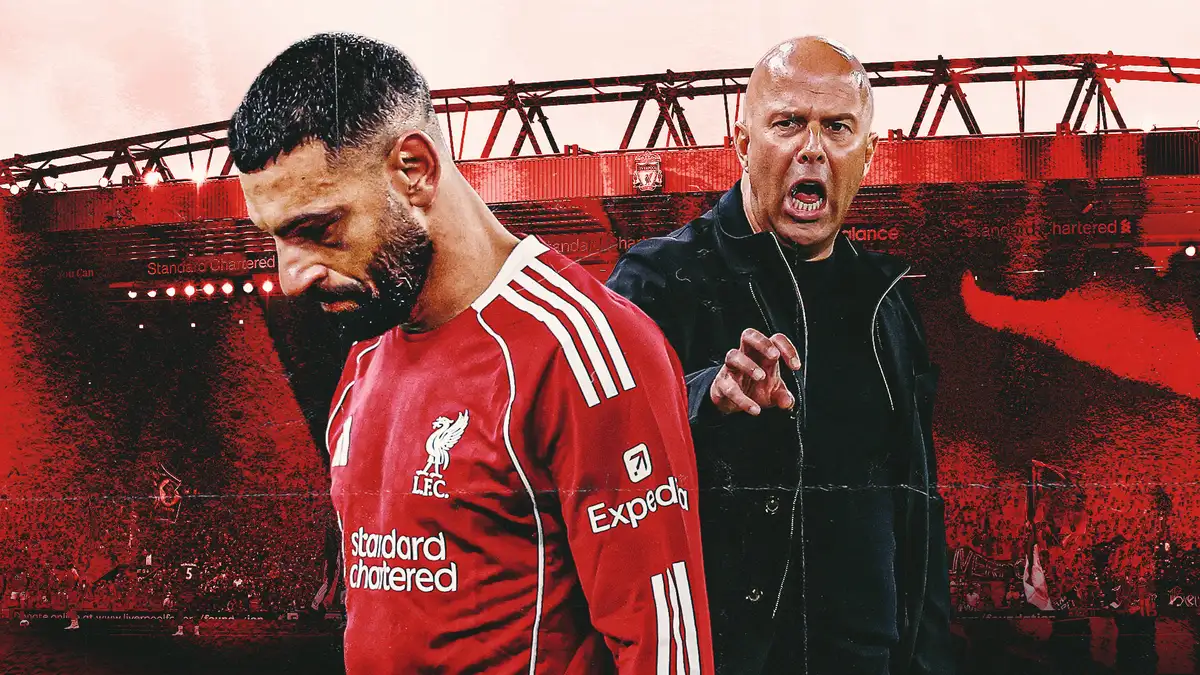
Mohamed Salah Has Tainted His Liverpool Legacy After Taking a Leaf Out of Cristiano Ronaldo’s Playbook – There Is No Way Back
From Talisman to Turmoil: Mohamed Salah Has Tainted His Liverpool Legacy
There was a time—not that long ago—when Mohamed Salah represented everything Liverpool stood for. Relentless excellence, relentless professionalism, relentless productivity. He was the talisman whose presence alone elevated expectation. Today, that same figure is firmly embroiled in a narrative that suddenly looks far more divisive.
It feels almost surreal to say this, but Salah’s legacy has been damaged in a way that now seems irreversible. His decision to publicly challenge Arne Slot, question his position within the dressing room, and position himself as a victim has pushed supporters toward uncomfortable territory. The great ones are rarely remembered solely for numbers; they’re remembered for dignity—especially in moments of decline.
To understand how stark the shift is, you only need to rewind to the spring. Salah had signed his extension, his goal involvements hit record totals, and the mood was celebratory. Slot inherited a superstar. Yet just months later, the same manager has been dismissed by the man who once symbolised Liverpool’s competitive identity.
And that’s where things genuinely unravel.

Liverpool v Sunderland – Premier League
Mohamed Salah Taking a Leaf Out of Cristiano Ronaldo’s Playbook
Football has seen this movie before. The parallels with Cristiano Ronaldo’s final chapter at Manchester United are undeniable.
Ronaldo felt betrayed, complained publicly, pointed fingers in televised interviews and scorched every bridge he once walked on. Salah hasn’t sat opposite Piers Morgan, but the messaging is effectively the same: “I deserve special treatment, and I am entitled to my starting position because of what I once delivered.”
That attitude is not only corrosive, but completely at odds with what Liverpool have built under modern leadership.
It’s also fundamentally shortsighted. Slot is not the type to cave under pressure, particularly not when performance has dipped so visibly. Salah’s argument that he “earned his position” is precisely the kind of mindset that turns icons into casualties. Ronaldo learned that the hard way; Salah seems determined to repeat it.

FBL-ENG-PR-LEEDS-LIVERPOOL
When Performance Stops Matching Status
No one disputes the brilliance of last year. Salah was remarkable. Forty-seven combined goals and assists across the Premier League season was statistical gold. The performances warranted his wage structure and his superstar aura.
This season has been different. And not slightly. But dramatically.
Five goals in 19 appearances doesn’t merely represent a downturn; it reflects a tangible invisibility. Salah has looked disengaged in defensive phases, strangely static in attacking buildup, and uncharacteristically predictable in one-on-one moments.
There’s context, of course. The departure of Trent Alexander-Arnold has removed Salah’s preferred supply route. That seamless right-flank connection—so often taken for granted—is gone. And with Luis Díaz sold and Diogo Jota tragically lost, Liverpool no longer have the high-pressing front-line that insulated Salah’s defensive shortcomings.
But great players adapt. Great players evolve. And great players do not accuse the manager of betrayal when they are benched.
Especially when results improve without them.

Leeds United v Liverpool – Premier League
Slot’s Loyalty Was Real—Salah Repaid It Poorly
The timeline reveals more about Salah than any public interview ever could.
Slot defended him, publicly, repeatedly. He resisted calls to bench him for months. Liverpool lost nine of twelve across all competitions, but Salah still started every league match in that stretch. Slot gambled on experience over form.
Eventually, that loyalty expired.
Slot removed him against West Ham. Liverpool won. Salah didn’t play. Slot repeated that approach against Leeds and Sunderland. Efficiency suddenly improved. Defensive structure held.
That should have been Salah’s moment to respond privately—to have a difficult conversation, recalibrate, regain his spot.
Instead, he aired his frustration to the world. He claimed promises were broken. He said someone “wanted him to get the blame.” He then positioned himself as uniquely targeted.
That language doesn’t reflect leadership. It reflects insecurity.
And as soon as leaders speak from insecurity, dressing rooms divide.
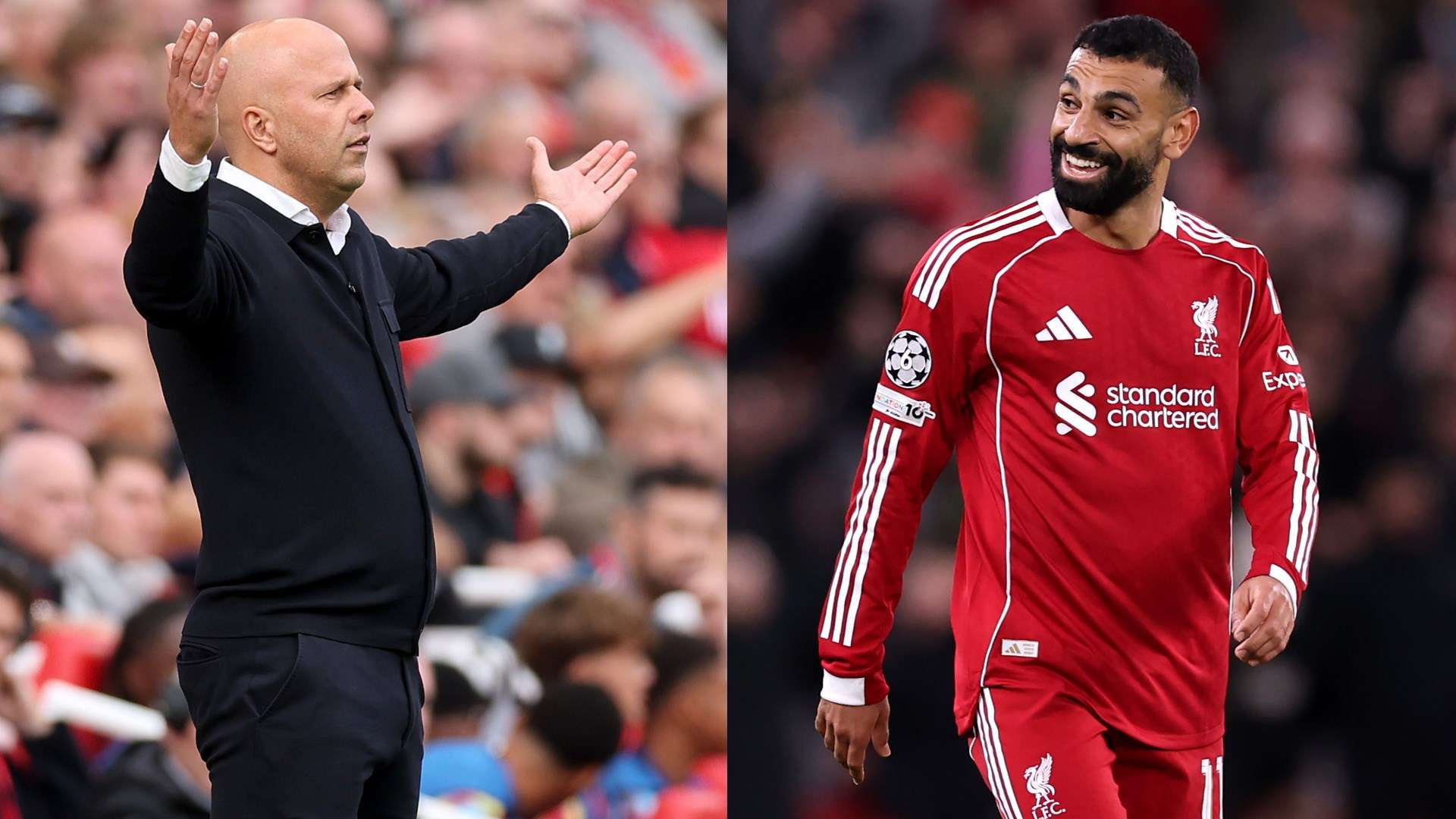
Salah-Slot
Salah No Longer Wants Accountability—He Wants Authority
Consider the sentence: “I earned my position. I don’t have to fight for it.”
That is football arrogance in its purest form.
Every Liverpool player has fought for status—from academy boys to £100m signings. Virgil van Dijk battled for credibility after injury. Dominik Szoboszlai fights for rhythm after dips in form. Even Mac Allister has played roles that don’t suit him just to help the system.
Only Salah projects himself as exempt.
Slot sees it. The squad sees it. Supporters now see it.
That’s why the club’s decision to leave Salah out of the travelling squad for the Inter match in the Champions League was not controversial—it was necessary. Without clarity, there is only tension.
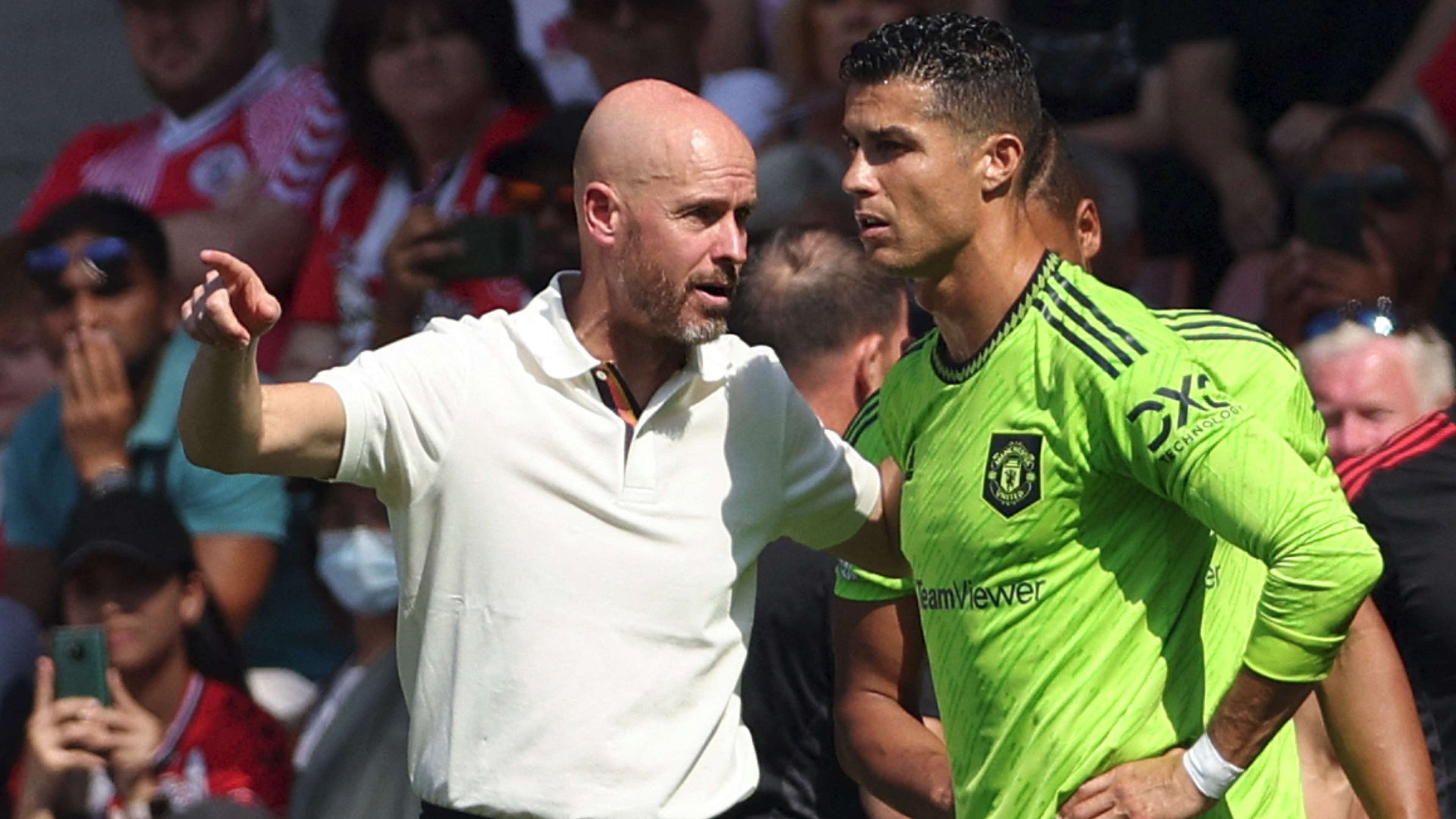
Ronaldo Ten Hag 2022-23
Cristiano Ronaldo’s Warning That Salah Chose to Ignore
When Ronaldo exploded at United, the trajectory became non-negotiable. It was impossible for Ten Hag to build through him. Impossible for teammates to trust his intentions. Impossible for supporters to demand standards from a player who refused accountability.
The result, inevitably, was separation.
Liverpool are heading toward a similar endpoint. Salah appears to be banking on the idea that he can outlast Slot. Ronaldo thought he could outlast Ten Hag, too.
That belief proved catastrophically wrong.
There is an old truth in football institutions:
Once a player attempts to publicly redefine his authority above the manager, he has already lost.
.png?auto=webp&format=pjpg&width=3840&quality=60)
Mo Salah
Legacy Cannot Be Protected with Sentiment
Salah has done extraordinary things. He delivered league titles, European nights of unforgettable magnitude, an individual scoring record few imagined possible. But greatness fades quickly when self-preservation takes priority over responsibility.
Liverpool supporters will not remember the volume of goals as much as the tone of his final chapter. That matters.
Salah could have fronted up. Could have said his form dropped, could have spoken about getting back to his best, could have said the benching hurt but was deserved.
Instead, he chose antagonism.
Instead, he implied conspiracy.
Instead, he positioned himself above process.
When icons burn bridges, they often assume their past shields them. History shows it never does.
There Is No Way Back
The hierarchy backs Slot. The team functions better without Salah in its current emotional state. Saudi Pro League interest remains. A six-figure deal awaits if Liverpool decide that emotional peace outweighs sentiment.
And when Salah returns from AFCON, he may find a team that doesn’t need him anymore—and definitely doesn’t want noise attached to him anymore.
The tragedy is that this didn’t need to happen. All Salah needed was humility. A willingness to reset. A willingness to fight for relevance again.
But when a player openly states that his position should be unquestioned, that the club owes him perpetuity because of past contribution, he removes the possibility of reintegration.
This is the Ronaldo ending—written with red ink rather than Manchester’s shade.
This is a legacy tarnished—not because of performance decline, but because of behaviour during decline.
Mohamed Salah had everything at Anfield. He could have authored a graceful twilight.
Instead, he chose confrontation.
And from this point, there is no way back.


There are no comments yet. Be the first to comment!