




Okan Buruk Rages at “Worst Referee in the World” After Liverpool End Galatasaray Champions League Dream
Liverpool vs Galatasaray: Champions League Exit Sparks Furious Reaction from Okan Buruk
European nights at Anfield have a reputation for being unforgiving, and for Galatasaray, this one proved brutally decisive. What began as a tie filled with belief and cautious optimism ended in frustration, controversy, and a harsh lesson in Champions League reality as Liverpool dismantled the Turkish champions 4–0 on Merseyside.
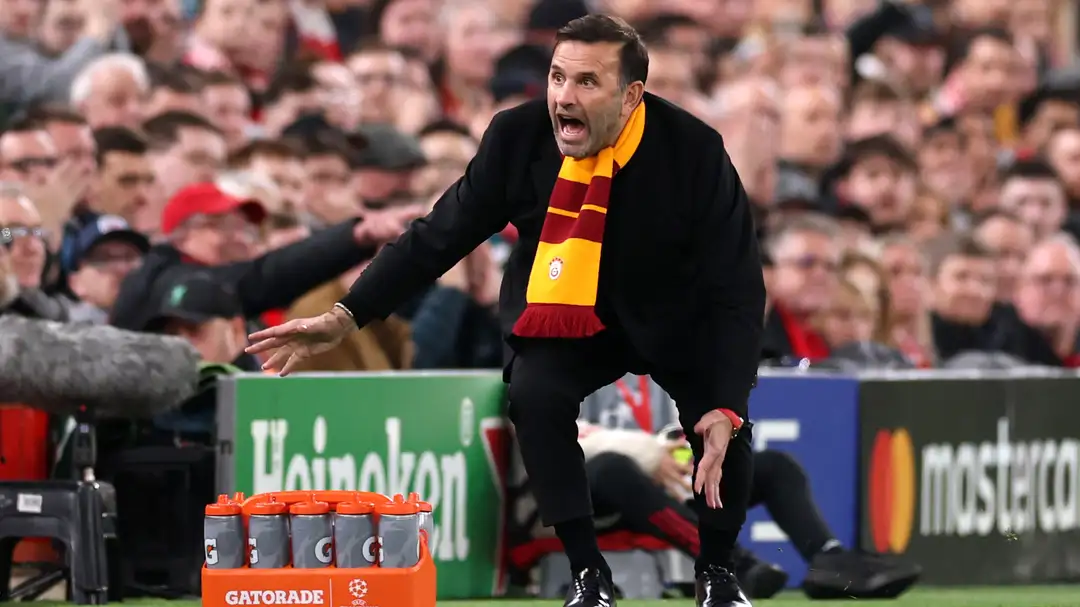
Yet while Liverpool’s ruthless efficiency ultimately settled the contest, Galatasaray head coach Okan Buruk ensured the post-match narrative would not focus solely on football. Instead, his explosive criticism of the officiating dominated the aftermath, with the manager branding the referee “the worst in the world” following a physically charged encounter that left his players bruised — both emotionally and physically.
For Buruk, the defeat hurt. But the manner of it appeared to sting far more.
A Night That Slipped Away at Anfield
Galatasaray arrived in England carrying genuine hope. A narrow first-leg victory in Istanbul had given them a fragile advantage, and there was quiet belief that discipline and resilience might carry them into the Champions League quarter-finals.
Anfield, however, had other plans.
From the opening whistle, Liverpool imposed a relentless tempo. Their pressing suffocated Galatasaray’s midfield build-up, transitions came at frightening speed, and every defensive hesitation was punished. The Turkish side struggled to establish rhythm, repeatedly forced into reactive defending rather than controlled possession.
The early breakthrough shifted the emotional balance of the tie. Once Liverpool sensed vulnerability, they accelerated mercilessly. Spaces widened, confidence grew, and Galatasaray found themselves chasing shadows for long stretches.
By the time the fourth goal arrived, the outcome felt inevitable rather than shocking.
Still, inside the visiting technical area, frustration had long since shifted away from tactics or execution. Buruk’s anger was directed elsewhere.
Okan Buruk’s Fury: “Worst Referee in the World”
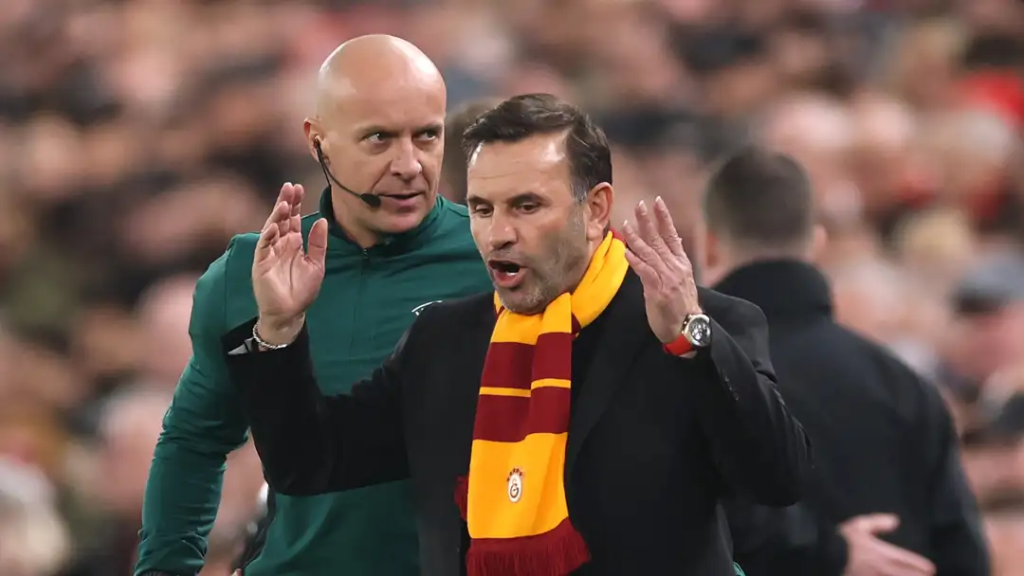
In his post-match press conference, Buruk delivered one of the most outspoken assessments of officiating heard this Champions League season.
The Galatasaray coach argued that his side’s key attacking weapon, Victor Osimhen, received insufficient protection throughout what he described as an excessively physical contest. According to Buruk, Liverpool defender Ibrahima Konaté repeatedly crossed the line without punishment.
“We expected the world’s best referee,” Buruk said bluntly. “Instead, the world’s worst referee managed the match.”
It was not merely frustration speaking — at least from his perspective. Buruk insisted that repeated fouls disrupted Galatasaray’s attacking flow and prevented his team from building any sustained pressure.
Osimhen, tasked with leading the line against Liverpool’s powerful defence, endured a relentless physical duel. Every aerial challenge became a collision; every attempt to hold up play turned into a wrestling match. While such intensity is common in European knockout football, Buruk believed the balance of refereeing decisions consistently favoured the home side.
Even as he acknowledged Liverpool deserved victory overall, the manager maintained that the officiating influenced the psychological rhythm of the game.
Injuries Add to Galatasaray’s Misery
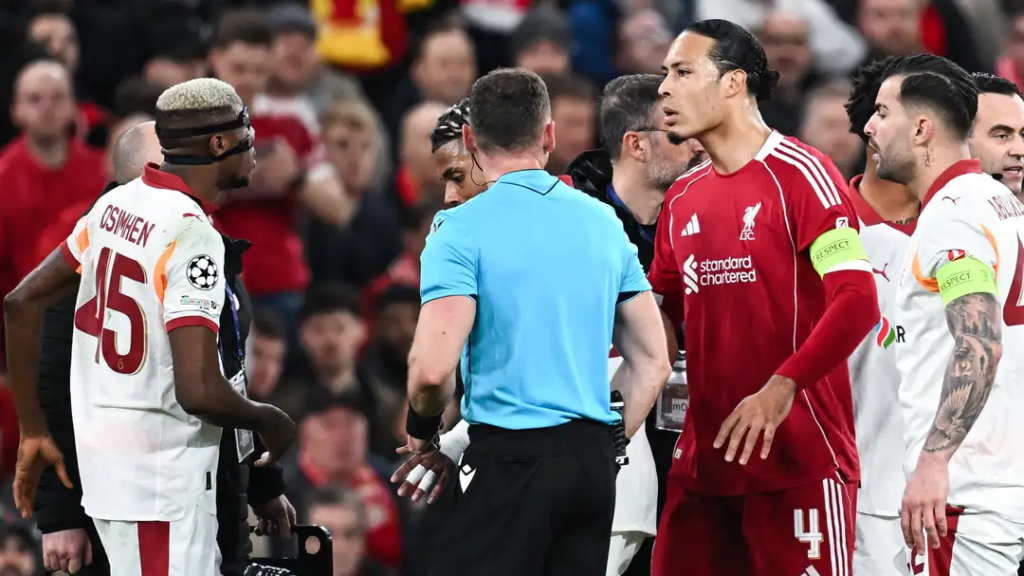
The defeat was compounded by growing injury concerns that further darkened the mood in the away dressing room.
Noa Lang suffered what Buruk described as a serious finger injury and required hospital evaluation immediately after the match. Osimhen himself finished the night in visible discomfort, nursing pain following repeated challenges.
In knockout football, physical wear often tells the hidden story behind results. For Galatasaray, the toll was clear — players exhausted, key figures hurting, and momentum slipping away with every passing minute.
It turned a difficult night into a damaging one.
Honesty Amid Disappointment
Despite his anger toward the referee, Buruk did not hide from his team’s shortcomings. Once emotions settled, his assessment became notably self-critical.
“Nothing went right,” he admitted. “Our decisions during the match were wrong. You can lose a game, but our performance was not enough to deserve victory.”
It was a rare moment of dual honesty: frustration with officiating combined with acceptance of footballing reality.
Liverpool created more chances, controlled transitions, and exposed defensive gaps repeatedly. Galatasaray’s goalkeeper Ugurcan Çakır produced several impressive saves to prevent an even heavier defeat, yet the defensive structure in front of him struggled to cope with Liverpool’s movement and speed.
Buruk acknowledged the gulf in experience as well. Many of his players were appearing in the Champions League round of 16 for the first time — a stage where small mistakes are magnified and hesitation is punished instantly.
The learning curve was steep, and Anfield proved an unforgiving classroom.
Apology to the Fans — and a Promise for the Future
Perhaps the most telling moment of Buruk’s press conference came not during his criticism, but during his apology.
Galatasaray supporters had travelled in large numbers, filling their section with colour and belief despite the daunting setting. The team had given them hope after the first leg, and Buruk felt the responsibility of failing to carry that dream further.
“We gave our fans hope,” he said. “But we couldn’t follow through.”
He praised his players’ effort while acknowledging their inexperience, framing the defeat as part of a longer journey rather than a final verdict on the squad’s potential.
The tone shifted from anger to reflection — the reaction of a coach trying to protect belief while confronting reality.
Liverpool’s Statement Performance
Lost slightly amid the controversy was just how clinical Liverpool were.
Their performance combined tactical discipline with attacking ruthlessness. Every turnover became an opportunity, every defensive lapse a potential goal. The Premier League side demonstrated exactly why European experience remains such a decisive factor in knockout competitions.
They did not simply win the match; they controlled its emotional tempo from start to finish.
For Galatasaray, the difference lay not only in quality but familiarity with pressure at this level.
Focus Returns to Domestic Ambitions
With European hopes ended, Galatasaray must now refocus quickly on domestic objectives.
The Istanbul giants remain top of the Süper Lig table, holding a four-point advantage over fierce rivals Fenerbahçe. Their league form — four wins in the last five matches — suggests stability despite continental disappointment.
Buruk’s immediate challenge will be psychological recovery. European exits can linger, especially heavy ones, but title races demand short memories.
A crucial fixture against Trabzonspor awaits in early April, offering an opportunity to reset momentum and remind supporters that the season still holds major rewards.
Lessons From a Painful European Night
Champions League campaigns often reveal more about a team than victories do. For Galatasaray, this defeat exposed both progress and limitations.
They proved capable of competing, brave enough to dream, yet still developing the experience required to survive elite European environments. Buruk’s passionate reaction reflected not just anger, but expectation — a sign that Galatasaray now believe they belong at this level.
Whether his criticism of the referee will spark debate across Europe remains to be seen. What is certain, however, is that the night at Anfield will linger as a turning point.
Sometimes growth begins with frustration.
And sometimes, as Okan Buruk discovered under the Anfield lights, football’s harshest evenings carry the lessons that shape what comes next.


There are no comments yet. Be the first to comment!