













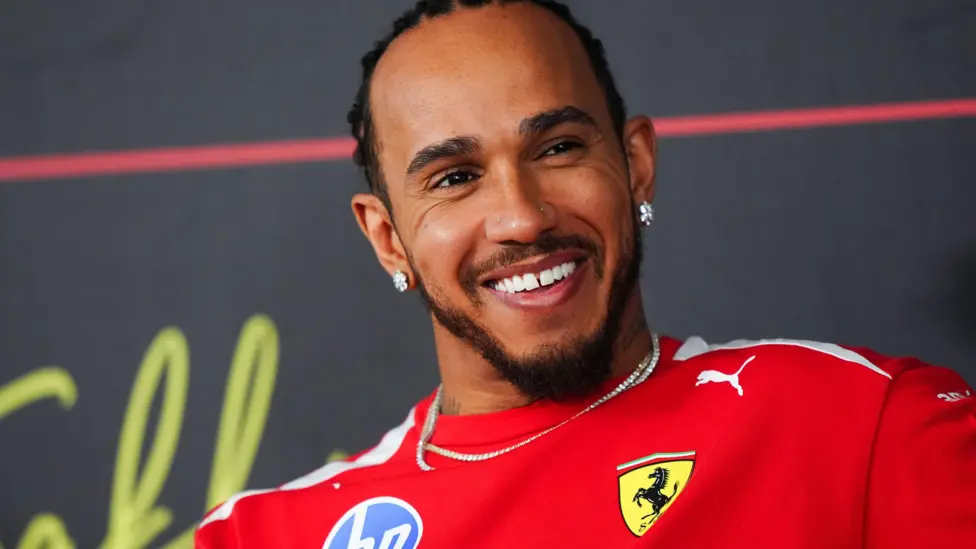
High Hopes for Hamilton and Ferrari? Inside the Big Questions Ahead of the 2026 Formula 1 Season
Formula 1 stands on the edge of one of its most fascinating resets in decades. The 2026 Formula 1 season arrives not just as another campaign, but as the beginning of a new technical era — one shaped by sweeping regulation changes that will redefine how cars look, sound, and race.
New chassis concepts, revised tyres, sustainable fuel requirements, and an entirely reworked power-unit philosophy mean even seasoned followers will need to learn fresh terminology. Phrases like overtake mode, boost mode, and active aerodynamics are no longer experimental ideas; they are central to how races will unfold.
Amid all this uncertainty, one storyline dominates conversations across paddocks and grandstands alike: should fans have high hopes for Lewis Hamilton and Ferrari?
With the season-opening Australian Grand Prix looming in Melbourne, optimism mixes with caution — and perhaps a touch of nostalgia — as Formula 1 prepares to discover whether one of the sport’s greatest drivers can write one final championship chapter.
High Hopes for Hamilton and Ferrari — Promise or Pressure?
The pairing of Lewis Hamilton and Scuderia Ferrari was always destined to carry enormous emotional weight. Seven world titles, unmatched experience, and the mystique of Formula 1’s most iconic team — on paper, it feels like destiny waiting to happen.
Reality, however, is rarely that simple.
Testing in Bahrain offered cautious encouragement. Across six days of running, rival teams quietly suggested that Ferrari — alongside Mercedes — appeared among the strongest contenders heading into Melbourne. Long-run pace looked stable, tyre degradation manageable, and the car showed balance across varying fuel loads.
Yet pre-season testing has fooled observers before.
Ferrari team principal Frédéric Vasseur has repeatedly stressed that the opening race will not define the championship. Development under the new regulations is expected to be aggressive, meaning performance rankings could shift dramatically throughout the year.
Some interpret that as realism. Others see it as an attempt to ease expectations surrounding Hamilton’s arrival.
Because ultimately, Ferrari’s competitiveness and Hamilton’s form are separate questions — even if they are inseparably linked in outcome.
Can Lewis Hamilton Still Fight for an Eighth Title?

The ‘rare combination’ behind Britain’s newest F1 driver
Hamilton enters the 2026 season at 41 years old, a statistic impossible to ignore in a sport defined by razor-sharp reactions and relentless physical demands.
His final seasons with Mercedes and his first campaign at Ferrari were, by his own standards, underwhelming. Moments of brilliance appeared, but consistency — once his defining trait — occasionally faded. Public frustration surfaced in interviews, hinting at a driver searching for rhythm rather than dictating it.
Earlier this year, Hamilton acknowledged that struggle openly, admitting he had needed to mentally “reset.” It was a rare glimpse into the psychological toll of competing at the highest level for nearly two decades.
The key question now is not whether Hamilton still possesses speed — few doubt that. Instead, it is whether he can sustain elite performance across an entire season while battling younger rivals like reigning champion Lando Norris.
Equally intriguing is the internal Ferrari dynamic. Charles Leclerc remains deeply embedded within the team’s long-term vision. If Ferrari delivers a title-worthy car, Hamilton must not only defeat Red Bull and McLaren — he must also outperform a teammate entering his prime.
History shows that intra-team battles often define championships more than external rivals.
Regulation Revolution: Why 2026 Could Shuffle the Grid
The scale of technical change for 2026 cannot be overstated. Formula 1 has effectively rewritten its engineering rulebook.
Power units now rely more heavily on electrical deployment, making energy management central to racecraft. Drivers must carefully balance deployment strategies, deciding when to attack and when to conserve.
Two new tactical tools highlight this shift:
-
Boost mode, available at any time, allows drivers to deploy extra electrical energy from their standard allocation.
-
Overtake mode, triggered when a driver runs within one second of a rival at designated detection points, permits additional energy recovery — enabling longer bursts of maximum power.
The distinction may sound subtle, but strategically it transforms overtaking into a calculated chess match rather than a single-button advantage.
Meanwhile, active aerodynamic elements introduce another variable. Wings can adjust to reduce drag on straights, although race control retains authority to limit these systems in wet conditions to maintain safety.
The result? Drivers must think more like endurance racers, constantly managing energy states rather than relying solely on mechanical grip.
The Competitive Picture: Who Starts Ahead?
Despite hopes that regulation changes might compress the field, early indications suggest a familiar hierarchy.
McLaren enter the season as benchmark contenders after Norris secured last year’s championship. Red Bull Racing remain formidable, while Mercedes appear rejuvenated after several transitional seasons.
Ferrari’s pace places them firmly within this leading quartet — but a noticeable gap still separates the top teams from the midfield.
Budget caps and aerodynamic testing limits were introduced to close competitive differences, and last season hinted at progress. Yet the accumulated expertise of established teams continues to provide a structural advantage that newer challengers struggle to overcome.
In Formula 1, knowledge compounds over time.
Rising Stars and Unusual Beginnings
One charming subplot of the new season involves rookie talent adapting not only to Formula 1 but sometimes to everyday driving itself.
British teenager Arvid Lindblad enters the grid as the youngest British F1 driver in history — without yet passing his standard road driving test. While surprising at first glance, it mirrors past cases such as Max Verstappen, who debuted in Formula 1 before legally driving on public roads.
It serves as a reminder that Formula 1 drivers develop extraordinary skills in highly specialised environments far removed from normal motoring experience.
Safety, Speed and the FIA’s Balancing Act
The heavier reliance on electrical power introduces new safety concerns. Significant speed differences could arise when one car deploys full energy while another enters recovery mode.
To prevent sudden deceleration risks, the FIA has implemented gradual energy ramp-down systems rather than abrupt cut-offs. These technical safeguards aim to reduce collision risks while preserving strategic variety.
It is another example of Formula 1’s constant balancing act between innovation and safety — pushing boundaries without compromising driver protection.
So, Should We Really Have High Hopes for Hamilton and Ferrari?
The honest answer is both yes and maybe.
Ferrari appear competitive enough to fight at the front. Hamilton remains motivated, refreshed, and surrounded by a team eager to return to championship glory. The ingredients for success undeniably exist.
But Formula 1 rarely rewards sentiment.
Age, teammate rivalry, relentless competition, and the unpredictability of a new regulation era all stand between Hamilton and an eighth world title. The opening races will offer clues, not conclusions.
Perhaps that uncertainty is exactly what makes this season so compelling.
For the first time in years, Formula 1 feels genuinely open-ended — a championship where legacy, innovation, and reinvention collide. Whether Hamilton and Ferrari can turn hope into history will unfold not in headlines or testing timesheets, but across months of relentless racing beginning under the Melbourne lights.


There are no comments yet. Be the first to comment!