






































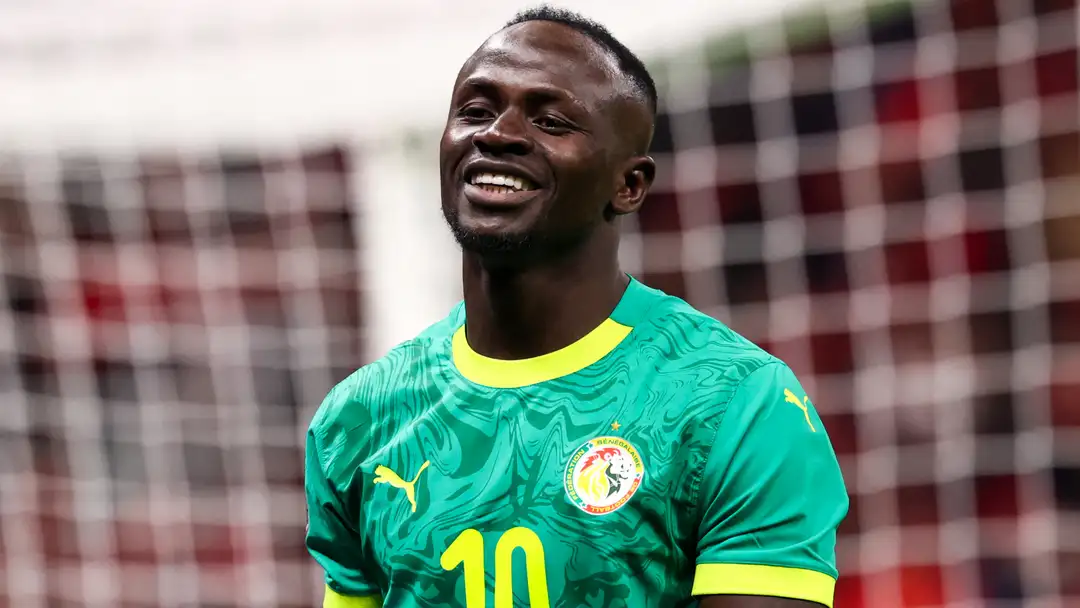
“It’s Not Fair to Stop the Game”: How Sadio Mane Leadership Defined a Chaotic AFCON Final for Senegal
Few Africa Cup of Nations finals have carried as much drama, controversy and raw emotion as Senegal vs Morocco in this unforgettable AFCON showpiece. Amid the noise, fury and confusion sparked by a contentious penalty decision, one figure stood firm, calm and resolute. Sadio Mane did not score the decisive goal, nor did he make the final tackle, but his intervention may have been the defining moment of Senegal’s triumph.
As Senegal edged past hosts Morocco in an AFCON final that will be debated for years, Mane’s decision to prevent his team-mates from walking off the pitch revealed why he remains one of African football’s most respected leaders.
Senegal vs Morocco: Chaos, Controversy and a Penalty That Changed Everything
The final had all the ingredients of a classic even before the flashpoint. A packed stadium, a roaring home crowd in Morocco, and two of Africa’s most complete sides battling for continental supremacy. But midway through the second half, the match took a dramatic turn.
Morocco were awarded a penalty following what many felt was a soft foul on Brahim Diaz. The decision instantly enraged the Senegalese bench and players, who surrounded the referee in disbelief. Tempers flared, protests escalated, and within moments several Senegal players began heading towards the tunnel.
Head coach Pape Thiaw, caught up in the heat of the moment, also left the technical area. For a brief period, it looked as though the AFCON final might collapse into farce, with the possibility of a walk-off threatening to overshadow the occasion entirely.
It was at this point that Sadio Mane stepped forward.
“It’s Not Fair to Stop the Game”: Why Sadio Mane Intervened
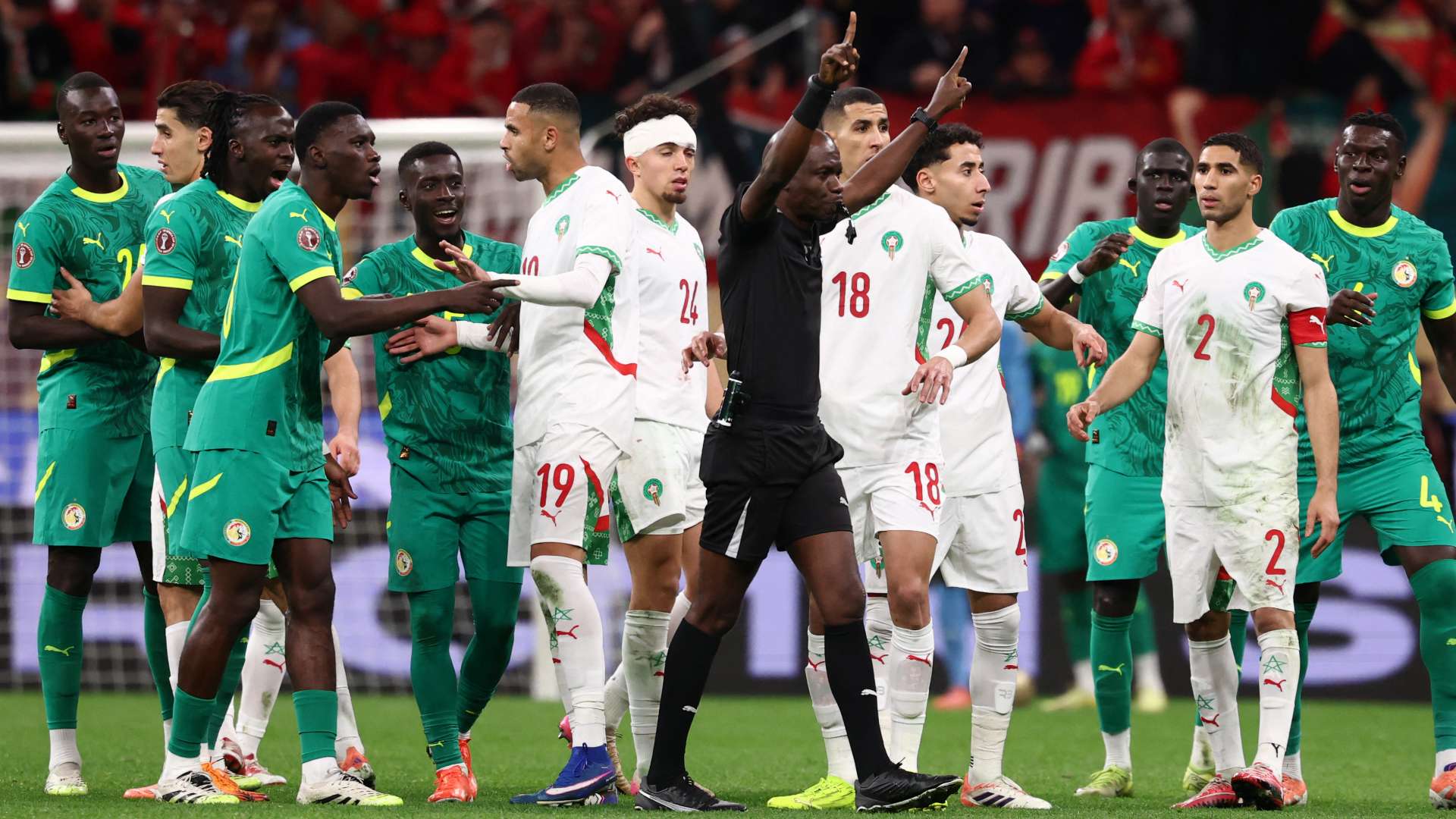
Senegal Morocco Africa Cup of Nations 2026
While others remonstrated or left the pitch, Mane stayed. The former Liverpool forward, now playing alongside Cristiano Ronaldo at Al-Nassr, spoke calmly with match officials before turning his attention to his own team.
One by one, he beckoned his team-mates back from the tunnel. Slowly, reluctantly, Senegal regrouped and returned to the field, allowing the game to resume.
After lifting Senegal’s second AFCON title as captain, Mane explained his thinking with a clarity that reflected his maturity.
“When they decided to go out and not play, I stayed and asked some people, ‘What do you think about this? Is it a good idea or not?’” Mane said.
“Then I decided to go and bring everyone back to the pitch. I think it is the best thing to do. Because this is just football.”
Mane acknowledged that referees make mistakes, particularly in high-pressure environments, but insisted that walking off would have caused far greater damage.
“People around the world are watching,” he added. “It could be a penalty or not, but that is not the most important thing. What matters is respecting the game. It is not fair to stop a match like this.”
From Fury to Focus: How Senegal Regained Control
Football has a habit of delivering poetic twists, and this was no exception. After a lengthy delay, play resumed and Brahim Diaz stepped up to take the penalty that had caused such outrage.
Incredibly, the Real Madrid forward attempted a Panenka straight down the middle, only to see Edouard Mendy stand firm and gather the ball comfortably. Relief flooded through the Senegal side. Anger turned into belief.
Deep into stoppage time, Pape Gueye struck the decisive blow, sealing a dramatic victory and sending Senegal into ecstasy. What might have been remembered as a controversial abandonment instead became a story of resilience, discipline and leadership.
Leadership Under Pressure: Mane Sets the Standard
Speaking after the match, Mane expanded on why he felt it was vital to protect the image of African football on such a global stage.
“Football is something special, the world was watching, the world loves football,” he said. “Football is a pleasure, so we have to give a good image for football.
“I think it would be crazy to not play this game because the referee gave a penalty and we go out of the game. That would be the worst thing, especially in African football. I’d rather lose than see this kind of thing happen to our football.”
Those words resonated far beyond the final whistle. In a tournament often scrutinised by outsiders, Mane’s stance was widely praised as an example of integrity and responsibility.
Pape Thiaw Admits Regret After AFCON Final Incident
Senegal head coach Pape Thiaw was candid in his post-match reflections, admitting that emotions had briefly got the better of him.
“I didn’t appreciate at all that I told my players to leave the field,” Thiaw said. “I apologise for football. After reflection, I had them come back. Sometimes, you can react in the heat of the moment.
“But we accept the referee’s mistakes. We offer our apologies to football.”
His comments underlined just how volatile the situation had become — and how crucial Mane’s intervention was in restoring calm.
Praise from Morocco and Beyond
Even among Moroccan observers, Mane’s behaviour earned admiration. Former Morocco international Hassan Kachloul, working as a pundit for Channel 4, singled out the Senegal captain for special praise.
“What I like more than anything, the only player from the Senegalese team was Sadio Mane,” Kachloul said. “That shows the great man he is. He went back to the dressing room and brought those players back. Mane was the man to bring them back on.”
In a fiercely contested final between rivals, that respect spoke volumes.
Will Sadio Mane Play at AFCON Again?
At 33 years old and with 126 international caps, Mane’s legacy with Senegal is already secure. After the final, he revealed that this AFCON would be his last.
“I am so happy, but as I have said, for me, as far as the AFCON is concerned, it’s over here,” Mane said. “I will stay with the team until the World Cup, but after that, it’s over.”
Those words prompted an emotional response from Thiaw, who made it clear the nation hopes Mane will reconsider.
“The country is not in agreement, and I am not in agreement,” Thiaw said. “He represents Africa, the world. He belongs to the people of Senegal, and they want to see him carry on.
“He gave his life to win the first AFCON, to get the first star. If I had to sign a paper to allow this player to leave, I would say ‘no’.”
Legacy Beyond the Trophy
Senegal now turn their attention to the 2026 World Cup, where they have been drawn in Group I alongside France, Erling Haaland’s Norway and the winner of an inter-confederation play-off. Whether Mane features beyond that remains uncertain.
But whatever the future holds, this AFCON final will stand as one of the clearest expressions of his character. In a moment when chaos threatened to define the night, Sadio Mane chose principle over protest.
In doing so, he didn’t just help Senegal win a trophy — he protected the spirit of the game itself.


There are no comments yet. Be the first to comment!