

































































































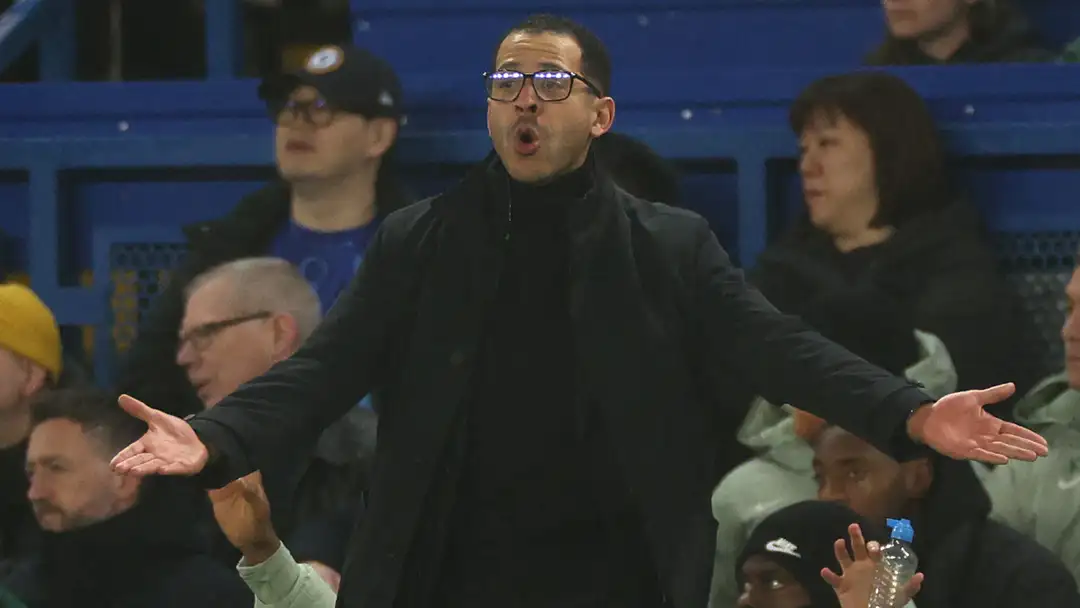
Rosenior Rages as Leeds Handball Call Denied in Chelsea Frustrating Home Draw
There are evenings in a Premier League season that linger long after the final whistle. Not because of brilliance alone, but because of the chaos, the controversy, and the nagging sense of opportunity lost. Chelsea’s 2-2 draw with Leeds United at Stamford Bridge had all of that rolled into one breathless, maddening spell.
Liam Rosenior did not attempt to mask his anger afterward. The Chelsea head coach was animated, visibly irritated, and pointed in his assessment of the moment that turned the match on its head. At the centre of his frustration? A Leeds handball call that never came.
“It affects my players,” Rosenior said bluntly. And in truth, it did.
“It Affects My Players” – Rosenior Furious Over Leeds Handball Call
For more than an hour, Chelsea had looked composed, assured, and in control. Joao Pedro’s delicate chipped finish set the tone, a goal crafted with patience and executed with flair. Cole Palmer’s penalty doubled the advantage and Stamford Bridge began to relax into what felt like a routine fifth consecutive league win.
Leeds, for long stretches, were chasing shadows.
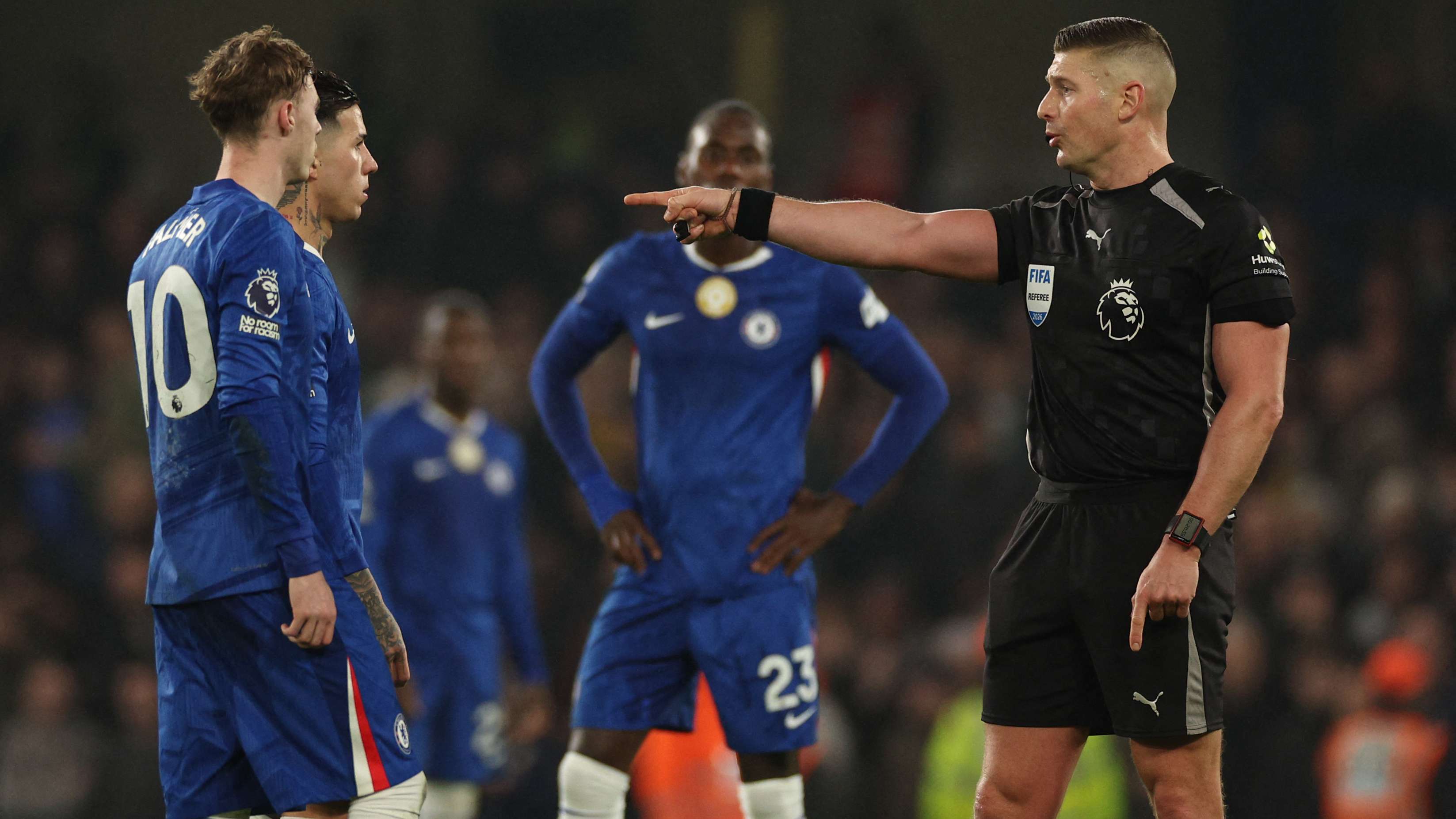
But football has a cruel habit of turning on the smallest hinge. In this case, it was a split-second incident in the build-up to Leeds’ equaliser. Jayden Bogle appeared to handle the ball in the phase of play that preceded Noah Okafor’s levelling goal. Chelsea players stopped. Arms went up. There was an expectation — almost an assumption — that the referee’s whistle would pierce the air.
It never did.
That hesitation, that collective pause, proved costly. Leeds played on. Chelsea’s defensive line, caught between protest and reaction, failed to clear their lines. Okafor pounced. Stamford Bridge fell silent, then furious.
Rosenior did not dance around the issue in his post-match press conference.
“The lad handballs it. It affects my players in that moment. They think it’s a handball, they switch off, we don’t clear the ball and they score,” he said, clearly still simmering.
Yet, in the same breath, he acknowledged an uncomfortable truth: elite teams must play to the whistle.
“For 25 minutes it was wave after wave of attack. We have to make sure we take care of moments and be professional.”
It was both a defence and an indictment — of the officiating and of his own players’ reaction.
Chelsea’s Dominance Undone by Five Minutes of Chaos
What made the collapse particularly galling for Chelsea was the sheer control they had exerted prior to the storm.
Until the 66th minute, Leeds had barely registered as an attacking threat. Chelsea’s pressing was sharp, their midfield balance intelligent, their transitions crisp. Moises Caicedo dictated tempo with authority, Palmer drifted intelligently between lines, and Joao Pedro stretched the Leeds backline with clever movement.
It was, in many respects, Chelsea at their most convincing this season.
Then came the unraveling.
A clumsy challenge from Caicedo handed Leeds a lifeline — a penalty converted coolly by Lukas Nmecha. That goal, while frustrating, still felt manageable. A two-goal cushion had been reduced, but control remained within reach.
What followed was harder to explain.
Within minutes, Leeds were level. The controversial handball incident injected uncertainty. Chelsea’s defensive clarity evaporated. Decisions, once measured and confident, became rushed and reactive.
“The ridiculous thing for us,” Rosenior admitted, “is that they’ve managed to score two goals in a five-minute period, when for the other 90 minutes of the game we were by far the better team.”
His frustration was understandable. Leeds had done little to suggest they would take anything from the match. Yet football rarely rewards dominance alone.
Rosenior was careful not to single out Caicedo unfairly. “Moises Caicedo is a magnificent player,” he said. “He’s been top for me.” But he also conceded that a chain of poor decisions — in pressing structure, in defensive positioning — had opened the door.
“In that moment we give away a penalty when, genuinely, I can’t remember Leeds having a shot or a moment in the game.”
That is the cruelty. One lapse can outweigh 60 minutes of superiority.
A Bitter Pill in the Race for the Top Four
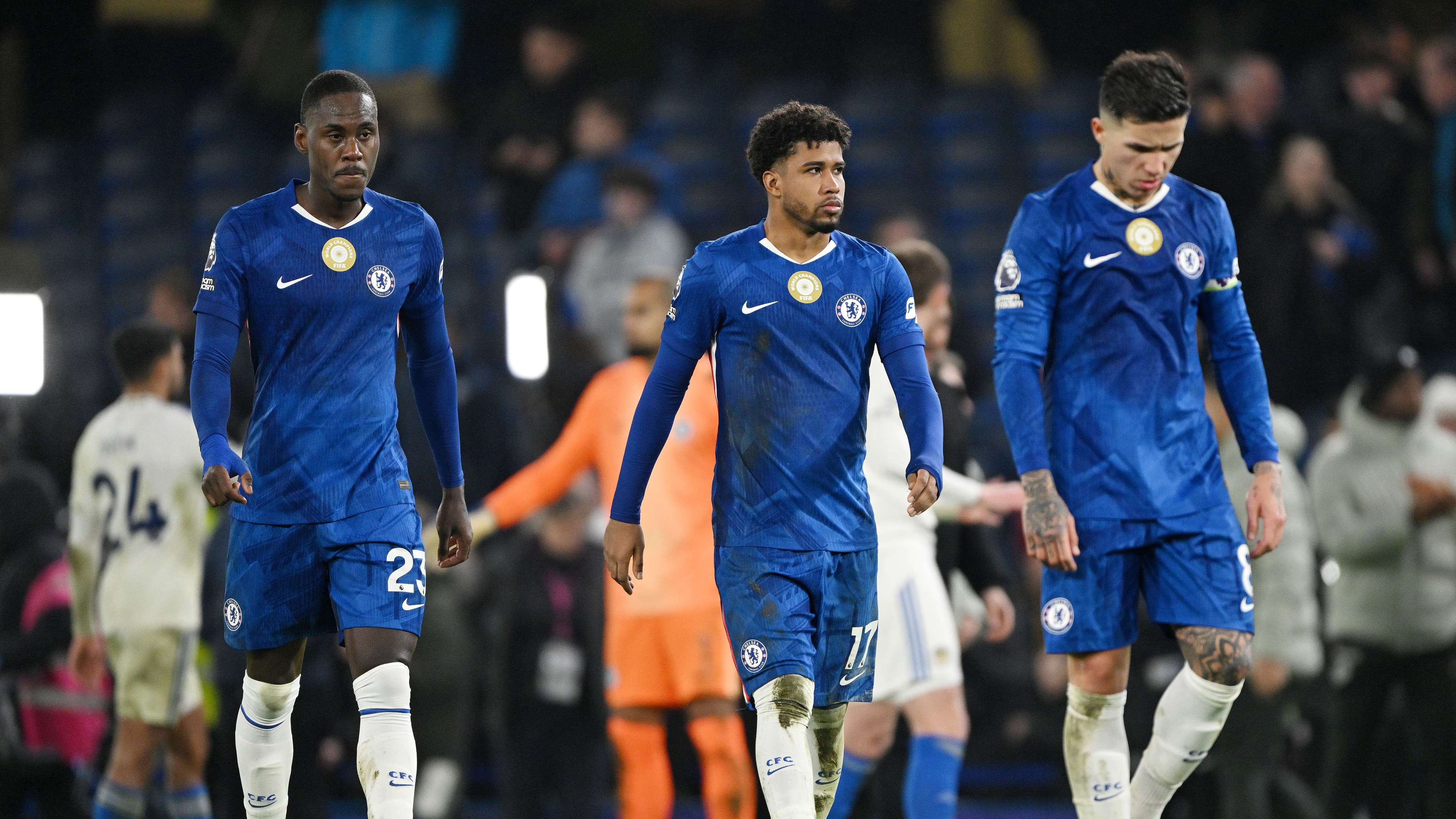
If the draw felt damaging emotionally, its impact in the standings made it even harsher.
With Manchester United also dropping points in a 1-1 draw at West Ham, Chelsea had a golden opportunity to leapfrog their rivals into fourth place. Victory would have shifted momentum decisively in the race for Champions League qualification.
Instead, they remain fifth — one point adrift — knowing the door was open and failed to walk through it.
There was still time, even after the equaliser, to snatch the narrative back. Deep into stoppage time, Palmer found himself staring at an open net from close range after being teed up perfectly by Caicedo. It was the sort of chance he converts instinctively nine times out of ten.
This time, he blazed over.
Stamford Bridge groaned in unison. Rosenior’s hands found his head. It was that kind of night.
“It is a bitter pill to swallow,” the manager admitted. “Some of our football in possession, our press and our energy was everything I wanted to see.”
And that is perhaps what made it sting most. Chelsea were not poor. They were not second best. They were undone by five chaotic minutes — part officiating controversy, part defensive lapse, part emotional overreaction.
Rosenior, Leeds and the Fine Margins of the Premier League
Matches like this underline the unforgiving nature of the Premier League. Fine margins separate control from chaos, comfort from crisis.
For Rosenior, the Leeds handball call will linger. Not simply because of the decision itself, but because of its psychological ripple. Elite players are trained to maintain focus regardless of circumstance, yet instinct sometimes overrides discipline. A perceived injustice can momentarily cloud judgement.
That split second cost Chelsea two points.
Still, there were positives. The fluidity in attack. The cohesion in pressing. The authority shown for long spells against a stubborn opponent. These are foundations Rosenior can build upon.
But he will demand sharper game management. Greater emotional control. A reminder that in this league, nothing is awarded without resilience.
The table remains tight. The margins remain thin. And as the season enters its decisive phase, Chelsea cannot afford another five-minute lapse — controversial handball call or not.
For now, Stamford Bridge is left replaying the moment in its mind: the raised arms, the missing whistle, the ball in the net.
And a manager insisting, with visible frustration, that it affects his players — even if, ultimately, they must learn not to let it.


There are no comments yet. Be the first to comment!