


























































































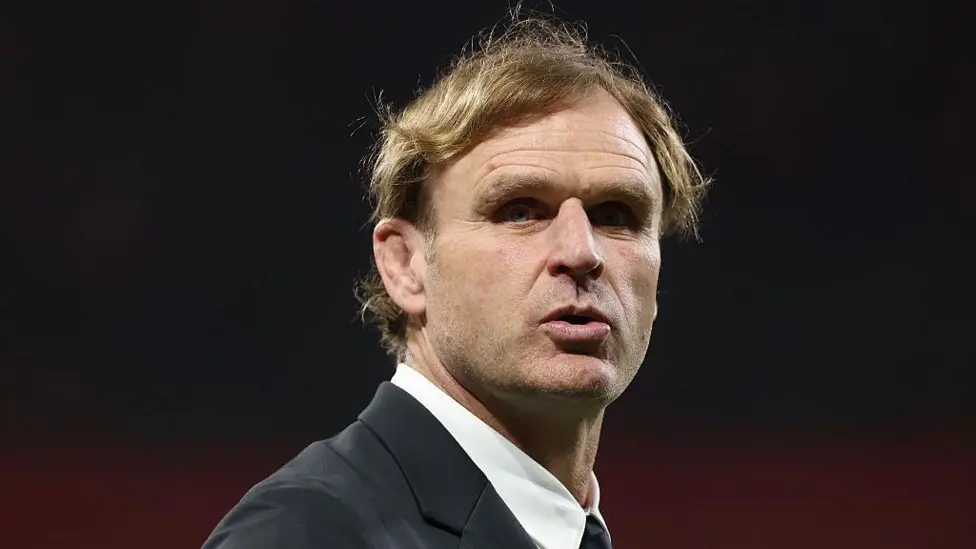
All Blacks in Turmoil: New Zealand Sack Scott Robertson as Rugby World Reels
Few coaching decisions shake the foundations of world rugby quite like this. New Zealand Rugby’s decision to sack Scott Robertson after just two years in charge of the All Blacks has sent shockwaves through the sport, raising uncomfortable questions about standards, patience, and the direction of the game’s most iconic national team.
Robertson, a man long viewed as the natural heir to the All Blacks throne, leaves the role “gutted” but defiant, insisting his departure is in the best interests of the team. For a coach once considered untouchable in New Zealand rugby circles, the fall has been as abrupt as it has been dramatic.
New Zealand Sack Scott Robertson After Mixed Two-Year Spell
Scott Robertson was appointed All Blacks head coach in March 2023, replacing Ian Foster after the Rugby World Cup. Even the timing of that announcement was controversial, coming months before the tournament and arguably undermining Foster, who would go on to take New Zealand within a whisker of lifting the Webb Ellis Cup.
At 51, Robertson arrived with a formidable reputation. His success with the Canterbury Crusaders, where he built a dynasty based on relentless standards and winning habits, made him the standout candidate. Many believed it was not a question of if Robertson would coach the All Blacks, but when.
On paper, his record is far from disastrous. Robertson led New Zealand to 10 wins from 13 Tests in the 2025 season, a return most international coaches would envy. But in the unforgiving world of All Blacks rugby, numbers rarely tell the full story.
Heavy Defeats and Growing Pressure on the All Blacks
The pressure on Robertson intensified following a damaging sequence of results that cut deep into New Zealand’s rugby psyche. An away defeat to Argentina raised eyebrows, but it was the Rugby Championship humiliation at home to South Africa that truly rang alarm bells.
The 43-10 loss in Wellington was the heaviest defeat the All Blacks have ever suffered on home soil. For a team built on the idea of Eden Park and Wellington as fortresses, the scoreline was more than a loss — it was a statement.
That defeat, combined with a rare loss to England in November, only the ninth in a 120-year rivalry, painted a picture of a side struggling to assert its authority. Steve Borthwick’s England ran out 33-19 winners in the Quilter Nations Series, another blow to Robertson’s credibility.
Behind the scenes, things were no calmer. Reports of tension between senior players and the coaching staff began to surface, suggesting a disconnect within the camp. An internal review followed, and the conclusion was stark: change was needed.
“Gutted” Robertson Breaks Silence After Sacking
In a dignified statement following his dismissal, Robertson did not hide his disappointment.
“Coaching the All Blacks has been the honour of my life,” he said. “I am gutted by the outcome, but I believe this is in the best interests of the team.”
Robertson was keen to stress the work done beneath the surface. He pointed to the introduction of a new generation of players, improved squad depth, and foundations laid for the future.
“We have brought through a talented group of young players and strengthened the depth across the squad,” he added. “I am incredibly proud of what this team has achieved and the progress we have made.”
Those words may yet prove prophetic. History has shown that All Blacks coaches are often judged more kindly in hindsight, particularly when their successors benefit from groundwork already laid.
New Zealand Rugby Defend Decision to Sack Robertson
New Zealand Rugby chair David Kirk thanked Robertson for his contribution, emphasising that the decision was not taken lightly.
“As always, Scott has put the All Blacks first,” Kirk said. “We respect that he has done the hard but right thing in agreeing to depart.”
Kirk highlighted the timing of the decision, describing the midpoint of the Rugby World Cup cycle as the right moment for an “extensive look” at progress both on and off the field. With a packed and demanding international calendar looming in 2026, NZR clearly felt decisive action was required.
The schedule ahead is relentless. New Zealand host France, Italy and Ireland in July, before embarking on an eight-match tour of South Africa in August and September. The Bledisloe Cup against Australia follows in October, then a challenging European tour in November featuring Scotland, Wales and England.
In that context, uncertainty over leadership was viewed as a risk too great to ignore.
Why This Sacking Sends Shockwaves Through Rugby
Robertson’s dismissal halfway through his contract — which was due to run until the 2027 World Cup in Australia — is highly unusual in New Zealand rugby. Stability has long been a hallmark of the All Blacks, with coaches typically afforded time even during periods of transition.
But this All Blacks side is in flux. Several senior figures retired or moved overseas after the 2023 World Cup, and concerns persist that New Zealand’s domestic system is no longer producing elite players at the rate it once did.
Robertson inherited a squad in transition and was tasked with evolving the All Blacks’ style while maintaining their aura. The problem, as critics see it, is that he never truly stamped his identity on the team.
Results were inconsistent, performances often lacked clarity, and turbulence within the coaching setup only added to the sense of drift. Player feedback, reportedly frank and critical, ultimately made Robertson’s position untenable.
Who Next After New Zealand Sack Scott Robertson?
With the search for a new head coach already under way, speculation is rife. There will be no shortage of candidates keen to take on one of the most prestigious roles in world sport, but one name stands above the rest.
Jamie Joseph, currently in charge of the Highlanders, is widely viewed as the leading contender. He is deeply embedded in the New Zealand system and brings international experience both as a player and a coach. His previous success with Japan has only enhanced his reputation as a calm, adaptable leader.
Whoever steps in will inherit a team under intense scrutiny, expected not just to win, but to dominate.
An End, or Just Another Chapter?
For Scott Robertson, this may feel like a brutal ending. For the All Blacks, it is another moment of self-examination in an era where excellence is no longer guaranteed.
New Zealand rugby has made its move. Whether it proves to be the right one will only be known in time. What is certain is that the sacking of Scott Robertson marks a significant crossroads — not just for the All Blacks, but for the entire international rugby landscape.


There are no comments yet. Be the first to comment!