



UEFA World Cup Play-offs Explained: Fixtures, Format and the Final Road to the 2026 World Cup
UEFA World Cup Play-offs: How European Qualification Reaches Its Dramatic Finale
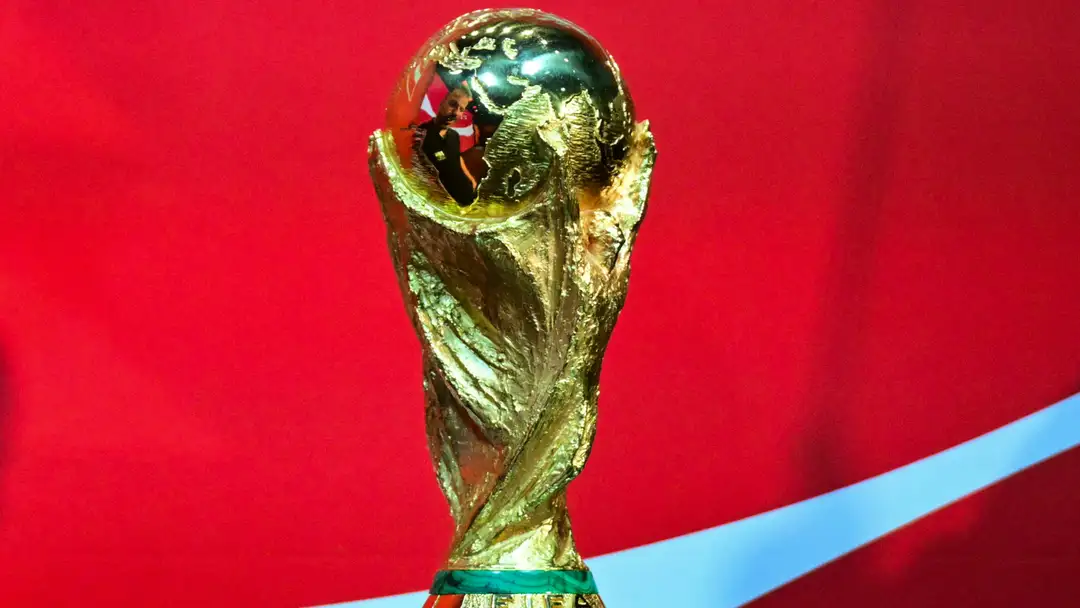
The long road to the 2026 World Cup is almost complete for Europe, but as always, qualification refuses to end quietly. While several nations have already secured their tickets to Canada, Mexico and the United States, the UEFA World Cup play-offs now take centre stage — a high-pressure, unforgiving mini-tournament where dreams are either realised or shattered in the space of just a few days.
In five days’ time, the final European lineup for the expanded World Cup will be confirmed. Sixteen teams remain in contention, but only four will survive. For some, it is a second chance. For others, it is survival football at its purest: two matches, no margin for error, and everything on the line.
Among those fighting to stay alive is Italy, a nation painfully familiar with the dangers of this stage after recent qualification heartbreaks. This time, however, the stakes feel even greater as Europe adapts to a new qualification format shaped by the tournament’s expansion.
Why the UEFA World Cup Play-offs Matter More Than Ever
The 2026 World Cup marks a historic change. With the tournament expanding to 48 teams, UEFA’s allocation has increased from 13 places to 16. On paper, that sounds like easier qualification for European nations. In reality, it has simply shifted where the pressure lies.
The main qualifying campaign was divided into 12 groups. Each group winner earned automatic qualification — the cleanest and safest route to the World Cup. Everyone else, regardless of reputation or history, was forced to look toward the play-offs.
That is where tension escalates.
The UEFA World Cup play-offs serve as the final gateway, distributing the remaining four European spots through a knockout system designed to reward resilience rather than consistency. Teams that finished second in their qualifying groups must now prove they can handle elimination football, while several Nations League sides have been handed unexpected lifelines.
The result is a fascinating mix: established powers, emerging nations, and dangerous outsiders all squeezed into the same high-stakes bracket.
How the UEFA World Cup Play-offs Work
The structure is simple in theory but ruthless in execution.
Sixteen teams enter the play-offs, made up of:
- The 12 runners-up from the European qualifying groups
- Four additional teams selected via the UEFA Nations League rankings — typically group winners or the highest-ranked sides not already qualified
These teams are then divided into four separate paths — Path A, Path B, Path C and Path D. Each path contains four nations competing in what essentially becomes a mini knockout tournament.
The draw is carefully organised using FIFA rankings and qualification routes to balance competitiveness. Teams are placed into different pots, separating higher-ranked sides from lower-ranked or Nations League qualifiers.
From there, everything becomes brutally straightforward.
Each path consists of:
- One semi-final
- One final
Win twice, and you are going to the World Cup. Lose once, and the journey ends immediately.
There are no second legs. No safety nets. No redemption matches.
Semi-finals are played on 26 March, followed by finals just five days later on 31 March — an intense schedule that tests squad depth, mentality and tactical flexibility as much as pure quality.
Where the Winners Will Go: World Cup Group Destinations
Unlike previous qualification campaigns, the reward is already mapped out. Each play-off path winner will immediately know their World Cup destination.
- Path A winner joins Group B alongside Canada, Qatar and Switzerland
- Path B winner enters Group F with the Netherlands, Japan and Tunisia
- Path C winner lands in Group D featuring the United States, Paraguay and Australia
- Path D winner completes Group A with Mexico, South Africa and South Korea
This clarity adds another layer of intrigue. Teams are not only fighting to qualify but already imagining the challenges waiting on the global stage.
UEFA World Cup Play-offs Semi-Final Fixtures (26 March)
The semi-finals promise contrasting styles, emotional narratives and plenty of unpredictability. Every tie carries its own storyline.
Path A: Italy Under Pressure Again
Italy vs Northern Ireland — Bergamo
Few fixtures carry more psychological weight than Italy in a play-off. The four-time world champions know better than anyone how dangerous this stage can be. Playing at home offers an advantage, but Northern Ireland arrive with nothing to lose — often the most dangerous mindset in knockout football.
Wales vs Bosnia and Herzegovina — Cardiff
Cardiff will provide a fierce atmosphere as Wales aim to continue their recent resurgence. Bosnia and Herzegovina, however, possess enough experience and technical quality to turn this into one of the most evenly balanced clashes of the round.
Path B: Tactical Battles Await
Ukraine vs Sweden — Valencia
A neutral venue adds a unique dynamic to this encounter. Ukraine’s resilience meets Sweden’s structure in what promises to be a tactical chess match rather than an open spectacle.
Poland vs Albania — Warsaw
Poland will rely on home support and attacking efficiency, but Albania’s rapid development in recent years makes them far more than underdogs. Expect intensity and physicality from the opening whistle.
Path C: Emerging Nations Seek History
Turkey vs Romania
Two passionate football cultures collide in a fixture likely to be defined by emotion as much as strategy. Turkey’s attacking energy faces a Romanian side built on organisation and discipline.
Slovakia vs Kosovo
Perhaps the most unpredictable pairing of the play-offs. Both teams see this as a rare opportunity to reach the World Cup, meaning caution may quickly give way to ambition.
Path D: Experience Meets Opportunity
Denmark vs North Macedonia
Denmark enter as favourites thanks to consistency and tournament pedigree. North Macedonia, however, have built a reputation for upsetting expectations when pressure rises.
Czech Republic vs Republic of Ireland
Two traditional European competitors meet in what could become a classic knockout battle. Physical intensity, aerial duels and defensive discipline are likely to define this contest.
Why the UEFA World Cup Play-offs Are Football at Its Purest
Qualification campaigns reward consistency over months or even years. Play-offs reward something different entirely — nerve.
There is no time to recover from mistakes. One defensive lapse, one missed chance, or one moment of brilliance can determine whether a nation reaches the biggest sporting event on earth.
That is why the UEFA World Cup play-offs consistently produce unforgettable drama. Underdogs rise, favourites stumble, and heroes emerge unexpectedly.
For players, these matches often define careers. For supporters, they create memories that linger long after tournaments end.
And for Europe, they represent the final chapter before attention shifts fully toward the 2026 World Cup itself.
In just a matter of days, four nations will celebrate qualification, while twelve others will be left wondering how close they came.
That is the beauty — and cruelty — of the UEFA World Cup play-offs.


There are no comments yet. Be the first to comment!