







































UFC London Exposes Fighter Pay Debate as ‘Heartbreaking’ Reality Emerges Beneath the Spotlight
UFC London delivered its usual mix of noise, drama and raw violence inside the O2 Arena, but beyond the cheers and highlight-reel finishes, a deeper conversation quietly took centre stage. While fans arrived expecting knockouts and submission battles, many left discussing something far less glamorous — fighter pay.
The event once again highlighted a long-running issue within mixed martial arts: the growing divide between the sport’s global popularity and the financial rewards received by many of the athletes risking their bodies inside the cage. For fighters competing away from the main-event spotlight, the night served as both a career opportunity and a reminder of the economic reality underpinning the UFC machine.
Several standout performances came not from headline names, but from prelim fighters whose efforts arguably defined the evening. Their battles reignited debate around compensation in a sport widely considered one of the most physically demanding in the world.
‘Heartbreaking’ Fighter Pay Debate at UFC London Takes Focus Away from Results
Nathaniel Wood and Mason Jones may not have topped the billing, but their performances embodied everything fans claim to love about mixed martial arts — resilience, courage and relentless determination.
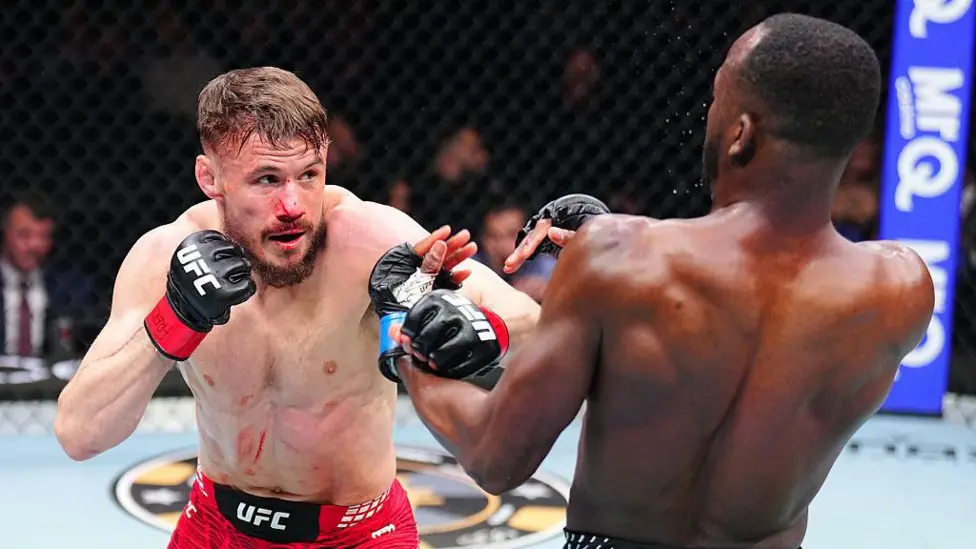
Wood once again defied expectations, grinding out an impressive victory over Losene Keita in a performance built on discipline and composure. Moments later, Mason Jones and Axel Sola delivered a chaotic, blood-soaked contest that many observers immediately labelled a fight-of-the-year contender.
By the final bell, both men were exhausted, drenched in sweat and blood, yet still exchanging strikes as if the outcome depended on sheer willpower alone. The crowd, which had occasionally struggled to find energy earlier in the evening, finally came alive.
Ironically, these were the fighters earning a fraction of the salaries commanded by headline stars.
Preliminary card athletes often receive limited promotion, less media exposure and significantly smaller purses despite delivering some of the most memorable moments of an event. The contrast has become increasingly difficult to ignore, particularly as combat sports continue to grow commercially.
For Wood, the issue became personal when news broke that boxer Conor Benn had secured a reported £11 million deal for a single fight under Zuffa Boxing — a promotion owned by UFC president Dana White.
The comparison struck a nerve.
After eight years competing inside the UFC, Wood admitted he felt “heartbroken” when confronted with the financial disparity.
“When you think I’ve been in the UFC for eight years and I’m not even on one percent of that,” he said candidly before the event. His tone was not bitter, but reflective — the words of an athlete fully aware of the system he operates within.
Why UFC Fighter Pay Remains a Growing Talking Point in Combat Sports
The debate surrounding UFC fighter pay is not new, but recent developments have amplified scrutiny. Industry estimates suggest UFC athletes collectively receive around 20 percent of event revenue, a figure significantly lower than boxing, where fighters can take home roughly 60 percent.
As boxing purses continue to climb, MMA fighters increasingly question why the fastest-growing combat sport has not produced comparable financial rewards across its roster.
Michael “Venom” Page added his voice to the discussion following his victory over fellow Briton Sam Patterson. Known for his calm demeanour and striking creativity, Page spoke passionately about the risks fighters accept every time they compete.
“I’ve followed sport my whole life,” he explained. “Cricket, football, basketball — but MMA is one of the toughest things you can do. Nobody else is trying to hurt you in quite the same way.”
His argument was not about diminishing other sports, but highlighting the unique danger fighters face. Unlike team athletes, MMA competitors absorb direct physical damage as part of their profession — damage that can carry lifelong consequences.
Despite that reality, Page believes compensation still lags behind comparable professional sports.
“We’re getting paid,” he acknowledged, “but compared to other sports at the top level, nowhere near what we should.”
Dana White’s Response and the Business Perspective
UFC president Dana White has consistently defended the organisation’s pay structure, pointing to long-term growth and rising athlete earnings since the company’s early years.
In response to criticism surrounding the Benn deal, White argued that higher earnings anywhere in combat sports should be viewed positively rather than as a comparison point. He also referenced the UFC’s massive new £5.7 billion broadcast agreement with Paramount, insisting fighter pay will continue to improve.
“I promise you fighter pay is going to be just fine over the next seven years,” White stated confidently.
From a business standpoint, the UFC operates differently from boxing. Fighters sign exclusive contracts preventing them from competing in rival promotions, allowing the organisation to maintain consistent branding and matchmaking control. While this model has helped build the UFC into a global powerhouse, critics argue it limits athletes’ negotiating power.
The tension between commercial success and athlete compensation remains one of MMA’s defining debates.
Fighters Searching for Income Beyond the Octagon
With contractual limitations restricting outside competition, many fighters are increasingly exploring alternative revenue streams.
British heavyweight champion Tom Aspinall recently signed a commercial and advisory partnership with boxing promoter Eddie Hearn — a move designed to maximise earnings outside fight purses. While Aspinall has publicly accepted the terms of his UFC contract, his decision reflects a broader trend among elite fighters seeking financial security beyond the cage.
Welsh lightweight Mason Jones echoed that reality when discussing the modern UFC landscape.
“The UFC is a wheel that keeps turning,” he said. “If it’s not you, it’ll be someone else.”
His message was clear: fighters cannot rely solely on bout payments. Personal branding, sponsorships and external opportunities have become essential components of building wealth and legacy in today’s MMA environment.
Unlike traditional team sports, where long-term contracts often guarantee stability, fighters must continuously promote themselves to remain visible — and financially viable.
The Human Cost Behind the Entertainment
Perhaps the most striking aspect of the UFC London fighter pay debate is how closely it connects to the human side of the sport.
Fans witness spectacular finishes and dramatic walkouts, but rarely see the sacrifices behind them — gruelling training camps, strict weight cuts, injury recovery and the psychological pressure of competing in a sport where defeat can instantly change career momentum.
For prelim fighters especially, the margin between success and obscurity can be razor-thin.
Jones and Wood delivered performances worthy of headline recognition, yet their earnings remain modest compared to combat athletes in other disciplines. That contrast fuels ongoing discussion about how MMA’s economic model should evolve as global interest continues to expand.
Even fighters who express satisfaction with their pay acknowledge the broader imbalance. Wood himself admitted he is grateful for the opportunities the UFC provides, recognising that few promotions could match his current earnings. Still, appreciation does not erase comparison.
And comparison, in modern sport, is unavoidable.
A Debate That Isn’t Going Away
UFC London will ultimately be remembered for its fights — the grit, the chaos and the unforgettable exchanges inside the cage. But outside it, the event added fresh momentum to a conversation that refuses to fade.
As MMA grows into a mainstream global sport, expectations surrounding fighter compensation are evolving alongside it. Athletes are more vocal, fans are more informed, and financial transparency across combat sports continues to invite scrutiny.
Whether meaningful change arrives soon remains uncertain. What is clear, however, is that performances like those delivered by Nathaniel Wood and Mason Jones ensure the discussion will persist.
Because while championships and knockouts define careers, the question of fighter pay touches something deeper — the value placed on the people who make the spectacle possible in the first place.


There are no comments yet. Be the first to comment!