











































































































































































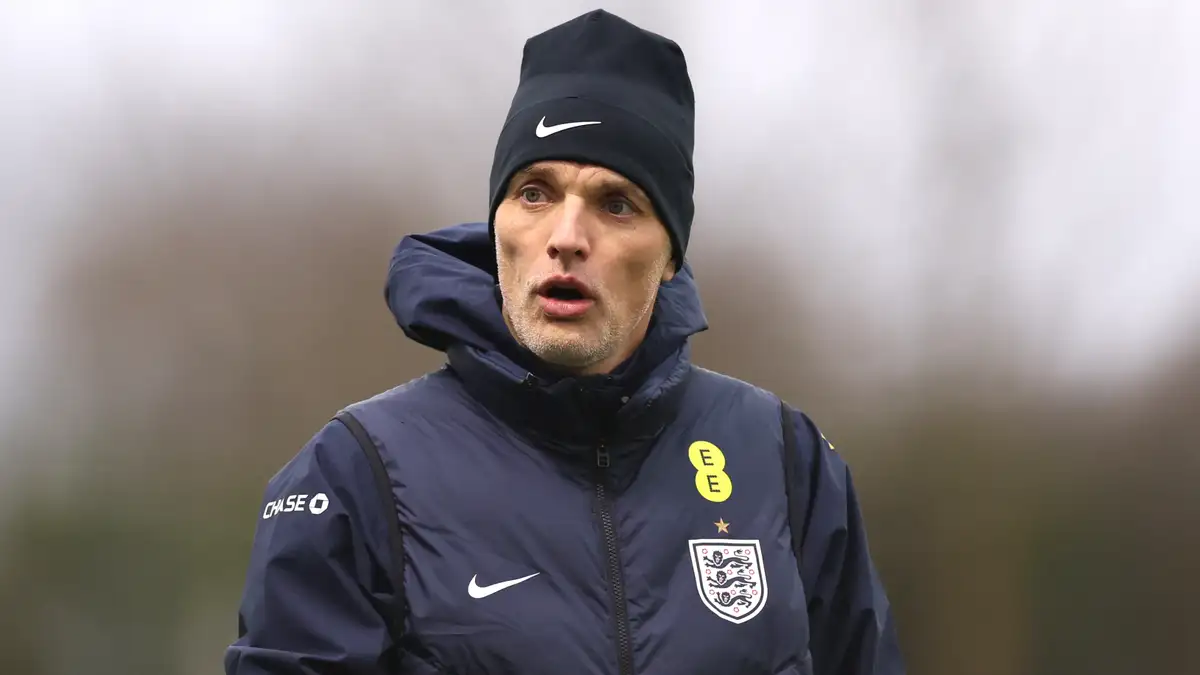
‘Unnecessary & Bizarre!’ – FA Slammed for Decision to Hand New England Contract to Thomas Tuchel Just Months Before the World Cup
Why the FA’s New England Contract for Thomas Tuchel Is Being Called ‘Unnecessary’ and ‘Bizarre’ Before the World Cup
The Football Association is no stranger to scrutiny, but its latest move has invited a fresh wave of criticism — and this time, the timing is what has people talking.
England manager Thomas Tuchel, who only took charge of the national team in early 2025, has already been handed a new contract extension through to 2028, effectively positioning him to remain in charge beyond the 2026 World Cup and potentially lead the Three Lions into the next European Championship. On paper, it looks like a statement of faith. In practice, though, not everyone is convinced it’s a smart one.
Former England and Liverpool midfielder Danny Murphy has openly questioned the logic behind the decision, describing it as both “unnecessary” and “bizarre”, while suggesting the FA may have created an avoidable public-relations nightmare if the upcoming World Cup campaign in North America fails to live up to expectations.
And that, really, is the heart of the issue. It’s not that Tuchel is a bad appointment — far from it. It’s that the FA has chosen to make a long-term commitment before the most important test of his England tenure has even arrived.
In modern football, that kind of move always carries consequences.
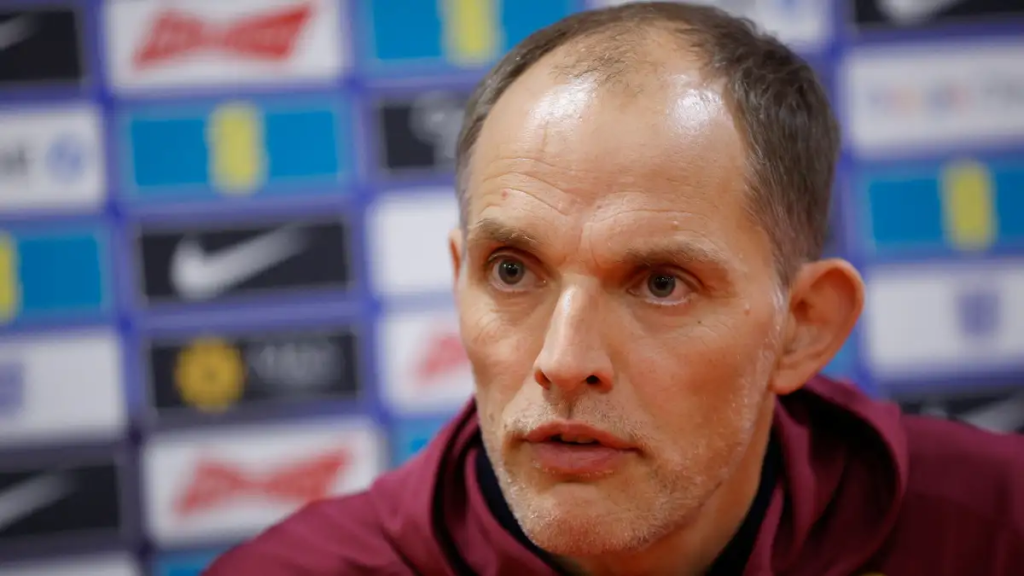
Thomas Tuchel’s New England Contract: A Vote of Confidence or a Needless Gamble?
There’s no question that Thomas Tuchel arrived with serious credentials. He’s a Champions League-winning coach, a tactician with elite-level experience, and a manager who has operated at some of the biggest clubs in European football. From a purely footballing standpoint, England appointing Tuchel made sense. He brings structure, tactical flexibility, and the kind of tournament experience the FA has often craved.
But giving him a fresh deal before he has led England through a single major international tournament? That’s where the debate gets complicated.
Murphy, speaking to CasinoHawks, made it clear that his problem isn’t necessarily with Tuchel the coach — it’s with the FA’s timing.
“I think the FA making a decision like that is unnecessary. It’s a bizarre one,” Murphy said. “It feels like desperation or not having a plan.”
That’s a strong criticism, but it lands because it speaks to something deeper than just contracts. National-team football works differently from the club game. Managers don’t need daily control over a dressing room. They don’t oversee training every week. They don’t manage a 50-game domestic season. Their work is more strategic, more selective, and ultimately judged by what happens in short, intense tournament windows.
That means one thing above all else: the World Cup matters more than everything else.
So by extending Tuchel before that defining moment, the FA has effectively committed itself before receiving the one piece of evidence that should matter most — how England actually performs when the pressure is highest.
Why Danny Murphy Thinks the FA Has Left Itself Exposed Before the World Cup
Murphy’s argument is straightforward and, in many ways, difficult to dismiss.
England, he believes, held all the leverage. Tuchel was already in a prestigious role, working with one of the most gifted national-team squads in world football, and by all accounts being paid extremely well to do so. There was no urgent need to rush into a longer commitment.
“They might have been worried about other clubs trying to hire him,” Murphy added. “He’s being paid very well to do a part-time job with one of the most talented squads in the world. If they negotiated after the tournament, they would still be in a great position.”
That line — “part-time job” — might sound harsh, but in the context of international football, it reflects the reality of the role. Compared to the relentless demands of club management, a national-team job offers less day-to-day grind and more focus on squad construction, tactical preparation, and tournament management.
Murphy’s point is that the FA simply didn’t need to act now.
If Tuchel had delivered a strong World Cup and guided England deep into the tournament, the FA could have extended him from a position of strength and clarity. If the campaign had gone poorly, they would have retained the freedom to reassess without facing questions over why they had already doubled down.
Instead, they’ve chosen to make the decision early — and with that comes risk.
Because if England stumble in North America, especially in a familiar and painful fashion — say, an early knockout exit, a penalty shootout defeat, or a performance that feels timid rather than bold — the narrative will be brutal.
Murphy summed that up perfectly:
“They’re leaving themselves wide open for criticism if he fails… Then how do they explain that decision?”
That’s the PR problem. Not necessarily that Tuchel will fail, but that the FA has made sure any failure now becomes harder to defend.
The FA’s Fear: Were Real Madrid and Manchester United Part of the Equation?
Part of the logic behind the extension appears to be simple self-preservation.
Reports suggest the FA wanted to protect Tuchel from interest by elite clubs, with names like Real Madrid and Manchester United mentioned as potential suitors if managerial situations changed. In that sense, the extension can be viewed as a pre-emptive strike: keep the manager tied down, send a message of stability, and prevent outside noise from disrupting England’s World Cup build-up.
That’s understandable in theory.
But it also raises another question: was the FA reacting to a real threat, or to the fear of one?
This is where Murphy’s “desperation” comment feels especially pointed. If the governing body believed it had to act quickly because top clubs might circle, that suggests a certain nervousness. And in football, nervous decisions often look worse in hindsight than they do in the moment.
Besides, England is not just another managerial job. It remains one of the most high-profile national-team positions in the game. Tuchel had already accepted it. The FA already had him. The role itself carries prestige, financial security, and the chance to coach a squad packed with talent.
From that perspective, it’s fair to ask whether the FA overplayed its hand.
England’s World Cup Reality Check: Why Danny Murphy Is Not Fully Convinced
Even beyond the contract controversy, Murphy also offered a more sobering view of England’s actual chances at the 2026 World Cup — and his assessment was notably realistic rather than romantic.
For years, England have entered tournaments surrounded by optimism. The squad is talented. The Premier League is the richest and most watched league in the world. The names on paper are impressive. Yet the national team still tends to hit a familiar ceiling when facing the very best.
Murphy believes the conditions in North America could expose that.
“Spain make a lot of sense [as World Cup favourites],” he said. “The heat over there and the style of play, the way Spanish teams keep the ball so well and how technically good they are, makes sense.”
That’s an important point. Tournament football is not played in a vacuum. Climate matters. Tempo matters. Ball retention matters. In hot conditions, the teams that can control possession, manage rhythm, and stay technically clean often gain a significant advantage.
That naturally leads Murphy toward Spain, and possibly France, as teams better built for those conditions.
England, in his view, are absolutely capable of winning the tournament — but they are not necessarily the most naturally suited side to dominate it.
That distinction matters.
Thomas Tuchel’s England Must Solve a Midfield and Philosophy Problem
Murphy’s deeper concern isn’t just about climate or luck. It’s about style.
For all the praise England’s talent pool receives, he believes the national side still lacks the kind of technical midfield control that separates the truly elite from the merely dangerous.
“Do we possess the type of talent the Spanish do in terms of keeping the ball in midfield, the philosophy? No.”
That line cuts to the core of England’s long-standing issue.
The Premier League may be full of world-class players, but many of those players are developed within systems that differ greatly from what’s required in international knockout football. The national team often has power, pace, and athleticism. It often has wide threats, dangerous forwards, and strong individual match-winners. But does it consistently have the midfield authority to dictate games against the very best? That remains the question.
Murphy doesn’t seem convinced.
And he also pointed to a very practical concern: depth behind Harry Kane.
If England’s captain is unavailable, off form, or physically compromised, who steps in with the same reliability? That uncertainty could become magnified in a short tournament, where one injury or one off-night can shift the entire trajectory of a campaign.
Tuchel’s task, then, is not just to pick the right XI. It’s to build a version of England that can survive in difficult conditions, control matches when required, and avoid becoming overly dependent on one or two star names.
That’s easier said than done.
Why the Thomas Tuchel Contract Decision Could Define the FA More Than the Manager
Ironically, if England perform well in 2026, this contract extension will probably be remembered as a smart show of faith.
That’s the nature of football. Win, and everything looks visionary. Lose, and every early decision gets dragged back into the spotlight.
If Tuchel leads England to a semi-final, a final, or — dare the FA dream — the trophy itself, then the extension becomes evidence of leadership and long-term planning. The FA will say it backed its man, blocked external interest, and created stability.
But if England crash out early, or if the campaign feels tactically underwhelming, then Murphy’s warnings will come roaring back.
And that’s why this debate matters now.
Because this isn’t just about whether Tuchel is the right coach. It’s about whether the FA has unnecessarily increased the pressure on itself before the biggest tournament in world football.
Thomas Tuchel may still prove to be the ideal man for England. Plenty of people believe he can. He has the pedigree, the intelligence, and the personality to handle a major job.
But the criticism here is about timing, not talent.
And until England’s World Cup story is written, that timing will continue to look — at least to some — a little too eager, a little too risky, and yes, perhaps a little too bizarre.


There are no comments yet. Be the first to comment!