





















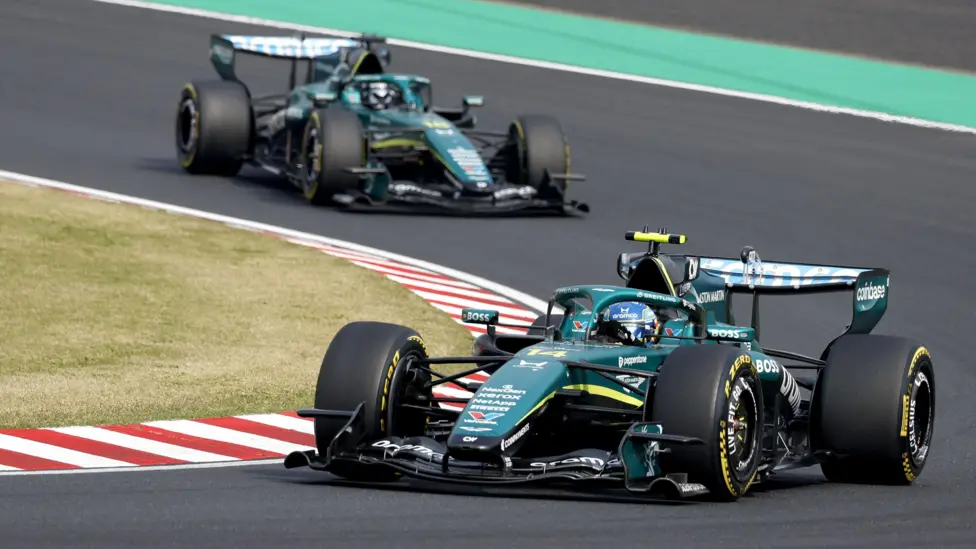
Why Aston Martin’s Problems Go Beyond the Honda Engine
The narrative around Aston Martin’s struggles in Formula 1 has largely focused on the Honda power unit — particularly its vibration issues and reliability concerns. But the reality is more complex.
According to insights from the Japanese Grand Prix weekend at Japanese Grand Prix, the majority of the performance deficit actually comes from the chassis — not the engine.
The Key Insight: Chassis Is the Bigger Problem
- More than 50% of Aston Martin’s performance gap is linked to the car itself
- Data comes from internal sources and GPS comparisons across teams
- The car is:
- Overweight
- Weak in high-speed corners
- Aerodynamically inefficient compared to rivals
This aligns with comments from Adrian Newey, who admitted the car is fundamentally lacking despite public focus on the engine.
How Far Behind Are They?
Let’s put the deficit into perspective:
- Aston Martin: ~3.6 seconds off pole pace (average)
- Midfield teams like Alpine: ~1.2s off
- Haas: ~1.5s off
That means Aston Martin is roughly 2.3 seconds away from Q3 competitiveness
Even with a better engine, they’d likely only match midfield pace — not challenge the front.
Honda Engine: Still a Factor

The Honda engine is not blameless:
- Severe vibration issues
- Reliability concerns
- Unclear root cause:
- Engine design?
- Or integration with chassis?
Important point: engine behavior affects cornering, so separating blame isn’t straightforward.
Why the Car Is So Weak
Aston Martin’s development process explains a lot:
- Adrian Newey joined late (March)
- Wind tunnel work delayed until April
- Development timeline became compressed
Result:
- Rushed design
- Poor optimisation
- Fundamental limitations baked into the car
What GPS Data Reveals
All teams can access comparative GPS data, which shows:
- Aston Martin loses most time in:
- High-speed corners
- Long-duration load phases
- Less loss on straights → engine not the sole issue
This is a classic sign of aerodynamic and chassis inefficiency
Bottom Line
Blaming Honda alone is misleading.
Reality:
- Chassis = majority of the problem
- Engine = significant but secondary issue
- Both need major improvement
As things stand, Aston Martin is:
- Not a front-running team
- Not even a consistent midfield contender
- Still in a rebuild phase
What Needs to Change?
For Aston Martin to compete:
- Weight reduction
- Aerodynamic redesign (especially high-speed stability)
- Better engine integration
- More development time and correlation
Final Verdict
This is not an engine crisis — it’s a full-package problem.
Until both the chassis and the Honda power unit improve together, Aston Martin will remain far from the front of the grid.


There are no comments yet. Be the first to comment!