


Iran, USA & a World Cup Under Political Fire
Iran, the US, and a World Cup That Starts in Three Months
In just over 100 days, the United States will co-host the 2026 World Cup — a tournament Iran have qualified for.
But recent US military action against Iran has dramatically altered the political backdrop. With tensions escalating across the Middle East, questions now surround Iran’s participation, tournament security, and the position of FIFA itself.
So what could this mean for football’s biggest stage?
Will Iran Still Play?
Iran national football team are scheduled to face:
-
New Zealand (Los Angeles)
-
Belgium (Los Angeles)
-
Egypt (Seattle)
Reports suggest Iranian FA president Mehdi Taj has cast doubt on participation following US strikes. However, FIFA officials are privately expecting Iran to compete.
FIFA Secretary General Mattias Grafström stated:
“Our focus is to have a safe World Cup with everybody participating.”
If Iran were to withdraw or boycott, potential replacements from the Asian Football Confederation could include Iraq or the UAE — though no official contingency has been announced.
At this stage, uncertainty remains political rather than sporting.
Security Concerns Growing
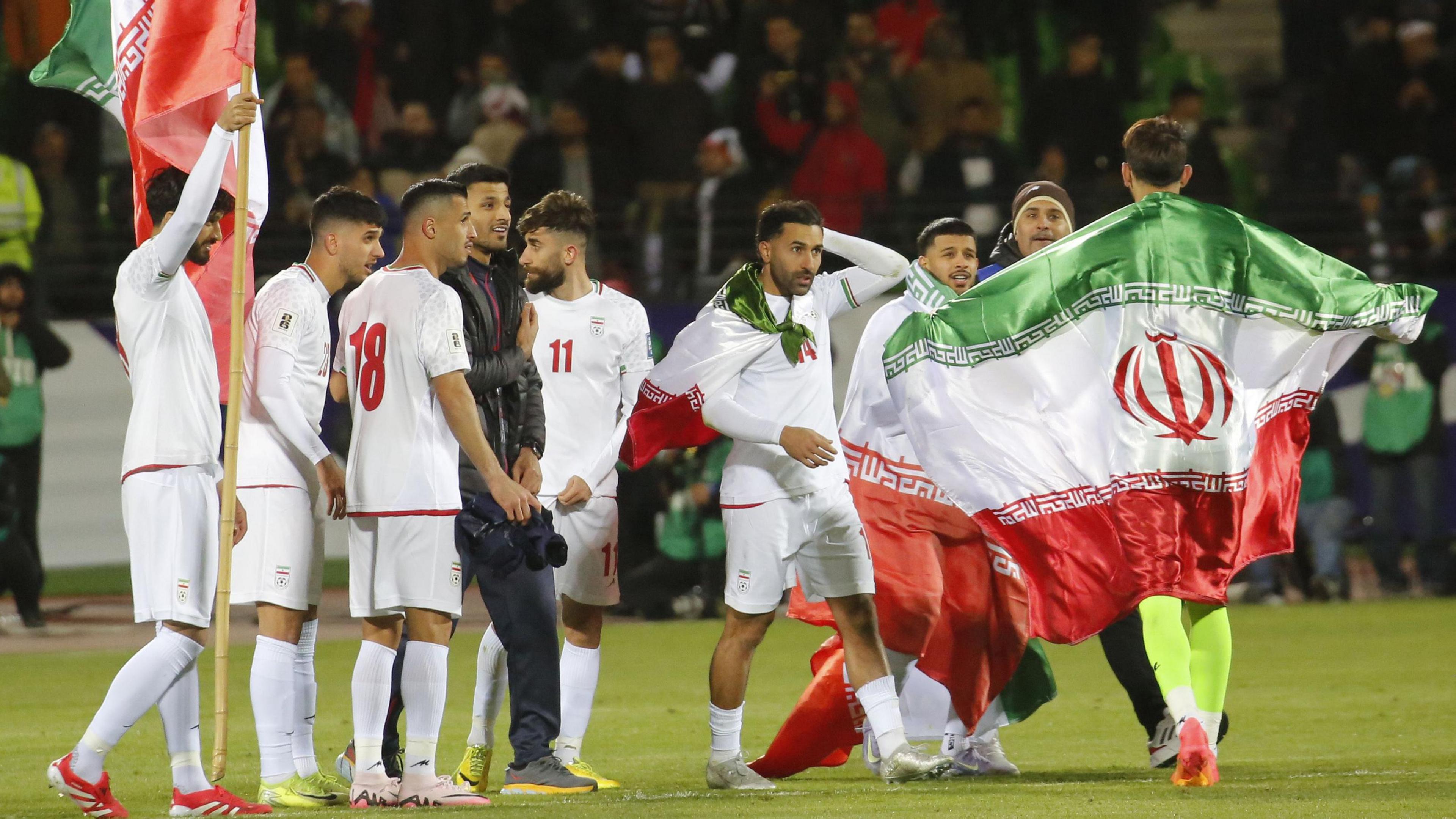
Iran’s men’s football team celebrated qualifying for the 2026 World Cup after a draw with Uzbekistan in March
Even before this escalation, security planning for the US-hosted tournament was under scrutiny.
Now, the stakes are higher:
-
Iran’s matches in Los Angeles place them in a city with one of the world’s largest Iranian communities.
-
Political protests are highly likely.
-
The tournament coincides with celebrations of the 250th anniversary of the US Declaration of Independence.
Security was already a talking point after funding freezes affecting host cities. Concerns also exist regarding:
-
Immigration enforcement visibility
-
Regional cartel violence in co-host Mexico
-
Rising geopolitical tensions globally
The 2022 World Cup saw confrontations among Iranian supporters amid protests back home. A similar — or intensified — atmosphere could develop this summer.
The Trump Factor
Donald Trump is expected to maintain a strong presence around the tournament.
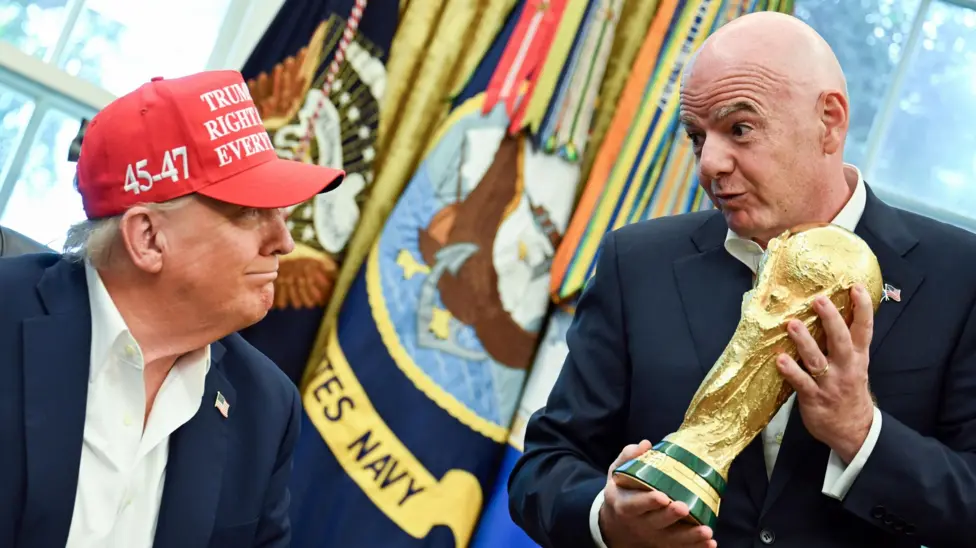
In December, FIFA president Gianni Infantino awarded Trump the inaugural FIFA “Peace Prize,” citing diplomatic efforts in the Middle East.
Since then, US military actions abroad have increased scrutiny over FIFA’s alignment with the White House.
Critics argue football risks becoming politicised. FIFA insists it has a statutory duty to remain neutral.
Infantino has previously defended neutrality, including during the Russia 2018 World Cup and amid calls to sanction Israel or other nations over geopolitical conflicts.
However, pressure could intensify if:
-
Iran withdraw
-
European nations push for protest or boycott
-
Security incidents escalate
Could Iran Be Replaced?
If Iran boycotted or were deemed unable to compete, FIFA would likely turn to AFC ranking protocols.
Possible candidates:
-
Iraq (still in play-off contention)
-
UAE (missed automatic qualification)
But such a move would be unprecedented so close to kickoff — and politically sensitive.
A Tournament Under Political Pressure
The 2026 World Cup was already shaping up to be one of the most complex editions in history:
-
First 48-team format
-
Three co-hosts (USA, Canada, Mexico)
-
Major expansion in ticket demand and security planning
Now, geopolitical instability adds another layer.
As one human rights expert put it:
“We are in uncharted territory.”
FIFA’s hope remains simple: that football can proceed, and that Iran — if qualified — competes safely.
But with just over three months to go, the political landscape is shifting faster than the fixture list.


There are no comments yet. Be the first to comment!