























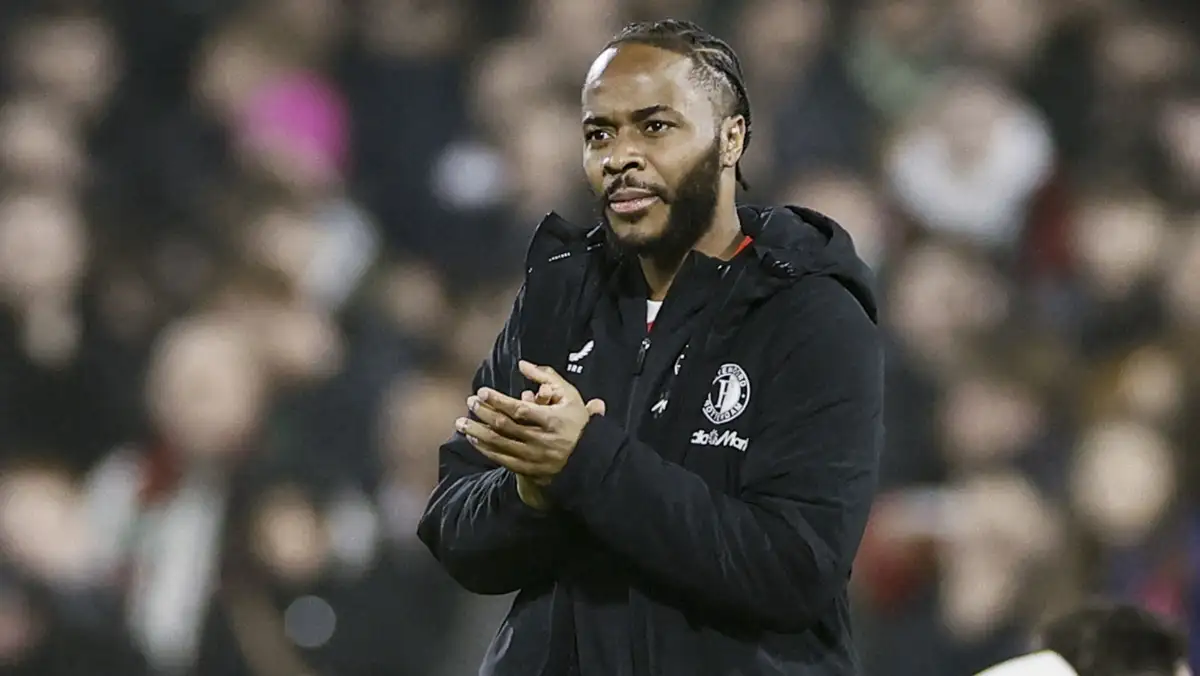
Major Setback for Raheem Sterling! Robin van Persie Explains Why He Benched Ex-Chelsea & Manchester City Star for Latest Feyenoord Outing
Major setback for Raheem Sterling as Robin van Persie reveals decision behind Feyenoord snub
There are moments in a player’s career when things just don’t click — when rhythm, confidence, and opportunity seem slightly out of sync. For Raheem Sterling, his early months in Rotterdam are beginning to feel like one of those phases.
What was supposed to be a fresh chapter at Feyenoord — a chance to reset, to rediscover that explosive edge that once made him one of Europe’s most feared wide players — has instead turned into a slow, uncertain climb. And over the weekend, that uncertainty became impossible to ignore.
Dropped to the bench for a crucial Eredivisie clash against NEC Nijmegen, Sterling watched from the sidelines as his team labored to a 1-1 draw. No late cameo, no opportunity to influence the game — just 90 minutes of quiet reflection as events unfolded without him.
For a player of his pedigree, that silence speaks volumes.
Left out in Nijmegen: a telling selection call
When team sheets were released ahead of Feyenoord’s trip, the biggest talking point wasn’t who started — it was who didn’t.
Sterling, once a guaranteed name on the teamsheet during his peak years at Manchester City and later Chelsea, found himself among the substitutes. In his place, a far less established name — Tobias van den Elshout — was handed a full Eredivisie debut.
That decision alone told a story.
Managers often talk about “earning your place,” but in reality, reputation usually buys patience. Sterling, however, seems to be operating without that safety net in Rotterdam. His status as a former Premier League star hasn’t shielded him from scrutiny — or from difficult calls.
And perhaps more tellingly, when Feyenoord needed something late in the game, he still wasn’t called upon.
Even after NEC found a dramatic equaliser in the 97th minute through Danilo Pereira, Sterling remained rooted to the bench. No tactical gamble, no last-minute injection of experience. That absence felt deliberate.
Robin van Persie breaks his silence
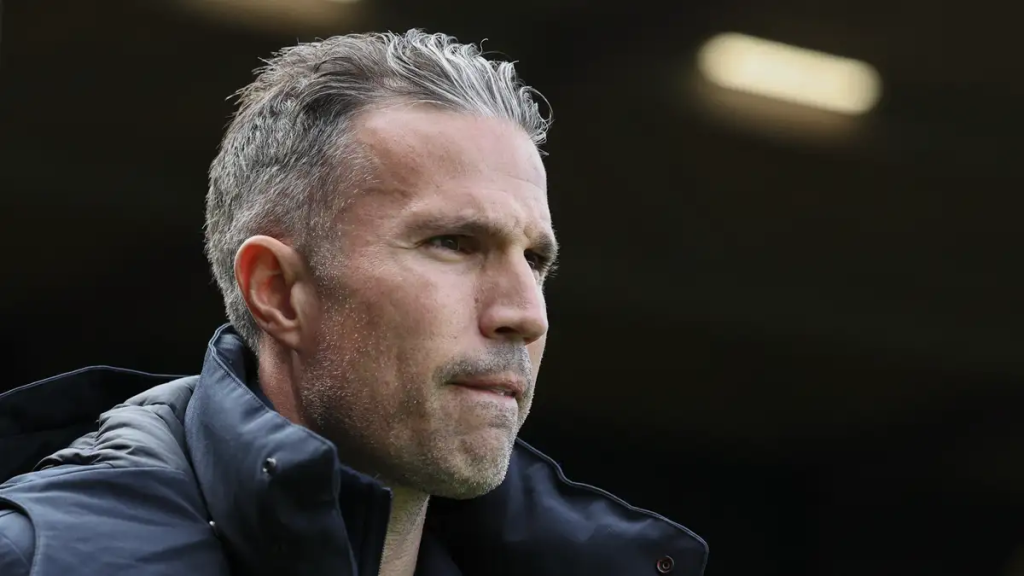
After the match, all eyes turned to Robin van Persie. The Feyenoord boss, calm but direct, didn’t dance around the issue.
According to him, this wasn’t about dropping Sterling permanently — but it also wasn’t entirely insignificant.
Van Persie pointed to physical concerns. A lack of freshness. A minor training-ground incident. Nothing dramatic on paper, but enough to influence selection in a tightly contested phase of the season.
And that’s the key context here.
Feyenoord aren’t cruising. They’re fighting.
With the Eredivisie table tightening and Champions League qualification hanging in the balance, Van Persie isn’t in a position to take risks. Every decision is shaped by immediate performance, not past achievements.
In that sense, Sterling isn’t being singled out — he’s being treated like everyone else.
But that, in itself, is part of the problem.
A difficult adaptation period in Rotterdam
When Sterling arrived in February, there was genuine curiosity about how he would fit into Dutch football.
On paper, it made sense. The Eredivisie’s open style, its emphasis on attacking play, its slightly slower tempo compared to the Premier League — all of it seemed suited to a player looking to rediscover confidence.
But football rarely follows scripts.
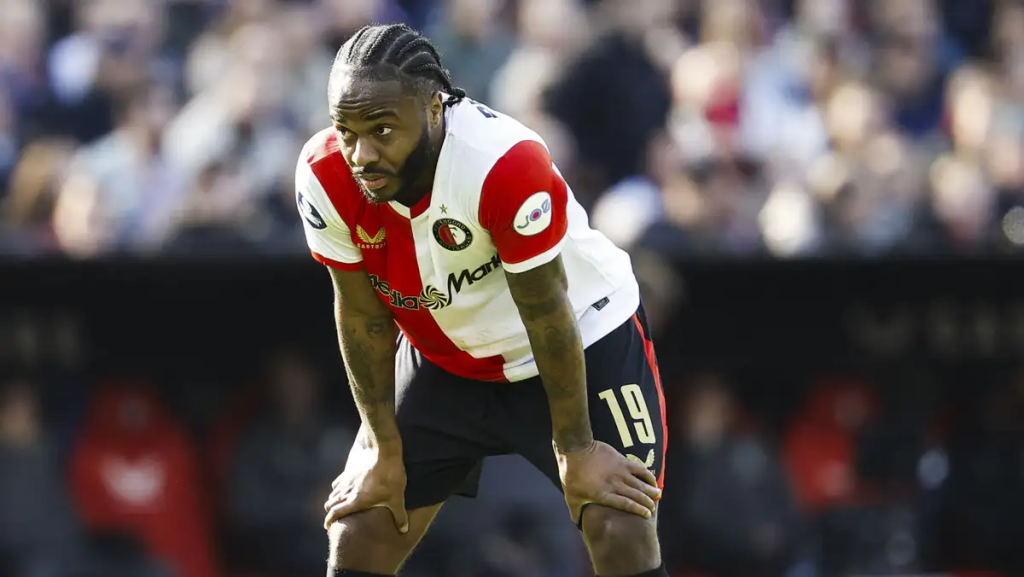
Six appearances in, Sterling has yet to score. Just one assist to his name. Moments of promise, yes — flashes of movement, intelligent positioning — but not the kind of decisive impact expected from someone with his résumé.
And confidence, once it dips, is a tricky thing.
You can see it in small details. The extra touch before shooting. The hesitation in one-on-one situations. The runs that are half a yard less aggressive than they used to be.
For a player whose game was built on instinct and explosiveness, those margins matter.
Competition, pressure, and changing priorities
Another layer to this story is internal competition.
Van Persie has made it clear he’s not afraid to back younger or less-established players if they show the right physical and tactical readiness. Tobias van den Elshout’s inclusion wasn’t just about Sterling being unavailable — it was also about rewarding performance.
That’s a message to the entire squad.
At a club like Feyenoord, especially in a season where margins are tight, there’s little room for sentiment. The objective is clear: secure a top-two finish, lock in Champions League qualification, and maintain momentum heading into next year.
Everything else is secondary.
And that includes reputation.
The bigger picture: a race against time
Time, in football, moves quickly.
Sterling signed a deal running until 2026, but contracts don’t guarantee relevance — performances do. And with the season entering its decisive stretch, opportunities to turn things around are becoming limited.
Feyenoord’s upcoming fixtures — against Groningen, Fortuna Sittard, AZ Alkmaar, and PEC Zwolle — will define their campaign. Slip-ups could be costly, especially with teams like NEC and FC Twente breathing down their necks.
For Sterling, these matches represent more than just points on the board. They’re chances to reassert himself, to remind everyone — perhaps even himself — of what he’s capable of.
Because once momentum is lost in football, it’s not easily regained.
A test of mentality more than ability
No one doubts Sterling’s talent.
You don’t achieve what he has at clubs like Manchester City without elite qualities. His movement, his timing, his ability to exploit space — those things don’t just disappear overnight.
But at this stage of his career, the challenge is different.
It’s not about proving he can play. It’s about proving he can adapt.
Different league. Different expectations. Different role within the team. And perhaps most importantly, a different psychological landscape — one where he’s no longer the guaranteed star.
That requires resilience.
What comes next for Raheem Sterling?
The coming weeks will be telling.
Van Persie’s comments suggest the door is still open. This isn’t exile — it’s a warning. A reminder that standards must be met, regardless of past achievements.
If Sterling responds the right way — sharp in training, decisive when given minutes — this could still turn into a redemption story.
But if the current pattern continues, the narrative could shift quickly.
From “experienced signing” to “missed opportunity.”
And in football, those labels tend to stick.
Final thoughts
There’s something almost human about this situation.
A player searching for rhythm. A coach balancing loyalty with pragmatism. A team chasing objectives that leave little room for patience.
For Sterling, this isn’t the end of the road — not even close. But it is a crossroads.
The kind that defines how a chapter is remembered.
Does he fight back, adapt, and become a key figure in Feyenoord’s run-in?
Or does this moment mark the beginning of a gradual fade from the spotlight?
The answer won’t come from headlines or interviews.
It’ll come on the pitch — if and when he gets the chance again.


There are no comments yet. Be the first to comment!