


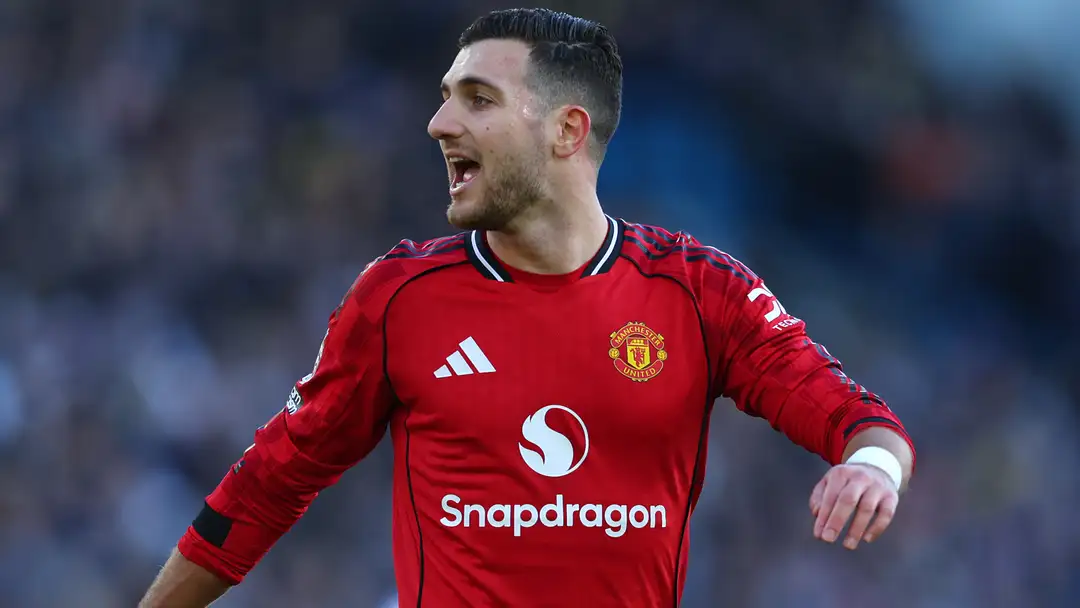
Diogo Dalot Warns Man Utd Team-Mates They Mustn’t Take Champions League for Granted After Playing ‘Nowhere Near’ Enough Games in 2025-26
Diogo Dalot Sends Clear Message to Man Utd: Champions League Can Never Be Taken for Granted
There are certain silences that echo louder than noise at Old Trafford. On European nights, the place usually hums from mid-afternoon — scarves draped over shoulders, floodlights cutting through the Manchester air, that familiar anthem rolling across the stands. This season, there has been none of it.
For Manchester United, 2025-26 has felt unusually light. Too light. And according to Diogo Dalot, that emptiness must sting enough to ensure it never happens again.
United’s Portuguese full-back did not dress his words up. After a campaign that will end with the fewest competitive matches the club has played in over a century, Dalot delivered a warning to his team-mates: Champions League football is not a given. It is a privilege — and one that can disappear quickly.
“I think seasons like this are good for you,” Dalot admitted candidly. “When you’re playing Europa League and especially Champions League, those are the best seasons. This year we play, I don’t know, maximum 40 games because we came out of the cups early. This is nowhere near what the club should be.”
For a club of United’s stature, those words carry weight.
A Season That Felt Too Short
The absence of European football has created a strange rhythm around Carrington. Fewer midweek recoveries. Fewer tactical briefings for continental opposition. Fewer moments that define careers.
Historically, United measure their seasons in three competitions at minimum. Premier League battles. Domestic cup pursuits. European ambition. Remove one pillar, and the structure feels incomplete.
The early exits from domestic tournaments compounded the issue. No long cup runs. No semi-final drama under the lights. Instead, extended training weeks and the uncomfortable sight of domestic rivals pushing deep into continental tournaments.
Dalot’s point was simple: the calendar itself should serve as motivation.
“When we get the main goal next season,” he said, “if we’re playing Champions League, we cannot take it for granted. We need to put the club back in there.”
It was less a complaint and more a pledge.
.jpg?auto=webp&format=pjpg&width=3840&quality=60)
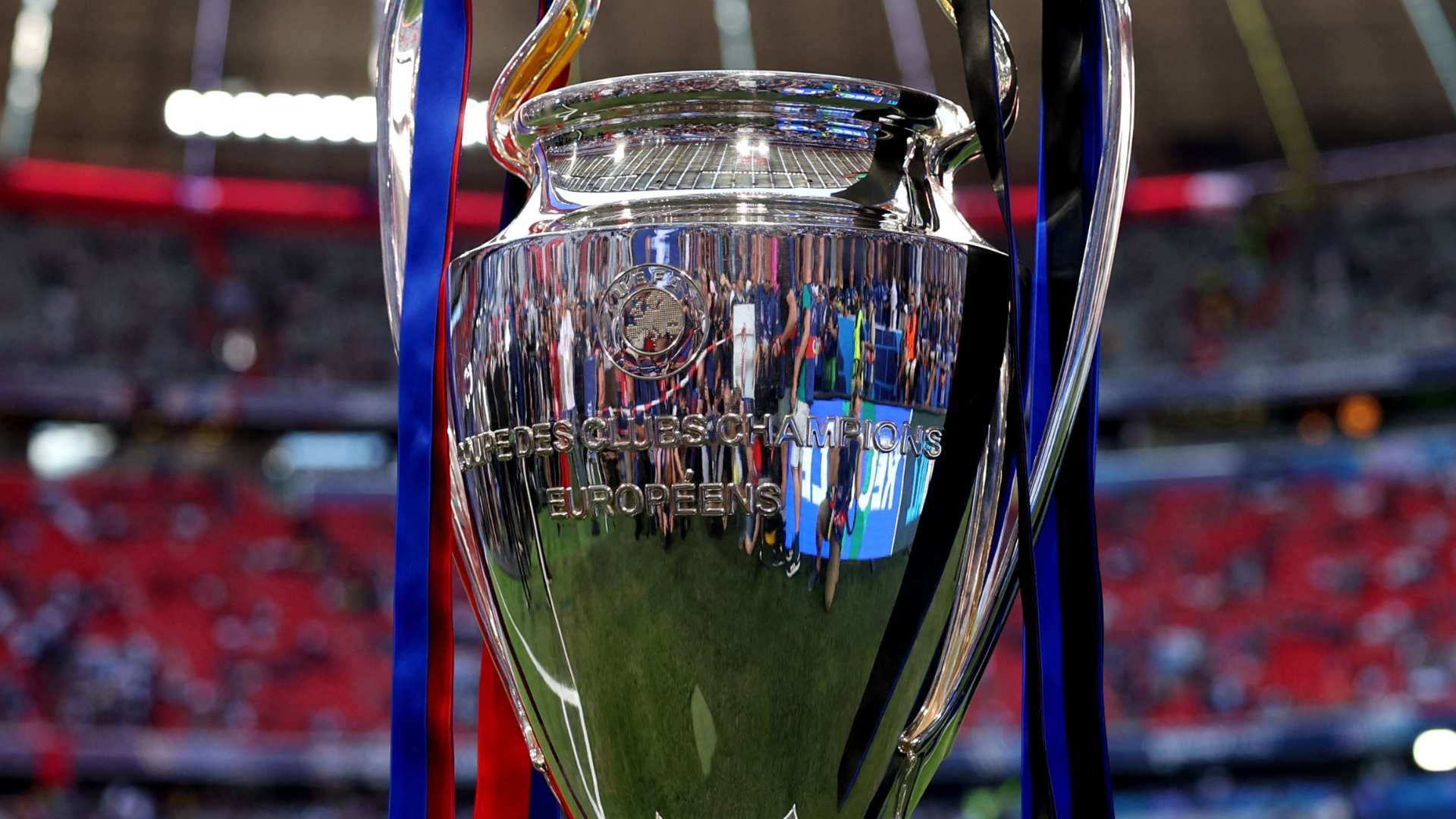
champions league trophy
United’s Resurgence Under Michael Carrick
Ironically, amid the frustration of a shortened schedule, there has been genuine progress on the pitch. Under interim manager Michael Carrick, United have rediscovered momentum.
The recent 2-1 victory over Crystal Palace lifted them into third place — their highest league standing since 2023. It was not a flawless performance. In fact, it was messy at times. But perhaps that is the point.
Palace struck first through a header from Maxence Lacroix, silencing Old Trafford early. In previous months, that might have triggered anxiety. Instead, United responded with patience.
Bruno Fernandes equalised with authority. Then Benjamin Sesko, in electric form, sealed the comeback.
Dalot highlighted the importance of such victories — games where dominance is partial, control fluctuates, yet three points are secured.
“For us to be able to stay at the top,” he explained, “we have to win games like today. You don’t control for 90 minutes, sometimes you don’t play like you should, but you find a way.”
That resilience has been the defining feature of Carrick’s tenure.
The Psychological Edge of European Nights
Players rarely admit it publicly, but European competition alters mentality. Preparation sharpens. Focus intensifies. The margin for error narrows.
Dalot knows this well. Having featured in both the Europa League and Champions League campaigns in recent years, he understands the growth that comes from facing Europe’s elite.
Without that exposure, development can plateau.
“It keeps you hungry,” he suggested indirectly. “Those are the best years.”
There is also the commercial and reputational aspect. Elite players want to compete against elite opposition. Recruitment becomes harder without Champions League assurances. Retaining top talent demands ambition.
United’s absence from Europe this season was not merely a scheduling inconvenience. It was a statement about where the club currently stands — and where it needs to return.
The Bruno Fernandes Factor
At the centre of United’s revival stands Bruno Fernandes. The captain recently surpassed 200 goal involvements for the club, eclipsing iconic names such as David Beckham and Ryan Giggs in combined contributions.
Yet Dalot believes his compatriot remains, in some quarters, underappreciated.
“When you’re so consistent,” Dalot reflected, “when you play many years at a very high level, sometimes when you’re not there for one game people start doubting.”
Consistency, in football, is often punished with unrealistic expectation. Fernandes’ output has become so routine that anything less than brilliance invites criticism.
Dalot’s defence of his captain was heartfelt. He spoke of Fernandes’ refusal to hide, his willingness to demand the ball in tense moments, and his constant communication on the pitch.
“He can read pretty much all the positions,” Dalot said. “If he believes he can help you, he will say it — no problem.”
That leadership mirrors Carrick’s philosophy from the touchline.
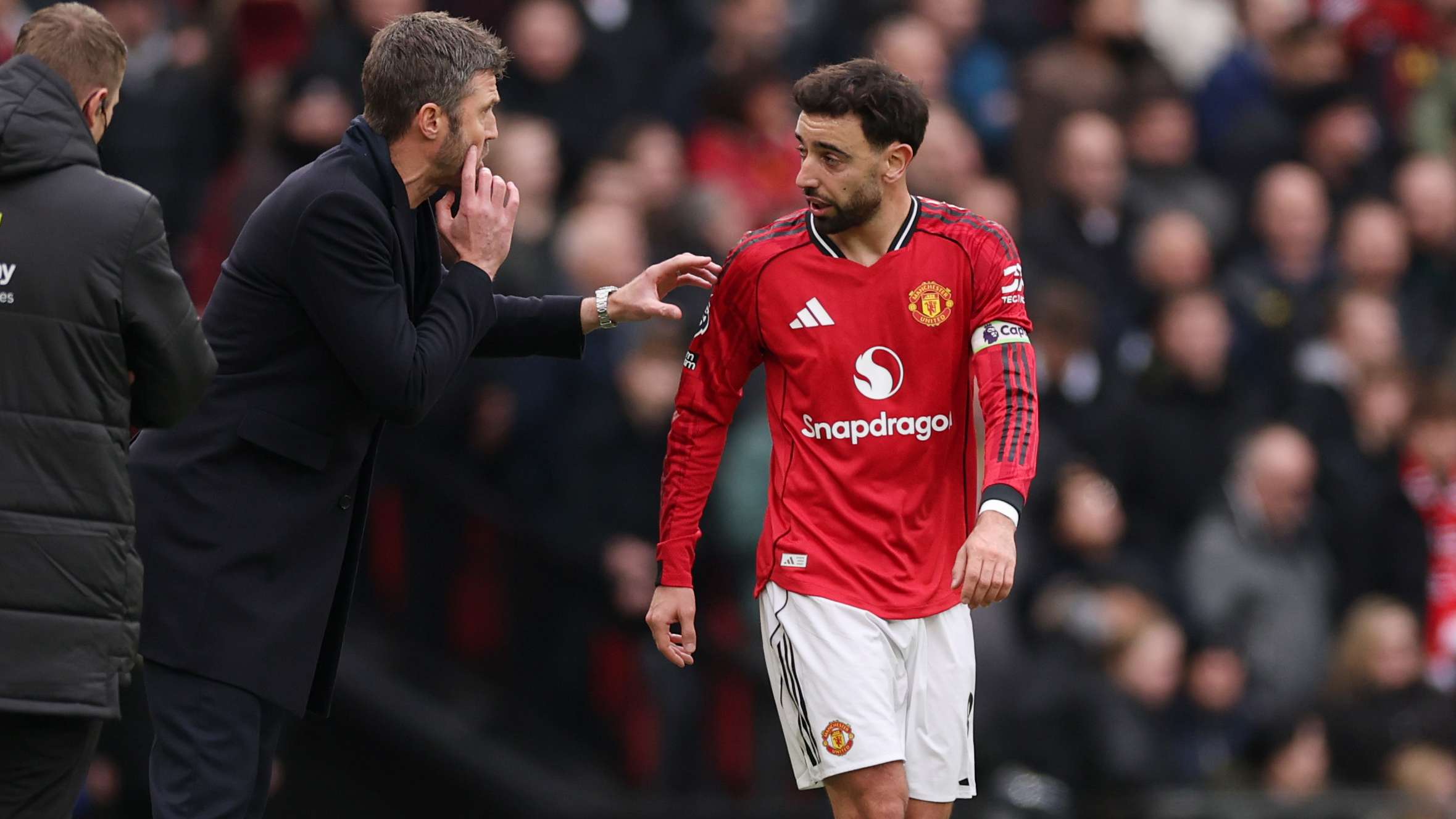
Manchester United v Manchester City – Premier League
Carrick’s Influence at Old Trafford
Since stepping into the interim role, Carrick has restored a sense of connection between squad and supporters. Tactical tweaks at half-time have turned matches. Calmness has replaced chaos.
The unbeaten run has not been built solely on aesthetics. It has been constructed on structure.
Dalot credited the synergy between Carrick’s instructions and Fernandes’ in-game guidance as a key element in United’s climb up the table. The manager sets the framework; the captain enforces it in real time.
There is a renewed clarity about roles. Full-backs overlap with purpose. Midfielders rotate intelligently. For the first time in months, United look cohesive rather than reactive.
And yet, Dalot’s message suggests the squad refuses to celebrate prematurely.
Third place means little without Champions League confirmation.
Learning From the Void
Perhaps the most striking element of Dalot’s comments is the acknowledgment that this season’s shortcomings may prove beneficial in the long run.
A year without European football exposes complacency. It strips away assumption. It forces introspection.
For younger players, it is a lesson in standards. For senior figures, it is a reminder of responsibility.
United have been “there,” as Dalot put it — drifting, dropping points, sliding down the table. They understand how quickly status can erode.
If this campaign ends with a top-four finish, the objective will have been achieved. But Dalot’s warning makes clear that qualification is not the finish line. It is the baseline.
Ensuring It Remains an Anomaly
As the race for the top five intensifies, United’s senior core appears united in purpose. They do not want this European absence to become routine.
For a club built on continental nights and dramatic comebacks, anonymity in Europe is unacceptable.
Dalot’s rallying cry was not dramatic. It was grounded.
Champions League football, he insists, must never feel ordinary again.
And if this shortened, sobering season serves as the catalyst for sustained resurgence, then perhaps the silence of 2025-26 will have been worth enduring.
But one thing is clear from Dalot’s tone: next time those floodlights dim, it will not be through absence. It will be because the job has been done.


There are no comments yet. Be the first to comment!