







































































‘We’re two-time champions!’ – Argentina claim victory over Spain as CONMEBOL chief ridicules La Roja & UEFA over Finalissima cancellation
‘We’re two-time champions!’ – Argentina claim victory over Spain as CONMEBOL chief ridicules La Roja and UEFA after Finalissima cancellation drama
For a match that never happened, the 2026 Finalissima has somehow managed to produce more noise, more tension and arguably more chaos than most games that actually make it onto the pitch.
What was supposed to be one of the most glamorous international showpieces on the football calendar — Copa America winners Argentina against European champions Spain — has now collapsed in spectacular fashion. And instead of a trophy being decided by ninety minutes, maybe 120, maybe penalties, it has been dragged into the sort of cross-continental political mess that only football can create.
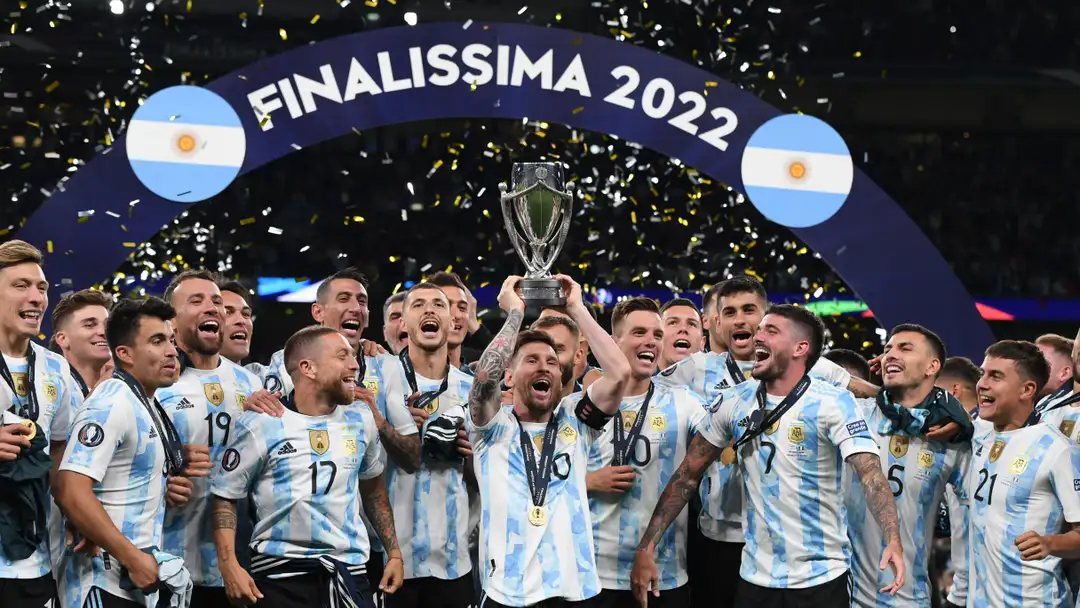
Now, in a move that has poured petrol all over an already burning situation, CONMEBOL president Alejandro Dominguez has publicly declared Argentina “two-time champions” of the Finalissima, effectively claiming a walkover win after the showdown with Spain was officially scrapped.
Yes, really.
The South American chief did not stop there either. In remarks that were part provocation, part theatre and part full-blooded institutional flex, Dominguez openly mocked Spain and took a swipe at UEFA, suggesting that La Roja had effectively failed to show up and that Argentina should simply be recognised as champions by default.
It was one of those football moments where everyone in the room probably knew exactly how inflammatory the words were — and that only made them land harder.
“If we apply a walkover, you’re a two-time Finalissima champion,” Dominguez said, before later doubling down even more directly by congratulating Argentines because, in his words, “they didn’t even show up.”
That line alone guarantees this story will not die quietly.
Because what began as a scheduling disagreement has now become something much bigger: a symbolic fight between two confederations, a war of messaging between South America and Europe, and a fresh reminder that football’s global politics can be every bit as dramatic as the sport itself.
Argentina claim victory over Spain as CONMEBOL chief ridicules La Roja and UEFA over Finalissima cancellation
The actual football should have been simple.
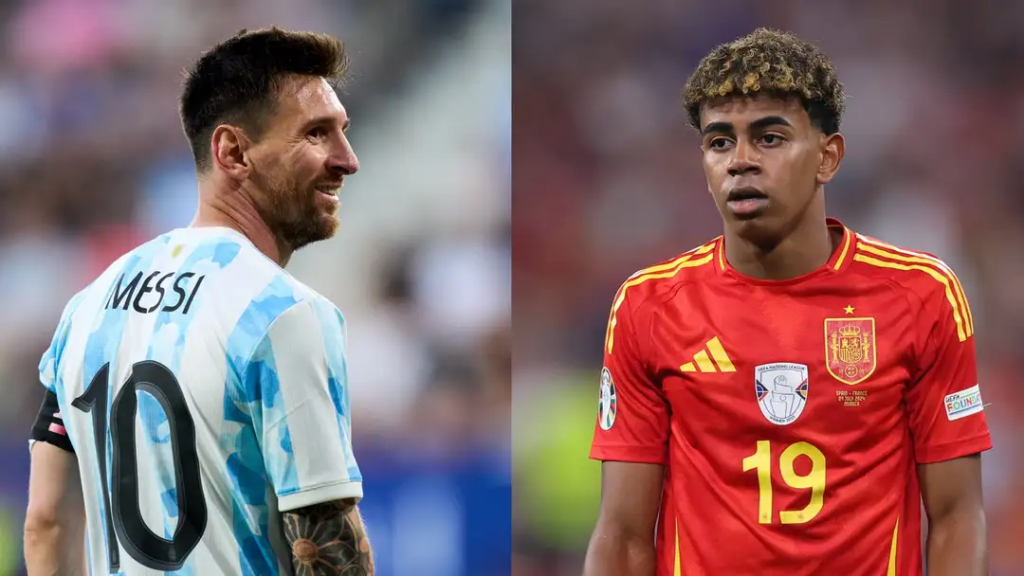
Argentina, reigning Copa America champions, against Spain, current European champions. Two elite national teams. Two different footballing identities. One one-off intercontinental final designed to celebrate continental supremacy and give supporters a heavyweight occasion outside the usual tournament cycle.
That was the dream.
Instead, the Finalissima is off — officially off — and what should have been a celebration of the game has turned into a public standoff between CONMEBOL and UEFA.
From the outside, this was always the kind of fixture that looked easy to market but difficult to organise. International calendars are brutal enough already. Clubs don’t want extra matches. Managers want control of player workloads. Federations want commercial leverage. And once venue politics enters the room, things can unravel very quickly.
That appears to be exactly what happened here.
The central issue was a failure to agree on both a date and a genuinely acceptable venue. But like most football disputes, the official explanation only tells part of the story. Beneath the scheduling language sits something more familiar: power, pride, leverage, and the refusal of either side to feel like it had conceded too much.
By the time the fixture was formally scrapped, both camps were already framing the collapse in ways that made it clear this was no longer just about logistics.
And once Dominguez took the microphone, the gloves came off.
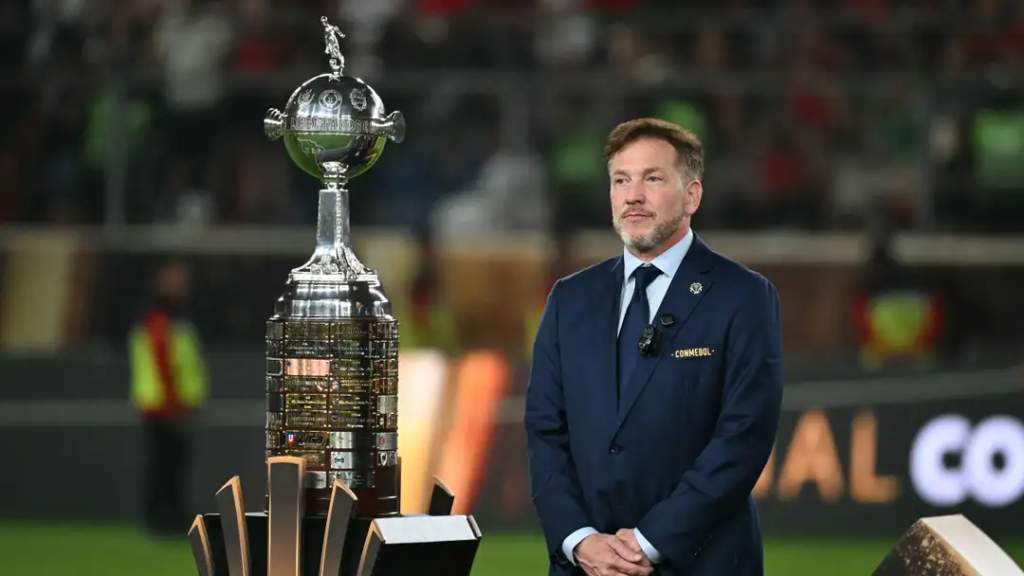
Alejandro Dominguez declares a walkover and turns Finalissima cancellation into a political statement
There are football administrators who speak in safe, corporate, deliberately bland terms.
Alejandro Dominguez was not in that mood.
Using the stage of the Copa Libertadores draw — hardly a small platform — the CONMEBOL president transformed the cancellation into a symbolic victory lap. Rather than treating the failed negotiations as an unfortunate missed opportunity, he chose to present it as something much more confrontational: a forfeit.
That framing is important.
By calling Argentina “two-time champions” of the Finalissima, Dominguez was not just joking around. He was rewriting the narrative in real time. He was telling South American audiences that if the match could not happen under fair conditions, then the title morally remains with the current holders. More than that, he was telling them that Europe should not automatically be treated as the standard-bearer in every footballing discussion.
And that message clearly mattered to him.
He urged Argentines to stop looking at European football as if it were inherently superior, insisting that the grass is not always greener on the other side. It was classic regional chest-thumping, but it also reflected something deeper: South American football’s long-standing sensitivity to how it is positioned relative to UEFA in global power conversations.
In other words, this was not just about Spain.
It was about Europe.
And Dominguez knew exactly which buttons he was pressing.
Spain, La Roja and UEFA become targets as South America fires verbal shots
The rhetoric escalated quickly.
What began as a disagreement over dates and venues shifted into something far sharper once CONMEBOL started implying Spain had effectively “not shown up.” That phrase carries obvious sporting weight. In football culture, not showing up is not a neutral phrase. It implies weakness. It implies avoidance. It implies fear, whether that is fair or not.
That is why Dominguez’s comments landed so aggressively.
By congratulating Argentines and saying “we’re two-time champions of the Finalissima, they didn’t even show up,” he was not simply making a legalistic point about a walkover. He was publicly ridiculing the entire situation and daring the European side to react.
And from a South American perspective, there is a certain logic to why that rhetoric resonates.
Argentina are world champions. They remain one of the most emotionally powerful national teams in global football. Lionel Messi’s era has given them a renewed aura, and in the current climate, many in South America genuinely believe the Albiceleste are not only capable of matching Europe’s best — they are the benchmark.
So when the Finalissima collapses, it becomes very easy politically for CONMEBOL to sell the story this way: we were ready, they were not.
Whether that is the full truth is another matter.
But in football politics, perception often matters just as much as process.
UEFA blames Argentina after Finalissima cancellation as the Santiago Bernabeu proposal becomes flashpoint
UEFA, for its part, has made it clear that it sees the situation very differently.
According to the European body, several solutions were put forward and Argentina — or more specifically the Argentine Football Association — rejected them. One of the headline proposals was a single-match Finalissima at the Santiago Bernabeu in Madrid, staged on the original date, with a 50:50 supporter allocation intended to preserve a sense of balance.
On paper, it sounds glamorous. On paper, it sounds commercially perfect.
Real Madrid’s stadium. Massive visibility. A world-class venue. A marquee European host city.
But on paper and in practice are not always the same thing.
UEFA’s position was that Madrid offered the prestige the event deserved. They also floated another option: a two-legged Finalissima, one leg in Madrid and another in Buenos Aires during a future international window ahead of Euro 2028 and Copa America 2028.
Again, commercially and politically, that looks like a compromise.
Again, Argentina said no.
And that is where the dispute turned toxic.
From UEFA’s side, those rejections were framed as evidence that the AFA had blocked realistic solutions. Once that line became public, the collapse of the fixture was no longer a regrettable scheduling issue. It became a blame game.
And once football institutions start issuing statements that read like legal briefs with emotional undertones, you know the relationship is already strained.
Why Argentina rejected Madrid and why the neutral ground argument changed everything
From the Argentine perspective, refusing Madrid was not stubbornness. It was principle.
That is, at least, how the AFA and CONMEBOL have framed it.
Their argument is simple enough to understand: if Spain are one of the teams involved, then staging the Finalissima in the Spanish capital cannot be described as a truly neutral venue, no matter how balanced the ticket split might be. You can call it world class, you can call it iconic, you can call it commercially irresistible — but it still places the European champions on home soil, or at least something very close to it.
And in a match of this profile, symbolism matters.
The AFA reportedly maintained that playing in Madrid would violate “the principle of sporting equity,” which is a phrase that sounds formal but carries real emotional punch. In practical terms, it means they believed the contest should not be tilted, even subtly, toward one side.
That position is not unreasonable.
In fact, many neutrals would probably agree with it.
The complication is that international football does not exist in a vacuum. Calendars are packed, venue availability is limited, club interests are powerful, and finding a date that works for both confederations and both squads is already a nightmare before you even add questions of neutrality.
Still, from Buenos Aires, the message was clear: if the match is going to happen, it must look and feel fair.
And that is where Rome entered the picture.
The Rome proposal, Spain’s refusal and how the Finalissima cancellation spiralled
Argentina’s side insists they were not refusing to play full stop.
They were refusing to play under conditions they felt compromised sporting fairness.
According to the AFA, they were open to staging the Finalissima in Rome on March 31, which would have given the fixture a recognisably neutral location and, in theory, solved the biggest political issue around Madrid.
But that proposal did not survive either.
Spain’s federation reportedly rejected Rome because a number of key players — particularly from Barcelona and Atletico Madrid — were due to face each other in La Liga only a few days later. From a player management perspective, that concern is understandable. Clubs already complain about overload, and adding a high-intensity intercontinental final into an already compressed calendar can be a hard sell.
Yet that explanation also opened the door to more criticism from South America.
Because once Spain declined the neutral-site alternative, CONMEBOL could argue — and clearly now are arguing — that Argentina had shown willingness to compromise while Europe had protected convenience.
That is the political opening Dominguez has exploited.
And he has exploited it ruthlessly.
Finalissima cancellation exposes the deeper tension between UEFA and CONMEBOL
This is the part that matters most beyond the quotes.
The Finalissima may be the headline, but the real story is the relationship between UEFA and CONMEBOL.
For years, the two confederations have had an interesting mix of cooperation and rivalry. There is mutual benefit in staging events like the Finalissima. It gives both sides commercial value, adds glamour to the international calendar and taps into the old romantic idea of Europe vs South America — a concept football fans will always buy into.
But underneath that, there is still friction.
UEFA remains the wealthiest and most structurally powerful confederation in world football. Its competitions dominate the calendar, its clubs dominate the transfer economy, and its political influence remains enormous.
CONMEBOL, meanwhile, carries immense cultural weight and historical prestige, but it has long had to fight harder for equal footing in these global conversations.
That tension never fully disappears.
So when a fixture like this collapses, it becomes more than an event issue. It becomes a status issue. A respect issue. A chance for one side to say: you don’t get to dictate everything.
Dominguez’s comments should be read through that lens.
He is not merely trolling Spain.
He is pushing back against UEFA’s gravitational pull.
Final word: Argentina claim victory over Spain, but Finalissima cancellation leaves football as the real loser
Alejandro Dominguez has succeeded in one thing beyond doubt: he has made sure nobody will quietly forget this cancelled Finalissima.
By declaring Argentina “two-time champions,” mocking Spain’s absence and openly ridiculing the wider European position, the CONMEBOL president has turned an abandoned showpiece into a full-scale footballing argument — the kind that will now linger long after the fixture itself has disappeared from the calendar.
For Argentina supporters, the comments will land as bold, defiant and maybe even a little funny.
For Spain and UEFA, they will feel provocative, disrespectful and deeply unnecessary.
For neutrals, the whole thing is frustrating because the real shame here is obvious: we were supposed to get Argentina against Spain. World champions against European champions. A genuine heavyweight international occasion. Instead, we got press releases, federation politics, venue disputes and one of the most dramatic “walkover” claims football has seen in years.
That is the real loss.
Because whatever side you believe in this argument — whether you think Argentina were right to reject Madrid, whether you think UEFA offered fair solutions, whether you think Spain had valid scheduling concerns — none of it changes the most disappointing truth of all.
The game should have happened.
And now, instead of remembering a classic, we are left with a quote:
“We’re two-time champions.”
In football, sometimes the best matches never get played.


There are no comments yet. Be the first to comment!