


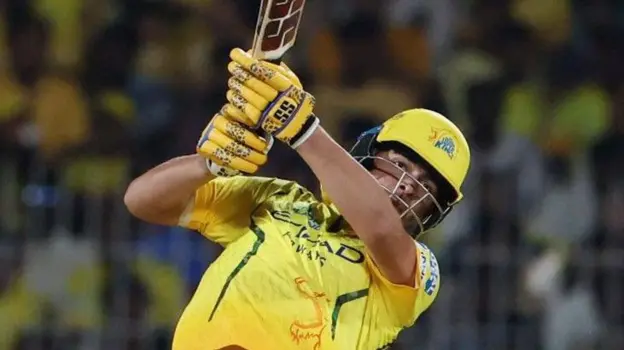
How the IPL Is Reshaping India Talent Map and Changing Cricket Forever
The Indian Premier League was created as a cricket tournament, but it has grown into something much bigger. It is now a talent machine, a financial powerhouse and, for thousands of young players across the country, the clearest route from local grounds to international stadiums.
Its slogan, Where talent meets opportunity, feels more accurate with every passing season. The IPL no longer simply rewards established stars. It discovers new ones. Every year, unknown names arrive at the auction, attract headlines overnight and suddenly become central figures in Indian cricket’s future.
This season has offered another reminder of how dramatically the tournament has changed the game. Youngsters such as Kartik Sharma and Prashant Veer, both with limited top-level experience, landed contracts worth more than £1 million. A decade ago, stories like that would have sounded impossible. Today, they are becoming normal.
How the IPL Is Reshaping India’s Talent Map Through New Pathways
For years, Indian cricket followed a traditional ladder. A player would shine in school tournaments, progress through age-group systems, perform in the Ranji Trophy, and only then hope to be noticed nationally.
That route still exists, but the IPL has accelerated everything.
Now a strong season in a regional T20 competition, a few explosive trial performances, or consistent domestic displays can put a young player directly in front of franchise scouts. Instead of waiting years for recognition, talented players can break through in months.
Kartik Sharma is a perfect example. Raised in a village in Rajasthan, he did not come through glamour academies or elite city structures. His father sacrificed work opportunities to focus on helping his son train. Coaches noticed early that Kartik possessed unusual power and shaped his game around that gift.
Rather than moulding him into a textbook batter, they leaned into what made him different: six-hitting ability, aggressive intent and fearless ball-striking.
That instinct paid off. Trial sessions reportedly turned heads immediately, with towering sixes and clean hitting creating bidding interest from major franchises. Suddenly, a teenager from rural Rajasthan was one of the most talked-about names in the market.
That is modern Indian cricket. Talent can emerge from anywhere.
Kartik Sharma and Prashant Veer Represent a New Generation
Prashant Veer’s journey tells a similar story, though from another corner of the country.
Coming from Uttar Pradesh, he grew up in modest surroundings, with family sacrifices playing a major role in his progress. Coaches and mentors helped bridge financial gaps while he developed his game.
His real breakthrough came in the Uttar Pradesh T20 League, one of the growing number of state competitions now feeding the IPL ecosystem.
These tournaments matter more than ever. They give players match experience, visibility and a chance to perform under pressure. They also give scouts direct access to talent pools that once went overlooked.
Years ago, a player outside the major cricket centres might remain unseen for too long. Now one hot streak in a state league can change everything.
That shift is why the IPL’s influence stretches far beyond its own two-month window. It has inspired a national network of opportunities.
Why Scouts Are Looking Beyond Traditional Cricket Cities
Indian cricket used to draw heavily from certain strongholds: Mumbai, Delhi, Chennai, Bengaluru and a few others. Those cities had facilities, coaching systems and historical advantage.
That picture is changing fast.
Franchises now search aggressively in Uttar Pradesh, Rajasthan, Madhya Pradesh, Bihar and Jammu & Kashmir. Smaller centres are producing quicker bowlers, harder hitters and hungrier players eager to seize rare chances.
This broader search has transformed squad makeup. In the first IPL season back in 2008, many teams were built around traditional cricket states. By 2026, representation has spread far more evenly across the map.
Uttar Pradesh now rivals Maharashtra for player numbers. Rajasthan has become a serious production line. Madhya Pradesh has gained presence. Jammu & Kashmir, once absent, now contributes multiple professionals.
That matters because talent in India was never limited to big cities. Often, it was opportunity that was limited.
The IPL has helped correct that imbalance.
The Financial Revolution Behind the IPL Boom
There is another side to this story, and it cannot be ignored: money.
For many young athletes, cricket has become a genuine path to transforming family life. One IPL contract can secure homes, education and long-term stability. That reality drives extraordinary motivation.
Youngsters grow up hearing stories of players who came from modest means and became national stars. Those stories are powerful because they feel real and reachable.
The dream is no longer abstract.
A teenager training on dusty grounds can watch someone with a similar background earn a life-changing contract, represent India and build a future. That belief creates commitment. It creates discipline. It creates competition.
And competition creates better players.
How the IPL Is Reshaping India’s Talent Map for the National Team
India’s recent strength in T20 cricket is no coincidence.
The country now produces a relentless flow of players already used to pressure, crowds, tactical matchups and elite standards. IPL dressing rooms expose youngsters to international stars, advanced coaching and high-performance environments before they ever wear the national shirt.
That shortens development time dramatically.
Instead of entering Team India raw and inexperienced, many players arrive battle-tested. They understand tempo shifts, media attention and knockout tension because they have already lived it in franchise cricket.
This is one reason India’s depth now looks remarkable. Injuries no longer create panic. There is usually another prepared option waiting.
Few nations can match that pipeline.
The Risks That Come With Fast Success
Of course, not everything is perfect.
Rapid money and fame can distort priorities. Short-format success may overshadow red-ball cricket. Some fear technique and patience receive less attention than power-hitting and brand value.
There are also concerns about selection politics in some systems, making franchise leagues even more important as alternative shop windows.
But overall, the positives remain overwhelming. The structure keeps expanding, scouting keeps improving and more players are being seen than ever before.
Cricket’s New Geography in India
Perhaps the biggest achievement of the IPL is cultural rather than sporting.
It has changed where Indian cricket believes greatness can come from.
Not just Mumbai. Not just Delhi. Not only famous academies.
Now it can come from a village in Rajasthan. A town in Uttar Pradesh. A fast bowler from Kashmir. A batter from Bihar. A teenager no one knew six months ago.
That is the true meaning of reshaping India’s talent map.
The IPL has not merely found stars. It has redrawn the route to becoming one.


There are no comments yet. Be the first to comment!