






















































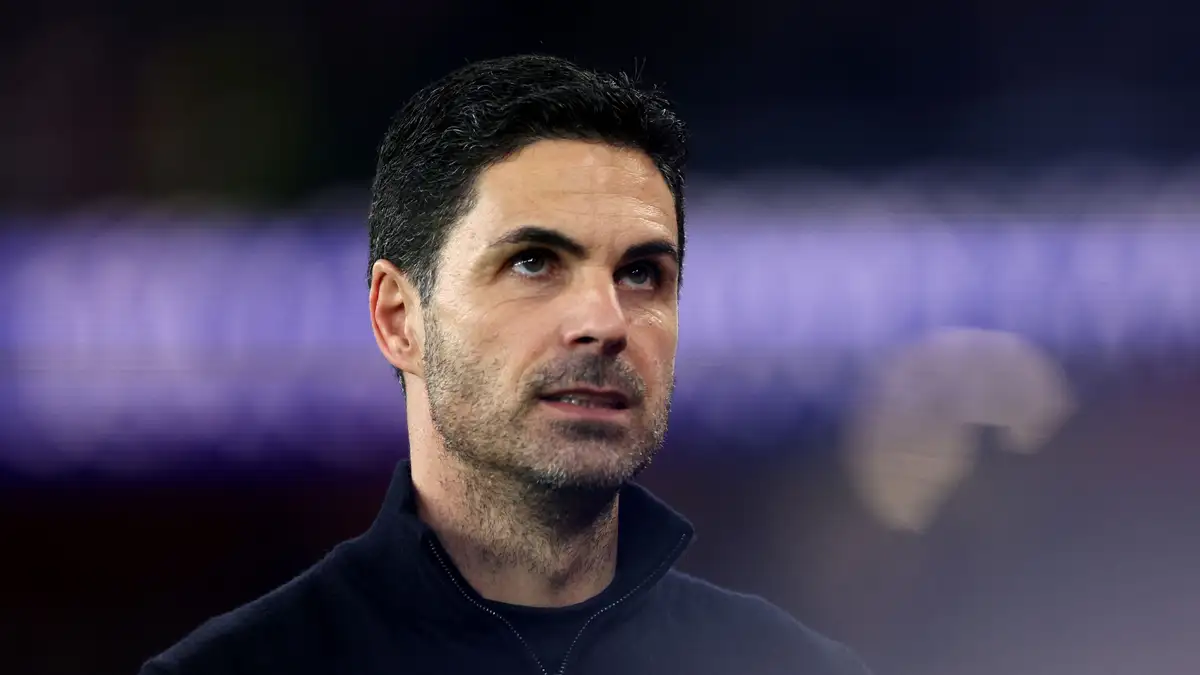
Mikel Arteta warned Premier League failure will have ‘long-term consequences’ for Arsenal as Man City increase pressure ahead of top-of-the-table clash
Mikel Arteta warned Premier League failure will have ‘long-term consequences’ for Arsenal as Man City increase pressure ahead of top-of-the-table clash
There are moments in a football season that feel bigger than three points, bigger than form, even bigger than the table itself. For Arsenal and Mikel Arteta, this weekend’s trip to Manchester City is one of those moments.
On paper, the situation still looks promising. Arsenal sit top of the Premier League, holding a six-point cushion and knowing that victory at the Etihad would stretch that lead even further. But football rarely follows the script written by league tables. Beneath the surface, the mood around Arsenal has shifted — from controlled confidence to something more fragile, more uncertain.
And now, voices from within the game are starting to frame this not just as a title race, but as a defining chapter in Arteta’s tenure.
High stakes at the Etihad as Man City increase pressure
There is no avoiding the magnitude of what awaits Arsenal at the Etihad Stadium.
Manchester City, under Pep Guardiola, have turned this stage of the season into something of an art form. When the pressure peaks, they tend to find another gear — a rhythm that suffocates opponents and turns small advantages into decisive runs. Arsenal know this better than most, having watched similar patterns unfold in recent seasons.
This time, however, the stakes feel even higher.
Arsenal arrive with 70 points, still in control of their own destiny. But three consecutive domestic defeats have chipped away at the aura they built earlier in the campaign. Injuries have stretched the squad, performances have dipped, and suddenly the margin for error has disappeared.
Win, and they send a statement — not just to City, but to themselves.
Lose, and the narrative shifts instantly.
Momentum, that intangible but powerful force in title races, would swing firmly in City’s direction. And once that happens, history suggests it is very difficult to pull back.
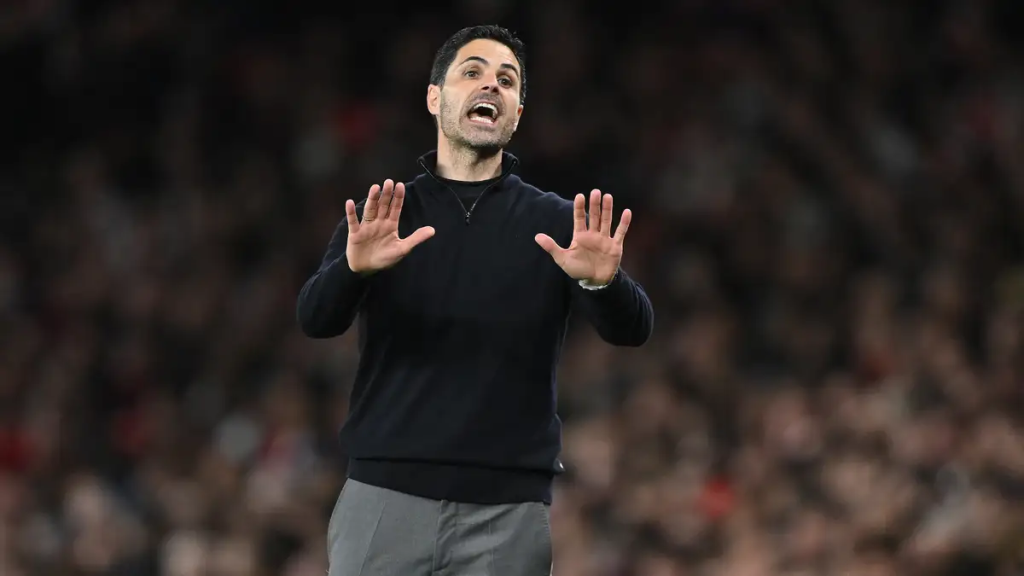
Mikel Arteta warned Premier League failure will have ‘long-term consequences’ for Arsenal as Man City increase pressure ahead of top-of-the-table clash
It is in this context that former defender Jamie Carragher has issued a stark warning.
In his view, this is not simply about winning or losing a title. It is about validation. About whether Arteta’s project — years in the making — can deliver the one thing that ultimately defines elite teams: silverware.
Carragher’s argument is blunt but difficult to ignore.
For the past few seasons, Arsenal’s progress has been widely praised. Finishing second, once seen as a sign of revival, was celebrated as a step forward. But expectations evolve. What was once success can quickly become insufficient.
And now, the bar has moved.
“This is supposed to be Arsenal’s time,” Carragher suggested, pointing to the idea that opportunities like this do not come around indefinitely. Teams rise, peak, and sometimes fade before reaching the summit.
For Arteta, the concern is not just falling short — it is what comes after.
Arteta’s legacy on the line
It might sound dramatic, but in modern football, narratives change quickly.
Arteta has spent years building this Arsenal side — reshaping the squad, refining the style of play, instilling a clear identity. There is no doubt the club is stronger than when he arrived. The structure is there, the philosophy is clear, and the talent pool is impressive.
But elite football is unforgiving when it comes to outcomes.
If Arsenal fall short again, it would mark a fourth consecutive second-place finish. And while that might still represent consistency at the top level, it risks creating a different kind of narrative — one centred around near-misses rather than achievements.
Carragher framed it in stark terms: a triumph would silence all criticism, rendering past doubts irrelevant. Failure, however, could open the door to renewed scrutiny — not just of results, but of methods.
In other words, the conversation shifts from “how far they’ve come” to “why they can’t get over the line.”
The psychological weight of another near miss
Football is as much mental as it is tactical.
One of the key concerns raised is the psychological toll of repeated disappointment. Teams that come close but fail to win major trophies often face a difficult transition. Confidence can erode, belief can waver, and what once felt like momentum can begin to stall.
Arsenal are at risk of entering that territory.
Carragher pointed out that the summer could become far more complicated if the title slips away. Trust — between manager, players, and supporters — is a delicate thing. It takes time to build, but it can be shaken quickly when expectations are not met.
“Psychologically, it would be tougher to recover,” he noted, hinting at the possibility of longer-term consequences.
Those consequences are not always immediate or obvious. They show up in subtle ways — hesitation in big moments, increased pressure on new signings, questions over tactical decisions that previously went unquestioned.

Tactical evolution or forced change?
Another layer to this discussion is what happens next, regardless of the outcome.
Even if Arsenal win the title, Arteta will likely look to evolve the team further. That is the nature of elite management — constant refinement, constant improvement.
But the difference lies in control.
As a champion, Arteta would have the authority to shape changes on his own terms. Adjustments would be seen as proactive, part of a broader vision.
Without a title, those same changes might be viewed differently.
They could be interpreted as reactive — responses to criticism rather than deliberate evolution. That shift in perception can influence everything from dressing room dynamics to transfer negotiations.
In short, success gives you control. Failure invites scrutiny.
Mikel Arteta warned Premier League failure will have ‘long-term consequences’ for Arsenal as Man City increase pressure ahead of top-of-the-table clash
The immediate challenge, however, remains on the pitch.
Arsenal are heading into one of the most demanding stretches of their season, and they are doing so without several key players. Injuries to Bukayo Saka and Martin Ødegaard have disrupted both creativity and balance, forcing Arteta to rethink his approach at a crucial time.
Depth will be tested. Mental resilience will be tested. And perhaps most importantly, belief will be tested.
Following the clash with Manchester City, Arsenal must quickly turn their attention to the Champions League, with a semi-final trip to Atletico Madrid looming. It is a schedule that leaves little room for recovery, either physically or emotionally.
In many ways, this is the ultimate examination of what Arteta has built.
Final thoughts: a defining moment, not just a match
It is easy to frame Sunday’s game as a title decider, but that only tells part of the story.
For Arsenal, it represents something broader — a test of identity, of mentality, of whether this team is ready to take the final step from contender to champion.
For Mikel Arteta, it is a moment that could shape how his entire project is perceived.
Win, and the narrative changes overnight. The years of groundwork are validated, the doubts fade, and Arsenal take their place at the summit.
Lose, and the questions return — louder, sharper, and harder to ignore.
That is the reality of elite football.
And that is why, when Arsenal walk out at the Etihad, they will be carrying more than just the weight of a title race.


There are no comments yet. Be the first to comment!