


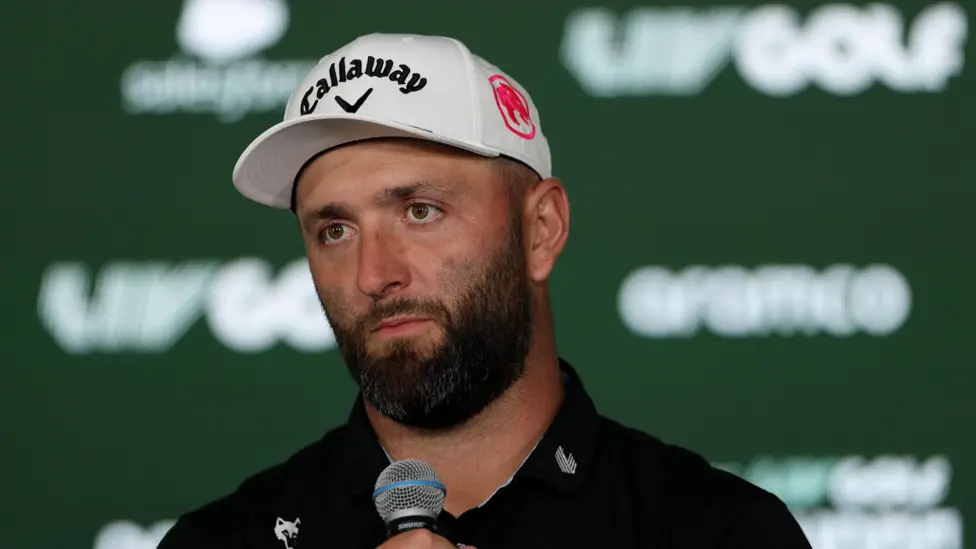
Saudi Arabia to Stop Funding LIV Golf Next Season as Breakaway Tour Faces Defining Summer
The future of LIV Golf has been thrown into fresh uncertainty after reports that Saudi Arabia will stop funding LIV Golf next season, ending the financial support that helped launch one of the most disruptive projects modern golf has ever seen.
For several years, LIV has operated with resources most rival sports leagues could only dream about. Massive appearance fees, guaranteed contracts, team franchises and aggressive expansion plans were all made possible by backing from Saudi Arabia’s Public Investment Fund. That money changed the golf landscape, lured some of the sport’s biggest names away from traditional tours and forced the PGA Tour into a defensive posture.
Now, with that support reportedly set to end after the current campaign, LIV stands at a crossroads. The league insists it has plans, investors are being courted and a new strategy is coming. But there is no escaping the scale of this moment. When the financial engine of a project changes, everything changes with it.
Saudi Arabia to Stop Funding LIV Golf Next Season and Trigger Major Questions
The headline itself is dramatic enough: Saudi Arabia to stop funding LIV Golf next season. But the real story is what follows.
LIV is expected to unveil a new strategic direction and appoint independent board members as it looks to present itself less as a state-backed challenger and more as a sustainable sports property. That is a very different identity from the one it carried into the market.
The original LIV model was built on disruption. Spend heavily, move fast, sign stars, challenge tradition and force negotiation. In many ways, it succeeded. The PGA Tour changed policies, prize money rose across professional golf and elite players suddenly had leverage they had never enjoyed before.
But disruption is one thing. Durability is another.
If Saudi funding is stepping back, LIV must now prove it can survive on commercial logic rather than sovereign wealth. That means sponsorship, broadcast growth, ticket demand, franchise value and credible long-term investor confidence.
Those are harder things to buy.
LIV Golf Must Find New Investors Fast
According to multiple reports, LIV executives are already searching for replacement funding and exploring ways to reposition the business. That suggests urgency.
The league may still believe in its global model. Events in Asia, Europe and Britain remain on the calendar, while team branding continues to be central to the concept. Yet the scale may have to shrink. Fewer tournaments, leaner operations and more realistic spending levels now appear likely.
That may not be a disaster. In fact, it may be overdue.
LIV’s early years often felt like a startup with unlimited cash but unfinished structure. Big names arrived, but fan identity around teams remained unclear. Television reach was inconsistent. Some venues generated energy, others felt corporate and detached. The golf was strong, but the ecosystem around it was still forming.
A leaner LIV could actually become a smarter LIV.
Fourteen events may become eight or ten. Prize structures may evolve. Teams may need real owners rather than symbolic valuations. Markets may be selected for audience growth instead of spectacle alone.
That would be less flashy, but potentially more sustainable.
What Happens to the Stars of LIV Golf?
Whenever uncertainty surrounds a league, attention immediately turns to players.
LIV still has elite names attached to it. Jon Rahm, Bryson DeChambeau, Phil Mickelson, Cameron Smith and others remain significant attractions. Their presence gives the product credibility and marketability.
But elite athletes also value clarity.
If the schedule shrinks, if investment softens or if confidence drops, players will naturally weigh their options. Some may remain loyal to guaranteed status and a global calendar. Others may quietly explore pathways back to traditional tours if doors reopen.
That is where the next political battle in golf could begin.
The PGA Tour and DP World Tour have already had to coexist with LIV reality. If LIV weakens, those organisations must decide whether to absorb returning stars, under what conditions, and at what cost to members who stayed.
There are no easy answers there.
Saudi Arabia’s Wider Sports Strategy Matters Too
This story is not just about golf. It is also about Saudi Arabia’s evolving sports investment strategy.
The kingdom has invested heavily across football, boxing, Formula 1, tennis and more. Those moves were never isolated. They were part of a broader push for visibility, influence and commercial diversification.
If Saudi Arabia is stepping back from LIV specifically, it does not necessarily mean retreat from sport overall. It may simply mean recalibration.
Some projects mature. Others need restructuring. Others no longer fit current priorities.
LIV may now fall into that category.
Why LIV Golf Still Has a Chance
Despite the noise, writing LIV’s obituary would be premature.
The league still has assets many new sports properties would envy:
- Recognisable star players
- Global event experience
- A differentiated team concept
- Existing brand awareness
- Relationships in multiple markets
- Proof that it can attract headlines and attention
Those things matter.
If fresh investors arrive with a more disciplined model, LIV could move from rebellion to relevance. Instead of trying to overpower golf’s old order, it could become a complementary premium circuit with selected global events and team competition layered into the calendar.
That version may actually suit modern fans better.
Shorter schedules, clearer stakes and easier-to-follow narratives often outperform bloated calendars.
The Cost of the Experiment
Still, the numbers around LIV’s journey have been staggering. Billions reportedly committed. Huge losses absorbed. Massive contracts handed out.
That spending bought attention, but attention is expensive.
The real test of any sports league is whether people watch when the novelty fades. Whether sponsors stay when subsidies shrink. Whether fans care beyond controversy.
That is the challenge LIV now faces.
It no longer gets judged as the bold newcomer. It gets judged as an established business.
And established businesses need balance sheets, not just headlines.
A Defining Summer for LIV Golf
The next few months could shape the next decade of men’s professional golf.
If LIV secures smart funding, trims excess and stabilises operations, it could emerge stronger and more serious. If it fails to do so, fragmentation in golf may begin to heal as players drift back toward older structures.
Either way, the age of limitless spending appears to be ending.
For players, administrators and fans, that may bring clarity after years of chaos.
Saudi Arabia to Stop Funding LIV Golf Next Season – What Comes Next?
That remains the biggest question.
LIV was born as a revolution. It now has to survive as a business.
Some leagues are built with money. Others are built with momentum. The strongest are built with both.
LIV had the first. It briefly had the second. Now it must prove it can still create the third.
Saudi Arabia may be stepping away, but the real verdict on LIV Golf starts now.


There are no comments yet. Be the first to comment!