































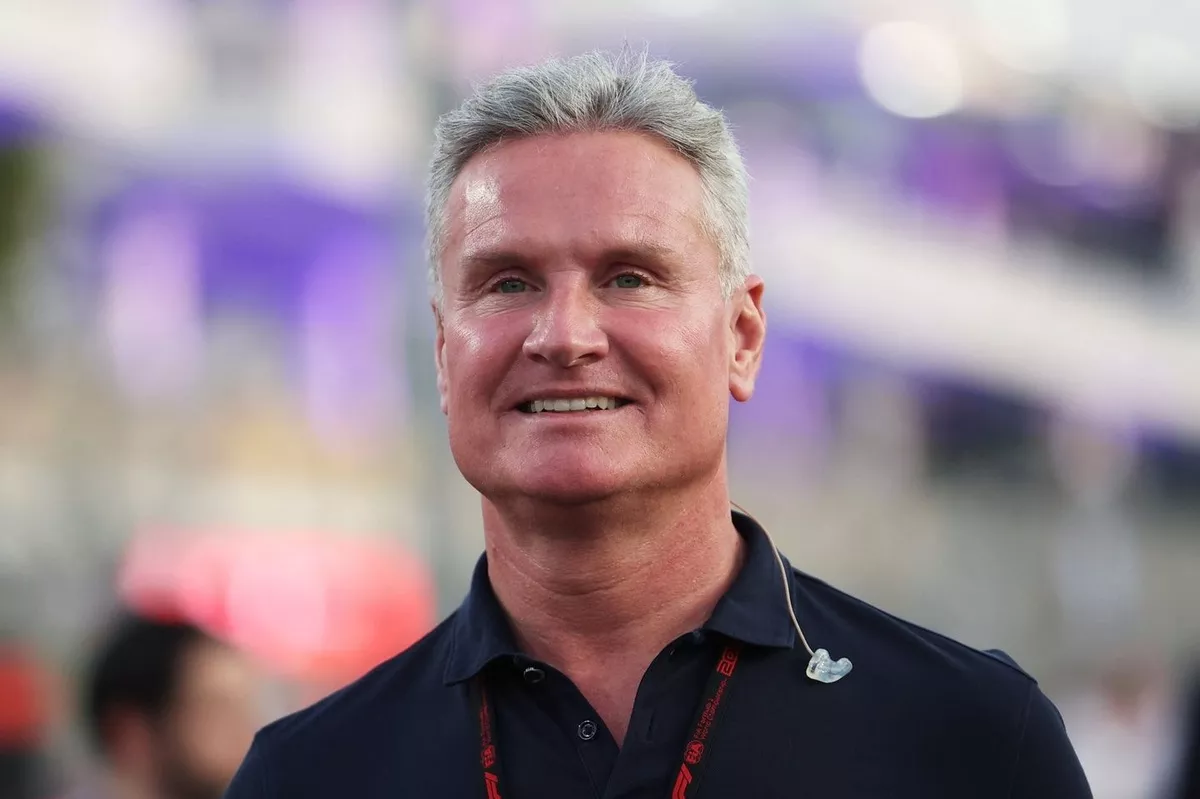
David Coulthard lifts lid on soaring junior racing costs with £8million claim
David Coulthard lifts lid on soaring junior racing costs with £8million claim
There are conversations in motorsport that tend to stay behind closed garage doors—quiet discussions about funding, sponsorship, and the uncomfortable reality that talent alone is rarely enough to climb the ladder. But every so often, someone with experience at the very top of the sport brings those conversations into the open.
That is exactly what former Formula 1 driver David Coulthard has done, offering a frank and slightly sobering look at what it now costs to even dream of reaching the F1 grid in the modern era. His headline figure is striking: around £8 million from karting through to the point where a driver is considered ready for Formula 1.
It is the kind of number that makes you pause for a second—not because it is surprising in the paddock, but because hearing it spoken out loud gives it a different weight entirely.
David Coulthard lifts lid on soaring junior racing costs with £8million claim
Speaking on the Up To Speed podcast alongside former W Series driver and Sky Sports F1 pundit Naomi Schiff, Coulthard didn’t sugarcoat the situation. With the perspective of someone who has raced at the very highest level—and who now watches the next generation closely through his own family’s involvement in motorsport—he broke down just how quickly the financial demands escalate.
The former 13-time Grand Prix winner described a progression that starts in karting, moves into Formula 4, then climbs through Formula 3 and Formula 2 before a driver is even in the conversation for Formula 1. Each step, he explained, carries a significant jump in cost, and together they form a ladder that is as financially demanding as it is competitive.
In his words, if everything goes as planned, a family could expect to spend close to £8 million by the time a driver is properly positioned for F1 consideration. And that, he stressed, is almost the “best case scenario”.
It is not just a figure—it is a reminder of how much motorsport has changed.
The brutal financial ladder from karting to Formula 1
Coulthard outlined the progression in fairly straightforward terms, but the implications behind each stage are anything but simple.
Karting, often seen as the purest form of racing, is where most future F1 drivers begin. But even this entry-level stage is far from cheap. Between equipment, travel, coaching, tyres, and constant upgrades, costs can quickly spiral into the hundreds of thousands over several years.
From there, drivers typically move into Formula 4, where costs rise again. Even a single season can demand significant backing, especially if a driver is competing at a front-running level.
Then comes Formula 3, which Coulthard suggested can require around £1.5 million across a campaign, depending on team and support package. Formula 2 follows, often exceeding £2 million per season for those aiming to compete at the front of the grid.
By the time all of these stages are added together, the total is staggering. And that is before factoring in the countless additional expenses that come with testing, simulator work, physical preparation, and ongoing development.
Coulthard, drawing from his own experience supporting his son Dayton’s progression through junior categories, was clear that even in karting alone, families are often already spending hundreds of thousands of pounds.
It adds up quickly. Sometimes faster than expected.
Naomi Schiff highlights the widening gap in grassroots racing
Naomi Schiff brought another perspective to the conversation, and her reaction reflected what many in the paddock quietly acknowledge.
For her, the sheer scale of the numbers is what stands out most. Motorsport, she noted, will always involve cost—cars need engineering, tyres need replacing, teams need funding—but the concern lies in how early that financial barrier begins to shape careers.
She pointed out something that has become increasingly visible in modern motorsport: the dominance of drivers who come from wealthy backgrounds or established racing families. While talent remains essential, access to resources often determines who gets the chance to showcase it in the first place.
Schiff raised an interesting comparison with Formula 1 itself, where strict cost caps have been introduced at the highest level to control spending. Yet, at grassroots level, there is no such structure in place.
That contrast is difficult to ignore.
If financial regulation is considered necessary at the top of the sport to maintain fairness and sustainability, the question naturally arises: should something similar exist at the entry point as well?
When talent meets financial reality
One of the most striking themes from the discussion was the idea that many talented drivers never even make it past karting—not because they lack ability, but because they lack funding.
It is an uncomfortable truth, but one that has become increasingly common in junior motorsport pathways. Unlike football or other global sports where raw talent can sometimes be enough to earn a chance, motorsport demands both skill and significant financial backing from the very beginning.
Schiff emphasised this point by reflecting on her own karting experience. She described a clear divide between drivers with access to upgraded equipment and those who had to make do with limited resources.
In many cases, she noted, competitors with greater financial support would arrive with multiple engines, newer chassis, and constant upgrades after each race weekend. Meanwhile, others had to extract every bit of performance from far more limited setups.
The implication was simple but stark: in a sport where milliseconds matter, equipment can sometimes outweigh talent.
The uncomfortable question: where should the line be drawn?
Perhaps the most thought-provoking part of the discussion was not the £8 million figure itself, but the broader question it raises about fairness in motorsport.
Schiff suggested that while it may be impossible to remove money from the equation entirely, there could be ways to reduce its influence at grassroots level. The goal, she argued, would not be to eliminate competition between teams or drivers, but to ensure that access to opportunity is not determined primarily by financial strength.
It is a delicate balance.
Motorsport is expensive by nature. Engineering expertise, logistics, safety standards, and global travel all come at a cost. But when that cost begins to exclude potentially elite talent before they even reach professional categories, the structure starts to raise difficult questions.
Coulthard acknowledged that reality, but also pointed out that similar issues exist in other sports—just in different forms. In football, for example, talent can be missed if players are not scouted at the right time or if injuries disrupt development.
The difference in motorsport is that financial barriers are present from the very first step.
A sport shaped by privilege and perseverance
Another uncomfortable truth highlighted in the discussion is the changing demographic of the modern F1 pipeline. Many current drivers, as Schiff noted, come from families with significant financial resources or strong motorsport backgrounds.
That does not diminish their talent, but it does reflect how much support is often required to reach the top level.
There are exceptions, of course—drivers who have broken through against the odds through sponsorship, academy support, or exceptional early performance. But they are increasingly rare compared to previous generations.
Coulthard referenced drivers like Lewis Hamilton, Fernando Alonso, Esteban Ocon, and Pierre Gasly as examples of racers who have come through more traditional, less financially dominant pathways. Their journeys are often cited precisely because they are no longer the norm.
The reality behind the glamour
From the outside, Formula 1 is a world of glamour, speed, and elite competition. But underneath that polished surface lies a development system that is increasingly shaped by economics.
The £8 million figure is not just a statistic—it is a reflection of how structured and commercialised the sport has become from the very beginning of a driver’s career.
For families, the decision to pursue motorsport at a serious level is no longer just about passion or talent. It is a long-term financial commitment that can stretch over a decade or more, with no guarantee of reaching the top.
And yet, despite those challenges, the dream persists.
Every season, new drivers emerge through the ranks, chasing the same goal: a seat in Formula 1. Some will make it through funding, some through academy systems, and a small number through sheer breakthrough talent.
Looking forward
What comes next for junior motorsport is still an open question.
Whether reforms at grassroots level will ever mirror the financial regulations seen in Formula 1 remains uncertain. What is clear, however, is that conversations like this one are becoming harder to ignore.
When experienced voices like David Coulthard and Naomi Schiff openly discuss the scale of costs involved, it adds weight to a debate that has been simmering for years.
For now, the pathway to Formula 1 remains as demanding as ever—both on track and off it.
And for every driver dreaming of the grid, the challenge is no longer just about being fast.
It is about being able to afford the journey that gets you there.


There are no comments yet. Be the first to comment!