
































































Cristiano Ronaldo Sees MLS Move Ruled Out as USMNT Legend Claims Portuguese GOAT Is ‘One Injury Away from Retiring’
Why Cristiano Ronaldo’s Long-Linked MLS Move May Finally Be Off the Table
For years, the idea has followed Cristiano Ronaldo almost like a football fairytale waiting for the right final chapter.
A glittering late-career move to MLS.
A grand entrance in Los Angeles, maybe Miami.
Packed stadiums, celebrity cameras, one last global marketing storm, and a smooth transition from football icon to full-blown American entertainment figure.
It always made sense on paper.
But football, especially at 41, rarely sticks to the script.
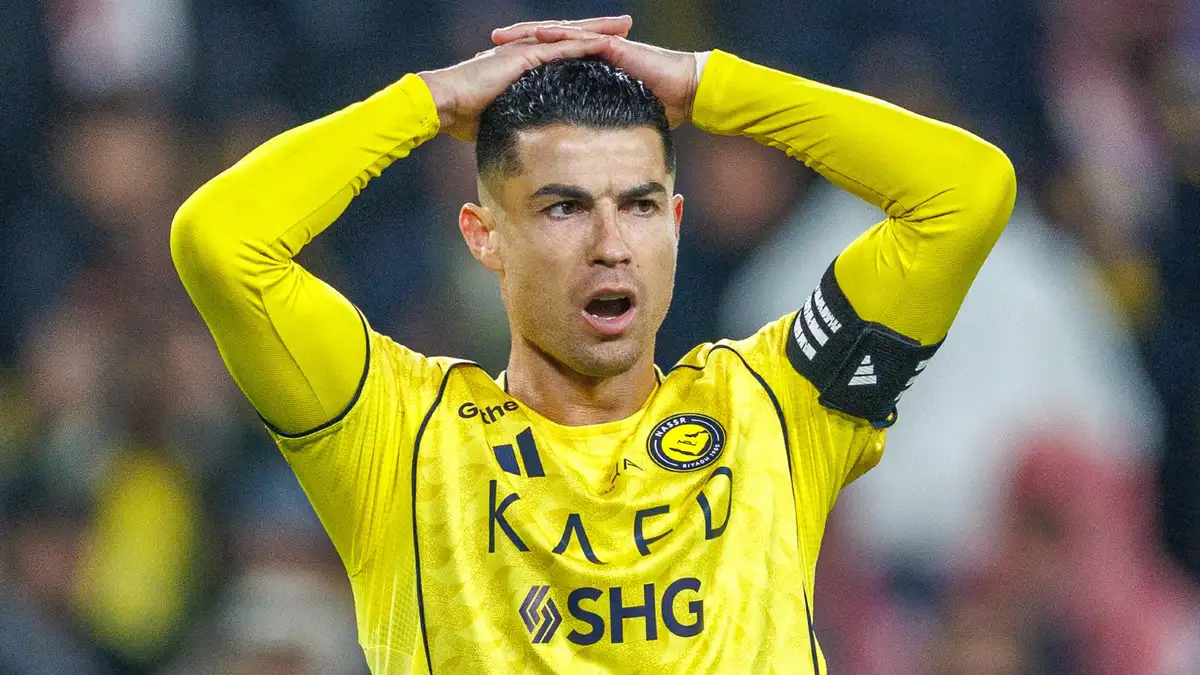
Now, the long-running speculation around Cristiano Ronaldo and a possible MLS move appears to be losing serious momentum — and not because the commercial logic disappeared. If anything, Ronaldo would still be one of the biggest attractions the league has ever seen. The real issue, according to USMNT legend Kasey Keller, is much simpler and much harsher: the Portuguese superstar may simply be too close to the edge physically to make that kind of jump now.
Keller’s verdict was blunt, and honestly, it landed with the kind of realism that tends to cut through the usual romantic transfer noise.
In his view, Ronaldo is “one injury away from retiring.”
That line sounds dramatic. But it also sounds uncomfortably plausible.
Because while Ronaldo remains one of the most obsessive physical specimens the sport has ever seen, age eventually changes the terms for everyone — even the guys who seem built in a lab. At this stage of his career, it’s not just about whether he can still score goals. It’s about whether he still wants to put his body through another demanding transition, in another country, in another league, with a very different travel schedule and competitive rhythm.
And when you look at where he is now — still playing in the Saudi Pro League, still chasing milestones, still recovering from yet another muscle issue, still targeting the 2026 World Cup — the idea of squeezing an MLS adventure in before the curtain drops suddenly feels a lot less inevitable than it once did.
Maybe the dream hasn’t fully died.
But for the first time in a long time, it genuinely feels like it might have passed him by.
USMNT Legend Kasey Keller Says Cristiano Ronaldo Is ‘One Injury Away from Retiring’
There’s a difference between people casually speculating about a veteran’s decline and a former elite goalkeeper saying the quiet part out loud.
Kasey Keller, one of the most respected names in USMNT history, didn’t dance around it when asked about Ronaldo’s future. He gave the kind of answer that feels grounded in experience rather than headline-chasing.
He acknowledged the obvious first: of course Ronaldo wants to keep pushing numbers. Of course the chase for landmarks still matters. The idea of reaching 1,000 career goals isn’t just some media fantasy — it’s exactly the sort of thing that would appeal to a player who has built so much of his identity around impossible standards and relentless accumulation.
But Keller’s bigger point was this: ambition is one thing, and physical reality is another.
At 41, Ronaldo is operating in a phase of a career where the margin for error becomes almost cruelly small. One serious injury doesn’t just interrupt momentum. It can end the entire conversation.
That’s why Keller’s comment hit so hard.
Because when he says Ronaldo is “one injury away from retiring,” he’s not necessarily predicting disaster. He’s describing the fragile truth of elite ageing. Once a player reaches this stage, every knock becomes more significant. Every recovery takes more management. Every decision about workload, travel, minutes and risk matters more than it did even two years earlier.
And that matters a lot when people keep casually throwing around the idea of Ronaldo to MLS.
MLS isn’t just a sunny retirement league anymore — at least not in the lazy, outdated way people sometimes frame it. It’s a demanding competition with huge travel demands, extreme climate variation, uneven surfaces in some places, and a calendar that can test even younger legs. Going from Saudi Arabia to a full American season at 41 or 42 is not just a branding move. It’s a physical project.
Keller clearly doesn’t think it’s one Ronaldo needs.
And maybe, deep down, Ronaldo doesn’t either.
Why an MLS Move May No Longer Make Sense for Cristiano Ronaldo at 41
The glamour of MLS has always been obvious.
There’s the marketability. The global visibility. The lifestyle angle. The potential for a big-market franchise to wrap football, entertainment and celebrity culture into one perfect final act. If there’s any player built for that kind of crossover, it’s Ronaldo.
But the timing matters.
If he had made that move a few years ago, maybe the conversation would feel different. If he had chosen the United States instead of Saudi Arabia when he left Europe, plenty of people would have called it a natural fit. There would have been immediate links to Inter Miami, LAFC, LA Galaxy, maybe even a one-season blockbuster somewhere else.
Instead, he chose Al-Nassr and the Saudi project.
That decision didn’t just change his geography. It changed the likely shape of his final years.
Once he committed to Saudi Arabia, the logic became more straightforward: keep scoring, keep earning, keep building the global brand, stay in a controlled environment, and chase personal milestones without the extra logistical stress that MLS can bring.
Keller even touched on that indirectly. He questioned why Ronaldo would want to throw himself into the American grind now — especially the coast-to-coast travel — “just for what?”
That’s the right question.
At this stage, what does MLS actually give him that he doesn’t already have?
More fame? He doesn’t need it.
More money? Not necessarily.
More brand exposure in the United States? He already has it.
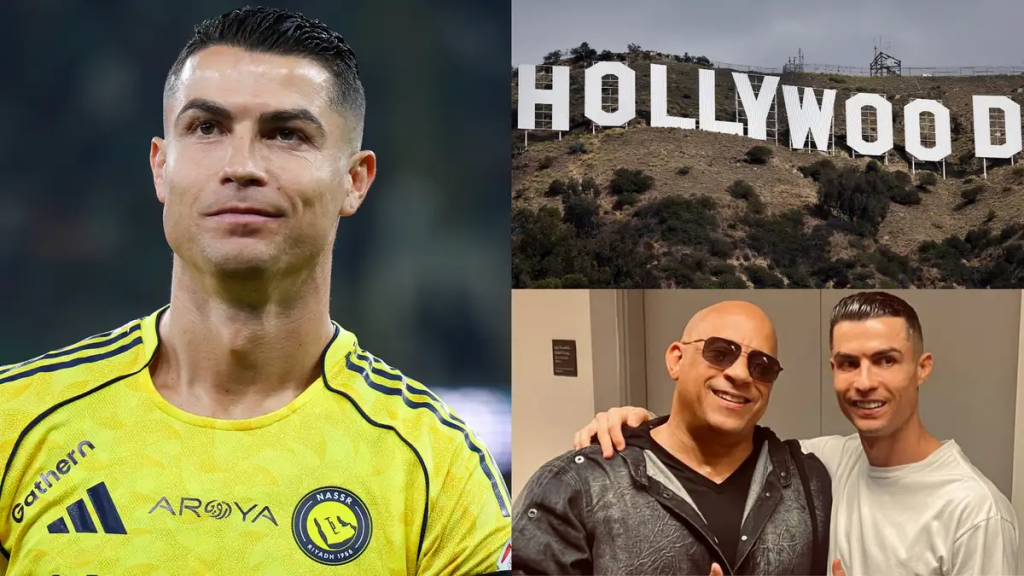
A Hollywood bridge? Probably irrelevant.
A new football challenge? Maybe, but at what physical cost?
And that last part is the one that keeps coming back.
If you’re Ronaldo, the calculation is no longer just about adding chapters. It’s about preserving the right ending.
Cristiano Ronaldo Doesn’t Need MLS to Break Into Hollywood or Build His Post-Football Brand
One of the long-standing assumptions around a potential Cristiano Ronaldo MLS move has always been that it would double as a launchpad into the next phase of his public life.
Come to America.
Play in front of celebrity crowds.
Build deeper connections in Los Angeles or Miami.
Step into film, streaming, entertainment, lifestyle branding, maybe even Hollywood itself.
It sounds neat. It sounds marketable. It sounds like the sort of narrative people love attaching to superstars.
But Keller made a very fair point: Ronaldo does not need a football contract in MLS to become a Hollywood figure.
He’s already Cristiano Ronaldo.
That may sound obvious, but it’s worth saying clearly. This is not a player who needs help getting into rooms. If Ronaldo wants to appear in a film, attach himself to a production, launch a series, expand a documentary brand, or partner with a major studio, he can do that tomorrow. The door is not waiting for him to score goals in California first.
That’s what makes the “MLS as a stepping stone” theory feel increasingly outdated.
Ronaldo’s brand is already global enough to skip the middle step entirely.
And if he really wanted the entertainment-first route, there’s a strong argument that he would have taken it instead of moving to Saudi Arabia in the first place. That’s basically what Keller was getting at. Ronaldo chose football continuation over lifestyle repositioning when he left Europe. That tells you a lot about what still drives him.
He’s still chasing football targets.
He’s still wired for competition.
And until that changes, every decision he makes is likely to be filtered through performance first — not image.
Ronaldo’s Hamstring Injury Is Exactly the Kind of Warning Sign People Were Already Talking About
The timing of this debate is especially interesting because Ronaldo is currently dealing with the exact sort of issue that fuels it.
The Portuguese icon recently suffered a hamstring tear while playing in the Saudi Pro League — precisely the kind of muscular setback that becomes more ominous when a player is in his forties. No one is saying it’s catastrophic. No one is declaring the end. But when you’re 41, a hamstring injury is never just a line in the team news.
It becomes part of the wider story.
It reinforces the idea that the body is now the main opponent.
To Ronaldo’s credit, he’s handled it in the way you’d expect from him. He’s been active on social media, showing rehab work, pushing the usual message of progress, discipline and daily improvement. That’s who he is. Even injured, he performs resilience like a second sport.
And to be fair, Portugal boss Roberto Martinez has tried to calm the noise. He has reportedly insisted that the current issue is a minor setback, not something that should trigger panic about Ronaldo’s place at the 2026 World Cup.
That’s important.
Because the World Cup is clearly still central to the entire conversation.
If Ronaldo makes it to North America next year and plays a major role for Portugal, that likely becomes the true final landmark of his international story. It may also become the natural endpoint of his playing career — or at least the point after which retirement becomes a far more realistic expectation.
Which brings us back to MLS.
If the World Cup is the target, and if every recovery and every physical decision is being made with that in mind, why complicate the path with another major club relocation?
That’s the question hovering over everything now.
What Cristiano Ronaldo’s Life After Football Could Really Look Like
The funny thing about Ronaldo is that even when people talk about retirement, it rarely sounds like anyone expects him to actually become quiet.
That includes Keller.
He made the point that Ronaldo will almost certainly remain visible, active and commercially powerful after football — he just doesn’t necessarily look like someone who will slide neatly into the usual ex-player jobs.
And honestly, that feels right.
Can you picture Ronaldo as a traditional coach?
Standing on a training pitch in the rain, barking instructions, grinding through youth sessions and tactical meetings for years?
Maybe. But it doesn’t naturally fit the image.
Can you see him as a sporting director or general manager, operating mostly behind the scenes, dealing with budgets and squad planning and contract details?
That feels even less likely.
Ronaldo has always been front-facing.
He has always been the event.
He has always been the headline, the camera magnet, the center of gravity.
That doesn’t mean he lacks football intelligence. Far from it. But personality matters when we imagine the next phase, and his personality suggests something broader.
Media projects? Absolutely.
Documentaries? Almost certainly.
A major streaming series? Very possible.
Brand expansion with Georgina Rodriguez? Easy to imagine.
Global ambassador roles, ownership stakes, lifestyle ventures, maybe even entertainment crossover? All of that feels more natural than a touchline tracksuit.
And that’s why the post-MLS fantasy may have been overcooked from the start.
He doesn’t need MLS to stay relevant.
He doesn’t need MLS to enter American culture.
He doesn’t need MLS to become bigger than football.
If anything, he already is.

Cristiano Ronaldo, MLS and Retirement: The Final Chapter May Be Closer Than Fans Want to Admit
So, where does this leave the long-rumoured Cristiano Ronaldo to MLS storyline?
Not completely dead. But definitely colder than it used to be.
There will always be clubs willing to make the call. There will always be executives who dream about what Ronaldo could mean for ticket sales, shirt sales, media buzz and global visibility. If he ever decided he wanted that move, someone in MLS would listen.
But the football logic has shifted.
At 41, with a recent hamstring tear, with the 2026 World Cup still looming as a major target, and with his career entering that brutally delicate phase where one more injury could change everything, the idea of uprooting himself for a new league feels less romantic and more risky.
That’s the core of Keller’s argument, and it’s hard to dismiss.
Ronaldo may still want 1,000 goals.
He may still believe he has more to give.
He may still be physically fitter than players ten years younger.
But even legends don’t get to negotiate with time forever.
And if this really is the stretch where every injury matters more, every recovery carries more weight, and every decision has to protect the final chapter, then maybe the smartest move is the simplest one:
Stay where you are.
Get fit.
Finish strong.
Chase the World Cup.
Then decide what the ending should look like.
For all the glamour attached to the MLS idea, maybe that ending no longer needs another club at all.
Maybe the final Ronaldo act isn’t about one last transfer.
Maybe it’s about one last tournament, one last milestone chase, and then the kind of exit only someone of his size could make.
And if that’s true, then the MLS dream may not have been ruled out by the league.
It may simply have been ruled out by time.


There are no comments yet. Be the first to comment!