


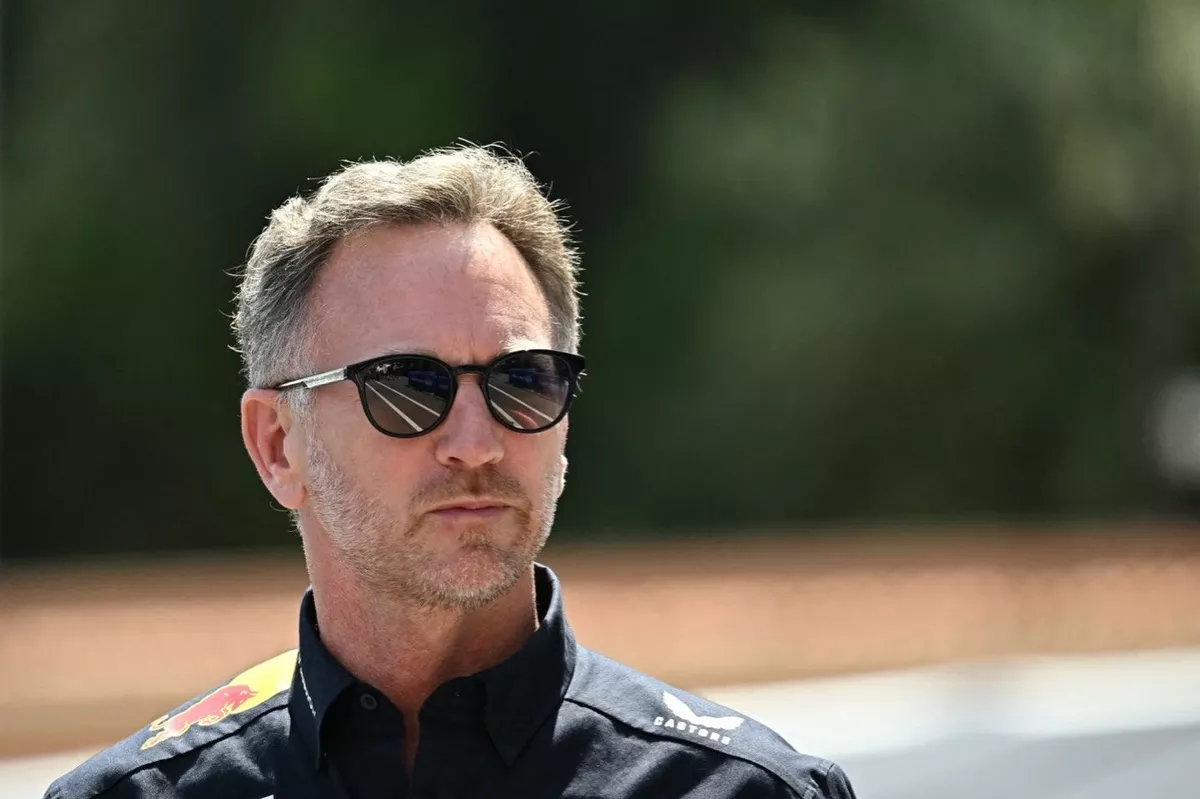
Former Red Bull F1 boss Christian Horner sparks intrigue with MotoGP appearance
Former Red Bull F1 boss Christian Horner sparks intrigue with MotoGP appearance at Jerez as cross-paddock ambitions emerge
Sometimes, in motorsport, it’s not the race itself that gets people talking — it’s who shows up where.
On a warm, expectant Saturday at Spanish Grand Prix in Jerez, there was the usual hum of engines, the buzz of qualifying ahead, and the familiar rhythm of a MotoGP weekend. But tucked into the paddock, away from the immediate roar of bikes and lap times, stood a figure that instantly shifted the conversation.
Christian Horner.
The former Red Bull boss wasn’t there by accident. And in a sport where appearances often carry meaning, his presence raised more than a few eyebrows.
A familiar face in an unfamiliar paddock
Horner’s visit to Jerez wasn’t just a casual drop-in. He was seen moving through the paddock with purpose, spending time in the garage of Honda Racing Corporation, deep in conversation with senior figures, including CEO Koji Watanabe.
For anyone who followed Formula 1 over the past decade, that connection makes sense.
Honda powered Red Bull through one of its most successful eras, delivering multiple world championships and forming a working relationship built on trust and shared ambition. Those ties don’t disappear overnight.
So when Horner is spotted in a Honda garage — even in a different championship — it naturally sparks curiosity.
What exactly is he doing there?
Alongside Stefano Domenicali — and that matters
Horner wasn’t alone.
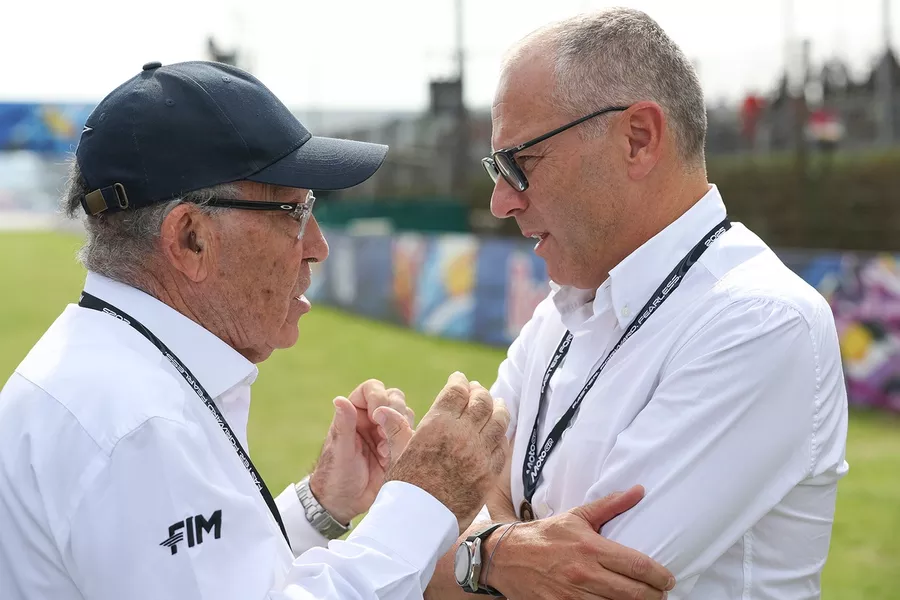
Walking the paddock with him was Stefano Domenicali, the CEO of Formula 1. That detail adds another layer to the story, because this isn’t just about one individual exploring new ground — it’s about a broader convergence between two worlds that are increasingly connected.
MotoGP and Formula 1, once operating in largely separate spheres, are now closer than ever, especially following the involvement of Liberty Media.
That shared ownership structure has started to blur the lines between the championships. Ideas, personnel, and even long-term strategy are beginning to overlap.
So when two high-profile F1 figures show up together in the MotoGP paddock, it doesn’t feel random.
It feels intentional.
Horner’s own words: curiosity, not commitment… yet
When asked directly about his presence, Horner didn’t rush to make bold declarations.
Instead, he spoke like someone observing, learning, taking stock.
He described himself as a long-time fan of MotoGP — which, to be fair, isn’t unusual in motorsport circles. He talked about the spectacle, the raw intensity of the bikes, the kind of visceral experience you only fully appreciate trackside.
But there was something else in his tone.
An openness.
Not a confirmation of intent, but certainly not a denial either. More like someone keeping options on the table.
A sport in transition — and opportunity
MotoGP is at an interesting point in its evolution.
With Liberty Media’s acquisition of Dorna Sports, the championship has entered a new phase — one that many believe could reshape its commercial and global appeal.
The parallels with Formula 1 are hard to ignore.
Liberty transformed F1 from a relatively traditional motorsport series into a global entertainment powerhouse, expanding its audience, modernising its image, and unlocking new revenue streams.
Now, the same approach could be applied to MotoGP.
And where there is change, there is opportunity.
Could team ownership be the next step?
Horner has made it clear in the past that he wants to return to the front line of motorsport. Not necessarily as a team principal in the traditional sense, but perhaps through ownership — having a stake, a say, a long-term position.
Formula 1 has always been the obvious destination for that ambition.
But MotoGP offers something different.
Something, arguably, more accessible.
Unlike F1, where teams must design and build their own chassis — a process that demands enormous infrastructure and investment — MotoGP allows independent teams to operate with manufacturer-supplied bikes.
That lowers the barrier to entry.
It doesn’t make it cheap, but it makes it more flexible.
And for someone like Horner, with experience, connections, and a clear understanding of how top-level motorsport operates, that flexibility could be appealing.
The precedent is already there
Crossing from Formula 1 into MotoGP is no longer unusual.
Figures like Massimo Rivola have already made that transition successfully, bringing F1 experience into the world of two wheels.
More recently, investment groups with F1 links have started to move in as well. Even Guenther Steiner has been involved in a consortium acquiring a MotoGP satellite team.
So Horner wouldn’t be stepping into unknown territory.
He’d be joining a growing trend.
Timing is everything
What makes this moment particularly interesting is the timing.
MotoGP is negotiating new commercial agreements set to come into force in 2027. Teams and manufacturers are pushing for improved financial terms, greater sustainability, and a clearer long-term structure.
At the same time, Liberty Media is still in the early stages of shaping its vision for the championship.
That combination — structural change and fresh ownership — creates a window.
A window where new investors, new ideas, and new leadership figures can step in and help define what comes next.
Horner’s appearance, in that context, feels less like a coincidence and more like reconnaissance.
The Jerez paddock as a meeting point
There’s something symbolic about Jerez itself.
It’s one of MotoGP’s most traditional venues, steeped in history, loved by fans, and known for producing intense, close racing. But it’s also a place where the sport’s future is quietly negotiated — in garages, hospitality units, and private conversations away from the cameras.
Horner’s time there — watching practice, talking to Honda, walking alongside Domenicali — fits into that environment.
Not everything happens in boardrooms.
Sometimes, it starts with showing up.
Between Formula 1 and MotoGP: a shifting landscape
For years, Formula 1 and MotoGP existed in parallel, occasionally intersecting but largely separate.
That’s changing.
Shared ownership, shared commercial thinking, and increasing crossover of personnel are bringing the two closer together. The idea of a unified motorsport ecosystem — where knowledge flows between disciplines — is becoming more realistic.
And figures like Horner, who understand one side deeply, are naturally drawn to explore the other.
So what does it all mean?
Right now, it means curiosity.
It means conversations.
It means someone with significant experience and influence taking a closer look at a sport that’s entering a new phase.
Does it mean Horner is about to buy a MotoGP team?
Not necessarily.
But it does mean he’s interested enough to be there, to ask questions, to observe from the inside rather than from afar.
And in motorsport, that’s often how bigger moves begin.
Conclusion: intrigue without certainty — for now
Christian Horner’s appearance in the MotoGP paddock at Jerez might not come with immediate consequences.
There’s no deal announced, no official role confirmed, no dramatic shift in career direction.
But it does create intrigue.
Because when someone with his track record, his connections, and his ambitions steps into a new environment, it rarely happens without a reason.
MotoGP is evolving.
Formula 1 continues to expand.
And somewhere between the two, figures like Horner are watching closely, weighing possibilities, and perhaps — just perhaps — preparing for what comes next.


There are no comments yet. Be the first to comment!