














































































Inside FC Bayern Most Incredible Project: How Säbener Straße Left Real Madrid and Barca Behind
“The Most Incredible Project We’ve Ever Undertaken” — How FC Bayern Built a Benchmark Beyond Real Madrid and Barca
For 77 years, one address has quietly shaped the identity of German football’s most powerful institution: Säbener Straße 51–57. Long before global branding, luxury training centres, and billion-euro football economies became standard, FC Bayern Munich was building something far more important — a home.
Today, the club’s headquarters resembles a five-star performance complex, closer in feel to a luxury hotel than a traditional training ground. But the journey from modest wooden huts to one of football’s most advanced facilities tells a story not just about infrastructure, but ambition, evolution, and a club constantly determined to stay one step ahead — even of giants like Real Madrid and Barcelona.
And if current plans materialise, another transformation could soon be on the horizon.
From Munich Hotspots to Football Innovation
Oddly enough, part of Bayern’s modern story begins away from the training pitches, inside a now-closed Munich bar called Edmoses. Located on Prinzregentenstraße, the venue once served as a meeting point where surfers, lawyers, and occasionally Bayern players crossed paths late into the night.
The contrast between nightlife and elite professionalism would soon become symbolic of a turning point.
When Jurgen Klinsmann arrived as head coach in 2008, he brought with him ideas shaped by American sports culture. Having lived in the United States, he admired how NBA and NFL franchises controlled every aspect of player development — fitness, nutrition, recovery, and team chemistry.
His vision was simple but radical for European football at the time: players should spend most of their day at the training centre.
The result was a sweeping modernisation of Säbener Straße.
Christian Lell, then part of Bayern’s younger generation, described the completed complex as a “really cool location,” even joking that he would move in permanently if given a small apartment. In reality, players were soon spending up to eight hours daily at the facility — a cultural shift that reshaped professionalism at the club.
A Training Ground Unlike Anything in Europe
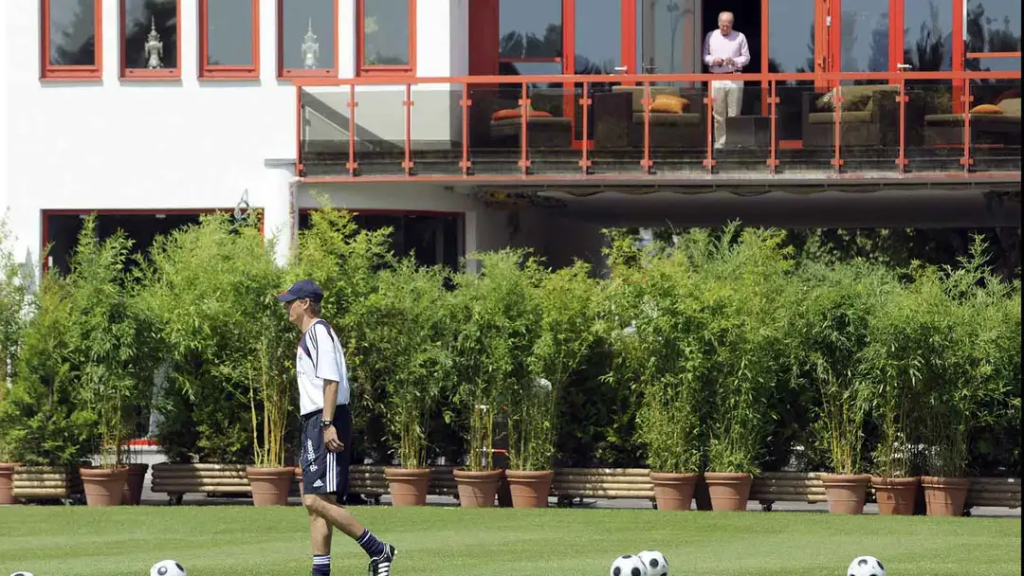
After renovation, Säbener Straße suddenly featured facilities unheard of in European football.
There was an auditorium equipped with simultaneous translation booths, a library, language classrooms, recreation areas with table tennis and pool tables, gaming zones, and even a DJ booth. The aim wasn’t luxury for luxury’s sake — it was cohesion.
Klinsmann proudly claimed that neither Real Madrid nor FC Barcelona possessed anything comparable at the time.
Captain Mark van Bommel, who had experienced Barcelona firsthand, agreed. The complex, he said, felt more like a high-end Dubai hotel than a football training centre.
The project also carried Klinsmann’s personal stamp. Interior designer Jurgen Meißner installed Buddha statues throughout the building to create a sense of calm and mindfulness — details that later became symbols of Klinsmann’s short-lived managerial era after he was dismissed without winning a trophy.
Yet despite his failure on the pitch, his infrastructural legacy endured. Bayern had entered the modern era.
Kurt Landauer and the Birth of a Permanent Home
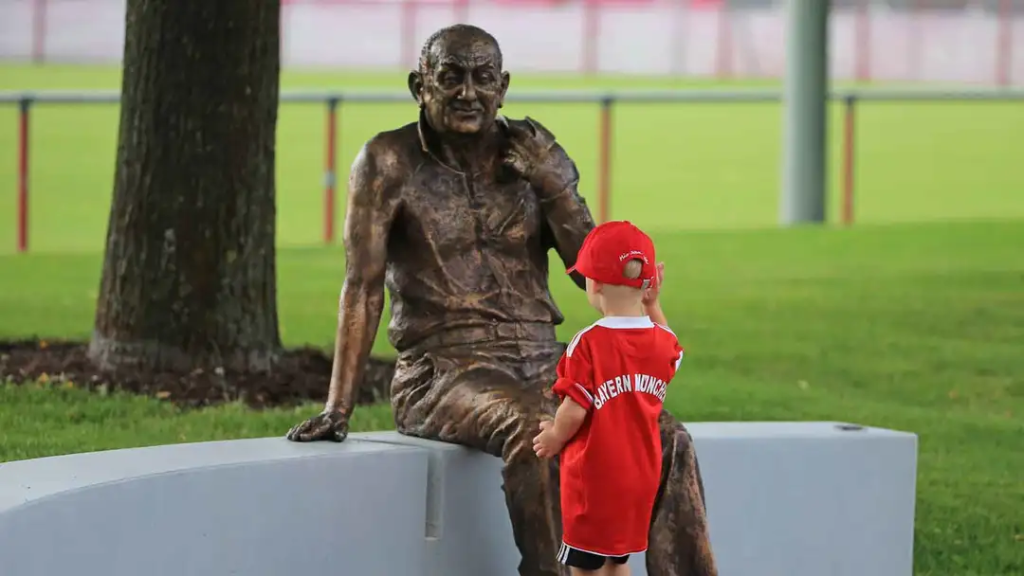
To understand the significance of Säbener Straße, however, one must go back much further — to 1949.
FC Bayern, founded in 1900 at Café Gisela near Odeonsplatz, spent decades without a permanent base. Training pitches and offices moved frequently until legendary president Kurt Landauer secured usage rights for the sports grounds in Munich’s Harlaching district.
For the first time, Bayern had stability.
Former goalkeeper Sepp Maier remembers arriving as a youth player in 1958 to a modest setup: three training pitches, a groundsman’s house, and simple wooden barracks serving as changing rooms and showers.
Hot water existed — briefly.
“You had to be quick,” Maier once joked. “Otherwise the water turned cold before the boiler reheated.”
Players even travelled into the city centre monthly to collect wages in person. Bank transfers didn’t yet exist. It was a different football world entirely.
Hierarchy, Hardship, and the Old Bayern Spirit
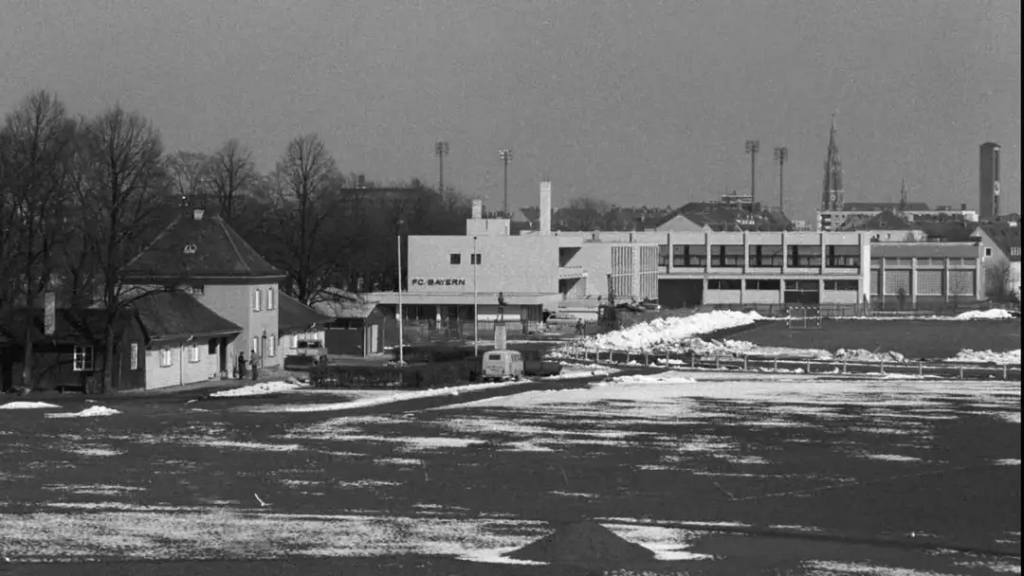
By the 1970s, Säbener Straße reflected Bayern’s rising sporting status but still retained a rough simplicity.
Klaus Augenthaler recalls four basement dressing rooms clearly mirroring team hierarchy: coaches first, then superstars like Franz Beckenbauer, Sepp Maier, and Gerd Muller, followed by senior professionals and finally the younger players.
Even medical treatment followed status lines. The club masseur often prioritised players who tipped him — a reminder that professionalism was still evolving.
The pitches looked perfect after summer breaks but deteriorated quickly as the season progressed, hardly fitting for a Bundesliga powerhouse.
Yet those imperfect conditions forged unity and resilience — qualities that defined Bayern’s golden era.
Commercial Growth and the Rise of Fan Culture
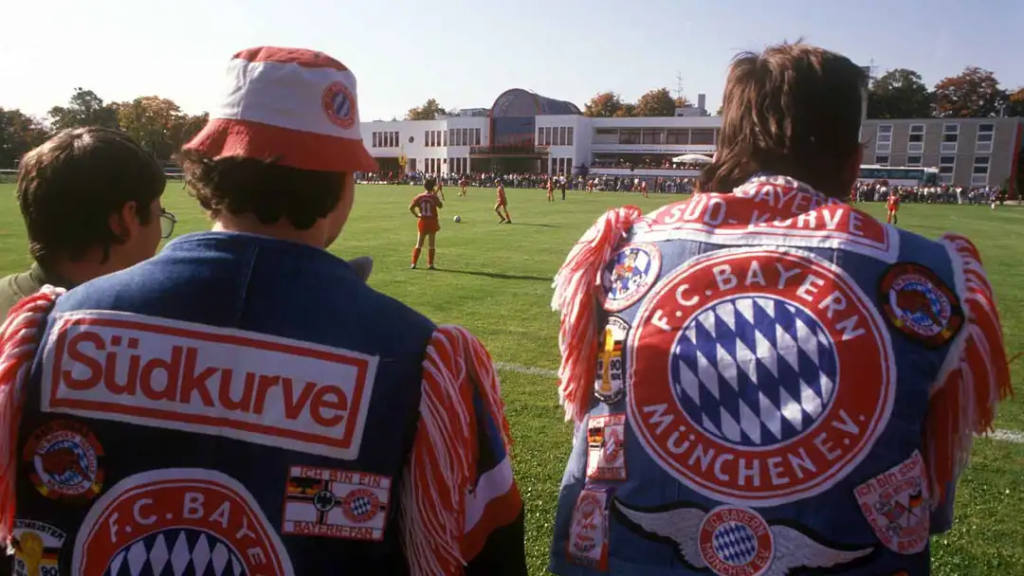
In 1983, inspired by American sports merchandising, young manager Uli Hoeneß introduced the Bayern Boutique — one of Europe’s earliest club merchandise stores.
It was a visionary move. Fans now had a physical connection to the club beyond matchdays, and Säbener Straße became a pilgrimage site.
A second major renovation followed in 1989, introducing the now-famous glass dome and a dedicated professional team building. The training ground increasingly became a symbol of Bayern’s identity rather than merely a workplace.
Stories from those years remain legendary.
Bastian Schweinsteiger, as an 18-year-old prospect, once triggered alarms after sneaking into the hot tub late at night with a companion he claimed was his cousin. Meanwhile, Mehmet Scholl and Giovane Elber famously escaped through windows using ropes during a sauna fire in 2000 — an incident causing millions in damage.
Even chaos became part of the mythology.
The 2008 Transformation — Bayern’s Most Incredible Project
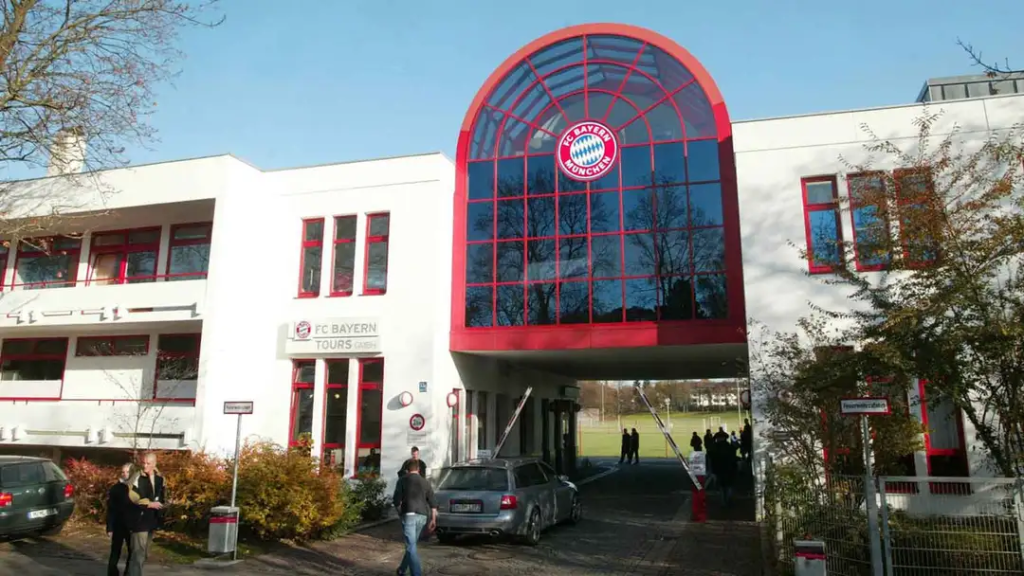
The largest leap forward arrived with the 2008 renovation under Klinsmann.
Architect Arnold described it as “the most ambitious project we’ve ever undertaken.” Within just seven weeks, more than 2,000 square metres were stripped down and rebuilt entirely. Workers operated around the clock in three shifts, completing a €15 million transformation that modernised every aspect of the facility.
Players gained cutting-edge recovery zones, medical departments, and communal areas designed to strengthen team culture.
But progress came with sacrifices. A beloved local pub closed, leaving long-time landlady Erika Niemeyer devastated. Fans also gradually lost access as privacy measures increased.
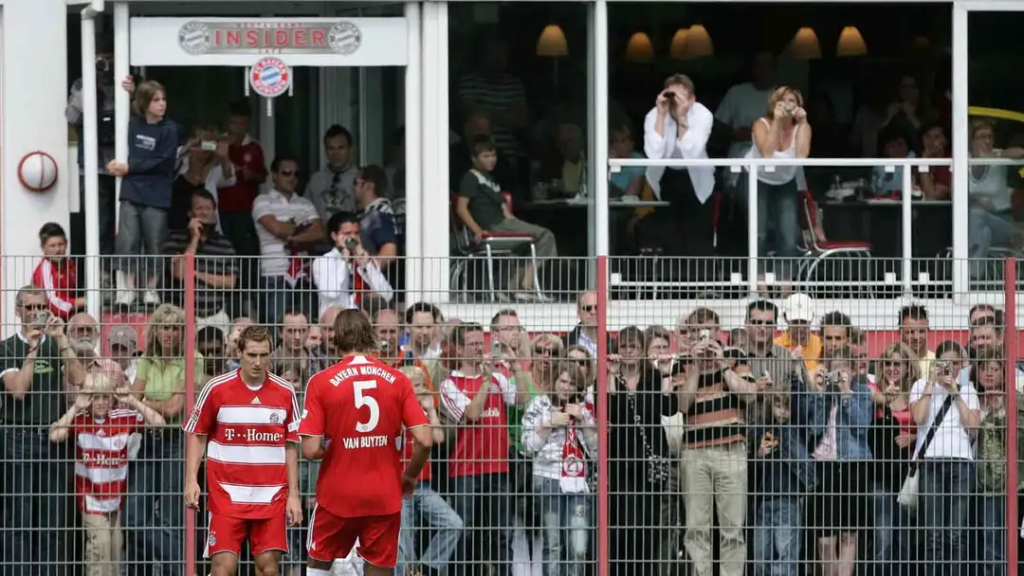
Curtains were installed around training pitches, and public viewing opportunities became rare. Even youth academy players were eventually restricted from watching first-team sessions.
Professionalism had replaced intimacy.
Expansion, Guardiola, and the Future Vision
Throughout the 2010s, Säbener Straße continued evolving. A multi-purpose hall, new offices, enhanced outdoor spaces, and advanced rehabilitation pools were added.
When Pep Guardiola arrived in 2013, even his office reflected Bayern’s attention to detail. Architect Arnold designed a custom asymmetrical desk chosen personally by Guardiola, paired with an Eames aluminium chair — small details illustrating the club’s obsession with excellence.
Meanwhile, Bayern invested €70 million into a new youth campus near the Allianz Arena, relocating academy operations due to space limitations at Säbener Straße.
Yet the original headquarters remained the beating heart of the club.
Another Giant Leap Ahead?
Now, nearly two decades after the last major renovation, Bayern appear ready for another transformation.
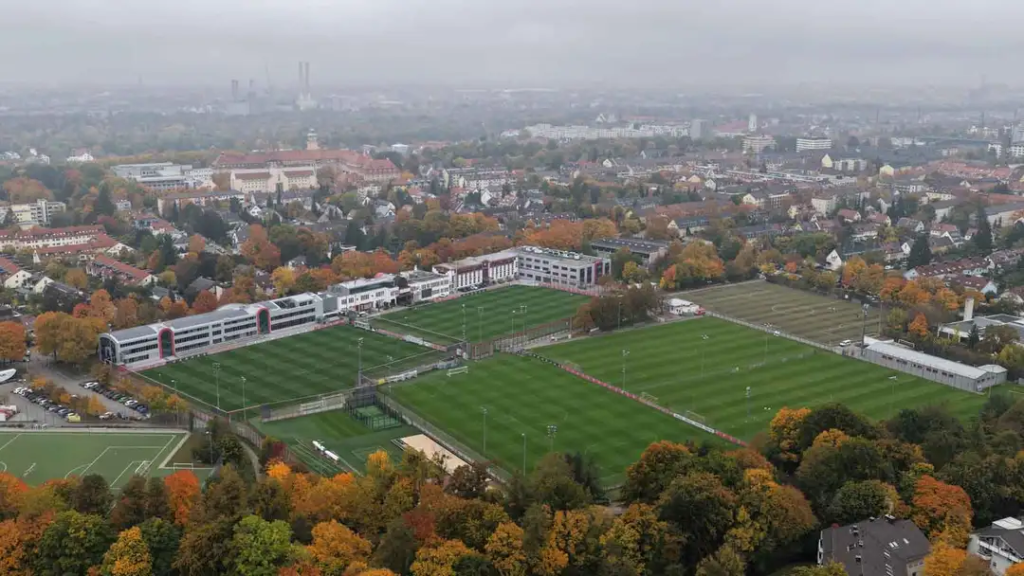
Club executives have hinted at a redevelopment costing around €100 million, potentially beginning in 2026 and lasting three years. The goal is clear: maintain competitiveness not only on the pitch but also in infrastructure — a decisive factor in attracting elite international players.
Architect Arnold compares football facilities to luxury hotels, which typically require refurbishment every decade. By that logic, Bayern are overdue.
From barracks to youth hostel, from modern complex to Dubai-style performance centre — Säbener Straße has constantly reinvented itself.
The next chapter could once again redefine football standards.


There are no comments yet. Be the first to comment!