







Erling Haaland Questions Gabriel Clash as Man City Star Reacts: “What Is This?!” After Arsenal Flashpoint
Manchester City’s huge victory over Arsenal may have shifted the balance of the Premier League title race, but one of the most talked-about moments from the afternoon had little to do with tactics or goals. Instead, attention quickly turned to a fiery confrontation between Erling Haaland and Gabriel Magalhaes that added another layer of tension to an already explosive occasion.
The Etihad Stadium was always going to host a match full of edge, intensity and pressure. With the title race on the line, every duel mattered, every tackle carried weight, and every emotional reaction felt magnified. In that atmosphere, it was no surprise that two of the Premier League’s most physical competitors eventually collided.
Haaland later spoke openly about the incident, insisting he had done nothing to provoke Arsenal’s centre-back. The Norwegian striker also suggested the punishment could have been much harsher for Gabriel had he chosen to fall theatrically to the turf.
It was a classic modern football debate: strength versus simulation, honesty versus gamesmanship, and how referees interpret moments that happen in the heat of battle.
Erling Haaland Questions Gabriel Headbutt Moment During Man City Win Over Arsenal
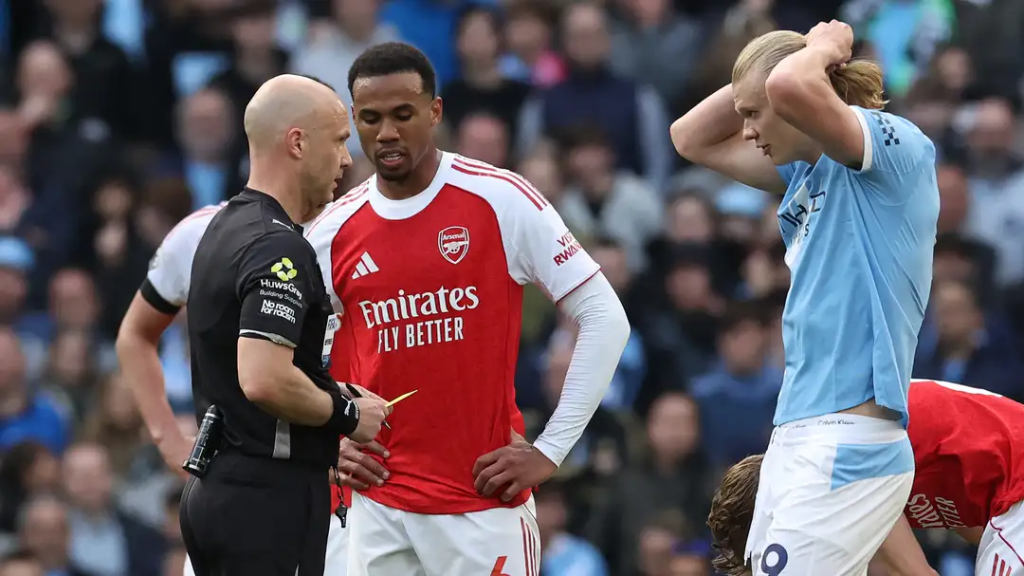
The confrontation came during the second half of City’s 2-1 win, at a stage when emotions were already running high. Arsenal were chasing an equaliser, City were protecting a precious lead, and personal duels all over the pitch were becoming increasingly fierce.
Haaland and Gabriel had been locked in combat throughout the match. There was shirt-pulling, shoulder-to-shoulder wrestling, verbal exchanges and the usual dark arts that often come with elite-level defending against one of the world’s most dangerous strikers.
Then came the flashpoint.
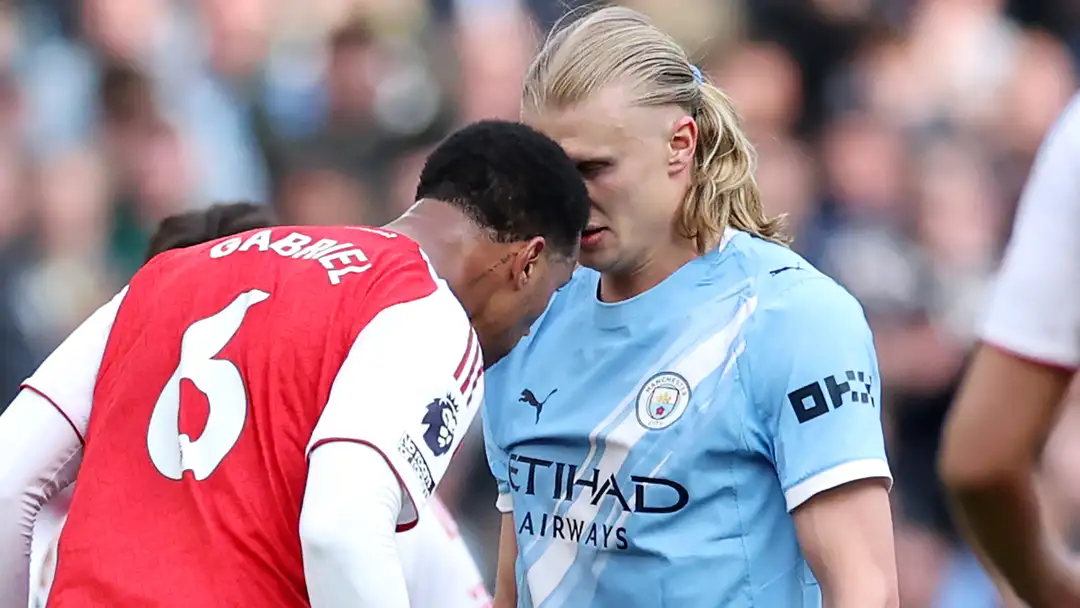
As players gathered following another physical exchange, Gabriel moved toward Haaland and appeared to make head contact with the City forward. It was not a dramatic collision, but it was enough to trigger immediate reactions from players, fans and pundits.
The referee reached for a yellow card rather than red, a decision that instantly divided opinion.
Haaland, speaking afterwards, made it clear he felt the situation might have ended differently if he had exaggerated the contact.
“I think if I fell on the floor there, maybe it would be a red card,” he said. It was a pointed comment, one that reflected growing frustration among players who feel honesty can sometimes work against them.
Gabriel and Haaland Continue Fierce Rivalry
This was never just one isolated moment. Gabriel and Haaland have developed one of the Premier League’s most compelling personal battles.
Gabriel is aggressive, front-footed and unapologetically physical. He thrives on confrontation and often looks to unsettle strikers before they can settle into rhythm. Haaland, meanwhile, combines power with relentless movement and has shown he welcomes direct battles with defenders.
Put those two profiles together in a title-deciding game and sparks are inevitable.
Throughout the afternoon, Gabriel tried to deny Haaland space, stepping tight, challenging early and making every touch uncomfortable. Haaland responded by battling for every long ball, pinning defenders and continuing to search for that one decisive chance.
In the end, he found it.
His winning goal, taken with trademark strength and composure, ultimately mattered far more than the confrontation. But the clash with Gabriel captured the raw emotional temperature of the contest.
Why The Referee Did Not Send Gabriel Off
The key talking point after the game was simple: why was Gabriel not shown a red card?
Under the laws of the game, violent conduct can lead to dismissal even when contact is minimal. Head movement toward an opponent often places players in danger territory immediately. That is why many expected VAR to intervene.
Instead, officials judged the incident differently.
Their view appeared to be that while Gabriel moved into Haaland’s space, the force of contact did not cross the threshold for serious violent conduct. In short, there was confrontation, but not enough aggression to justify a sending-off.
Not everyone agreed.
Former players on television were split. Some argued any head movement should be punished severely to protect consistency. Others believed football still needs room for natural conflict without every chest-to-chest or forehead-to-forehead moment ending in dismissal.
It is a debate that will continue long after this match.
Erling Haaland’s Stance on Diving Wins Attention
Perhaps the most interesting part of Haaland’s comments was not criticism of Gabriel, but his own attitude toward going down.
The City striker suggested he stayed on his feet because the contact was not enough to knock him over. In an era where simulation remains a constant issue, many supporters appreciated the honesty.
There was also a subtle frustration in his words. Players are often told to stay honest, yet some feel decisions only arrive when reactions are dramatic.
Haaland’s message seemed clear: if I go down, maybe Gabriel walks.
That tension sits at the heart of modern officiating. Referees want players to remain upright, but exaggerated reactions can sometimes influence outcomes. It is one of football’s contradictions.
Man City Win Bigger Battle Against Arsenal
For all the noise around the altercation, City’s victory was the headline that truly mattered.
Pep Guardiola’s side delivered under pressure once again, beating their closest rivals and dragging themselves right back into the title race. Suddenly, the gap at the top looked far smaller, and with a game in hand City sensed momentum shifting.
Arsenal had moments of quality, but they also looked vulnerable whenever City increased the tempo. The champions have seen this movie before. They know how to handle April pressure, and they know how to punish hesitation.
That experience showed.
Haaland’s goal underlined his value in these defining matches. Even when he spends long stretches wrestling centre-backs and touching the ball less than expected, he only needs one chance.
Arsenal Must Respond Quickly
For Arsenal, the frustration will be twofold.
First, the result itself was damaging. Second, the emotional nature of the contest may have distracted from the football at key moments. Great title winners usually keep their focus when chaos arrives. Arsenal are still learning how to do that consistently.
Gabriel’s duel with Haaland reflected passion and commitment, but these matches are often decided by control as much as intensity.
Mikel Arteta’s side now need a calm response. There is no time for lingering frustration when every remaining point could define the season.
Erling Haaland and Gabriel Incident Will Be Remembered – But The Goal Matters Most
In years to come, some will remember the forehead clash, the yellow card and Haaland’s post-match comments. That is the nature of high-profile rivalry games.
But the lasting image may be something else entirely: Haaland holding off defenders, finishing clinically, and helping Manchester City take another giant step in a title race they refuse to surrender.
That is what elite strikers do. They absorb the physical punishment, survive the noise, and still decide the biggest matches.
And once again, Erling Haaland did exactly that.


There are no comments yet. Be the first to comment!