







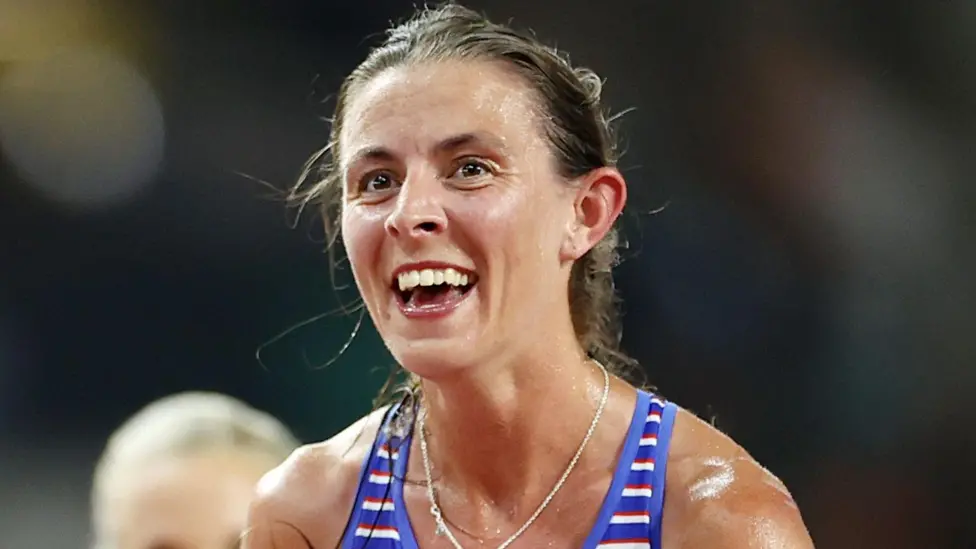
Back From Mid-Race Seizure: Jess Warner Judd Embraces a Remarkable Second Chance
There are comeback stories in sport, and then there are stories that go far beyond medals, rankings or finish times. Jess Warner Judd’s road back belongs firmly in the second category.
When she stands on the start line for the London Marathon in 2026, it will represent much more than a debut over 26.2 miles in one of the world’s biggest races. It will be a celebration of resilience, perspective and the simple joy of being able to run again.
Less than two years ago, Warner Judd was lying in a hospital bed in Rome after collapsing during a race and suffering a seizure caused by previously undiagnosed epilepsy. In the aftermath, retirement was a real possibility. Running, once her sanctuary, suddenly became linked to fear and trauma.
Now, she is back. Not unchanged, not untouched by what happened, but stronger in a different way.
Back From Mid-Race Seizure: The Night Everything Changed in Rome
Warner Judd herself has admitted that she remembers very little about that night in Rome. For those watching from the stands, however, the memory remains painfully clear.
Her husband Rob and her father and coach Mike could see early in the European Championship 10,000m final that something was wrong. The rhythm was gone. Her movement looked unnatural. She drifted wide into other lanes and seemed increasingly distressed.
At first, it may have looked like fatigue. Distance runners often push themselves to the limit. But this was something else.
As the laps ticked by, concern turned to alarm. Rob and Mike moved closer to the track, shouting for her to stop. Still, like so many elite athletes trained to keep going, she pressed on.
Then, with around 600 metres remaining, she collapsed.
Medical teams rushed to help. Later, after being taken from the track, she suffered another seizure so severe that sedation was required.
For Rob, it was a moment that changed everything.
Suddenly, sport did not matter. Results did not matter. The only thing that mattered was whether she would be okay.
The Hidden Warning Signs Before the Mid-Race Seizure
The Rome collapse did not come entirely out of nowhere, although nobody knew it at the time.
Earlier that season, Warner Judd had competed in a smaller 10,000m race in California and, unusually, failed to finish. For an athlete known for discipline and toughness, that alone was striking.
What was not immediately understood was that she had experienced a similar seizure there too.
Epilepsy can be difficult to diagnose, especially when symptoms are intermittent. Seizures are often the clearest sign, but even then the underlying cause is not always obvious through routine testing.
Following the events in Rome, doctors were finally able to provide an answer: focal epilepsy.
That diagnosis meant seizures were beginning in one side of the brain and triggering unusual sensations, movements or episodes of lost control.
For Warner Judd, having an explanation was important. But answers do not automatically make recovery easier.
Why Returning to Running Was So Difficult
Elite athletes are often celebrated for physical strength, yet the emotional side of recovery can be even more demanding.
With the Olympic Games on the horizon, Warner Judd understandably wanted to return quickly. But her body was not ready.
This was someone capable of running an 800m in under two minutes, an athlete used to elite standards and relentless training loads. Yet when she tried to come back, running a single mile took 12 minutes.
That alone would have been frustrating. But the physical challenge was only part of it.
Even once medication helped control the epilepsy and training became possible again, racing still felt frightening. She described panic when returning to the track, a place that had once been her comfort zone.
Running had always been her safe space — somewhere to clear her mind, to feel strong and free. After Rome, it carried the memory of collapse and fear.
That kind of association does not disappear overnight.
Therapy became a crucial part of the process, helping her work through trauma and slowly rebuild trust in herself.
A New Life, A New Perspective
Sometimes setbacks force people to reshape their lives in unexpected ways.
Warner Judd and Rob moved to Clitheroe in Lancashire, settling into a quieter life with their pets and a new routine. She completed her PhD in regenerative medicine, a reminder that her identity has always extended beyond athletics.
She also embraced part-time work at a local supermarket, something many outside elite sport might find surprising.
But perhaps that is exactly the point.
There can be freedom in stepping outside the bubble of professional sport. A life built around more than split times and championship dates can bring balance, especially after trauma.
She and Rob now train together on the hills and country roads nearby. The pace may vary, the goals may change, but the love of movement has returned.
And that may be the greatest victory of all.
London Marathon Awaits After Stunning Return
If anyone thought Warner Judd would simply jog quietly back into competition, they were mistaken.
Her marathon debut in New York last November was supposed to be a gentle exploration of a new distance. Instead, it became a statement.
She finished seventh in a high-quality field, clocking 2:24:45 on a famously demanding course. She crossed the line just two seconds behind Olympic champion Sifan Hassan and within touching distance of the very best.
For someone who says her only aim had been to finish, it was a remarkable performance.
Even more telling was what happened next.
Within 24 hours, she had apparently changed her mind about never doing another marathon. London soon became the obvious next step.
And now, in 2026, she prepares to race one of the most iconic events in distance running.
Back From Mid-Race Seizure: Unfinished Business Still Remains
For a while, a return to the track felt impossible. The emotional scars were too fresh, the memories too heavy.
Now, Warner Judd speaks differently.
She says she still feels there is unfinished business there. But the motivation has changed.
Previously, returning may have been about proving something — proving she could overcome it, proving she still belonged, proving nothing had changed.
Now, it is about enjoyment.
That shift is powerful. Athletes often spend years chasing external validation. Sometimes it takes adversity to rediscover why they started in the first place.
If she goes back to the track, it will be on her terms. When she is ready. When it feels right.
That may be healthier than any medal pursuit.
A Second Chance Worth More Than Results
Jess Warner Judd’s story is not really about times or rankings anymore, though those may still come.
It is about perspective.
She has faced the frightening possibility that her career might be over. She has rebuilt physically, emotionally and mentally. She has learned that running can be taken away — and given back.
So when she stands in Greenwich Park for the London Marathon start, she will not just be another athlete in the field.
She will be a woman who knows exactly how precious a second chance can be.
And that makes every mile matter more.


There are no comments yet. Be the first to comment!