








Best Friends with Hamilton: The Man Ruffling Feathers in Fencing and Changing the Sport
Miles Chamley-Watson has never looked like the typical fencing star. That is part of the reason he has become one of the most fascinating figures in modern sport.
Fencing has long lived in the shadows of bigger global games. It has history, elegance and Olympic prestige, but rarely the spotlight. Chamley-Watson has spent much of his career trying to change that. He has done it with medals, personality, style and an ability to walk comfortably between two very different worlds.
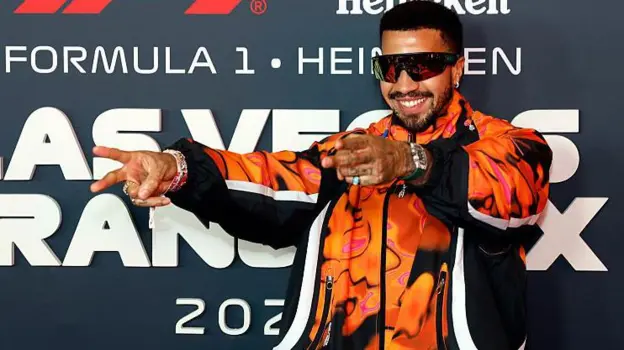
One moment he is competing with a foil in hand. The next, he is sitting at the Met Gala beside global music icons or travelling with Formula One champion Lewis Hamilton, whom he now describes as one of his closest friends.
For many athletes, that would seem unlikely. For Chamley-Watson, it feels completely natural.
Best Friends with Hamilton: Miles Chamley-Watson’s Unusual Rise in Fencing
Born in London before moving to New York as a child, Chamley-Watson’s journey into fencing was anything but conventional.
He has spoken openly about struggling in school as a youngster and dealing with severe ADHD. Traditional classroom settings were difficult, discipline was a challenge, and he often found himself in trouble. Eventually, an opportunity came with conditions attached: he had to choose a sport.
The options were tennis, badminton or fencing.
He picked fencing for the simplest reason imaginable. It involved swords.
That decision changed everything.
What started as curiosity quickly became purpose. He found rhythm in the sport, focus in the competition, and eventually excellence. While others saw fencing as niche or old-fashioned, Chamley-Watson saw something thrilling and expressive.
There was also another layer to his experience. He did not always feel he belonged in the environment around him. Fencing has historically lacked diversity, and he has spoken candidly about dealing with racism from a young age.
Yet success has a way of shifting conversations.
When he started winning, people noticed.
The Man Ruffling Feathers in Fencing Became a World Champion
Chamley-Watson’s breakthrough on the biggest stage came in 2013 when he became the first American man to win an individual world title in foil.
It was a landmark achievement, not just for him personally but for USA fencing as a whole.
He followed that with continued elite-level consistency and later won Olympic team bronze in Rio 2016. Across more than a decade, he established himself as one of the finest fencers of his generation.
But medals alone do not explain why he stands apart.
There have been many champions in Olympic sports. Few become cultural figures beyond their discipline.
Chamley-Watson did exactly that.
Best Friends with Hamilton and a Life Beyond the Piste
The worlds of fashion, entertainment and elite sport rarely overlap smoothly. Chamley-Watson somehow made it look effortless.
After London 2012, doors began opening outside fencing. Brands noticed his image, confidence and individuality. Fashion campaigns followed. Luxury partnerships arrived. His social media audience grew rapidly.
Then came moments that seemed almost surreal.
At one Met Gala, he found himself seated with Madonna on one side and Rihanna on the other. Also nearby was Lewis Hamilton, with whom he would build a lasting friendship.
That relationship says a lot about how Chamley-Watson operates. Hamilton has long supported athletes who challenge convention and redefine what their sports can look like. Chamley-Watson fits that description perfectly.
Their friendship has often been visible online through shared appearances, travel and mutual support. It also reflects a bigger truth: Chamley-Watson is no longer simply a fencing name. He has become a personality with reach far beyond the sport.
Why the Man Ruffling Feathers in Fencing Wants More
For some athletes, success means protecting the old system that rewarded them.
Chamley-Watson has chosen the opposite path.
Rather than preserve fencing exactly as it is, he wants to modernise it. That mission has led to the launch of the World Fencing League, a new project designed to make the sport more accessible, entertaining and commercially viable.
Traditional fencing can be difficult for casual viewers to understand. The speed is intense, scoring can feel technical, and television presentation has often struggled to capture the drama.
Chamley-Watson wants to change all of that.
His league aims to shorten formats, simplify storytelling, improve visuals and introduce technology that helps audiences follow blade movement in real time. There is also serious prize money involved, something many fencers have rarely enjoyed.
This is not a cosmetic change. It is an attempt to reshape the economics and visibility of fencing itself.
Naturally, not everyone loves the idea.
Ruffling Feathers in Fencing Means Challenging Tradition
Every traditional sport resists disruption.
Fencing, with its deep roots and formal culture, may resist more than most. So when Chamley-Watson talks about changing formats, entertainment value and audience-first presentation, criticism was always going to come.
Purists worry that spectacle can dilute heritage.
Chamley-Watson sees it differently. He believes history should be respected, but not used as an excuse for stagnation.
That is why the phrase “ruffling feathers” fits him so well. He understands that meaningful change usually annoys someone.
And he appears comfortable with that.
He knows fencing needs broader audiences, stronger sponsorship, bigger stars and more diverse participation if it wants to grow. Without evolution, niche sports can remain trapped in admiration without relevance.
Best Friends with Hamilton and Inspiring the Next Generation
Perhaps the most important part of Chamley-Watson’s story is who might be watching.
Young athletes from backgrounds not traditionally represented in fencing can now see someone who looks different, sounds different and carries himself differently thriving at the highest level.
That matters.
Representation often begins with visibility. When children see possibilities, they imagine themselves in those spaces too.
Chamley-Watson has spoken about wanting boys and girls from every walk of life to believe fencing belongs to them as much as anyone else.
That message may become his most lasting contribution.
World titles and Olympic medals are permanent achievements. But opening doors for future generations can outlast even those.
The Future of the Man Ruffling Feathers in Fencing
At 36, Chamley-Watson is already secure in his place within the sport’s history. Yet he seems more interested in what comes next than what has already happened.
That attitude explains why he continues to push boundaries.
Some athletes retire into comfort. Others reinvent themselves. Chamley-Watson appears determined to do both while still competing in spirit, if not always on the piste.
With friends like Hamilton, visibility from major global circles, and a bold new fencing project underway, he remains one of the most unusual and compelling figures in sport.
Fencing may never be the same because of him.
And that, more than anything, is why Miles Chamley-Watson matters.


There are no comments yet. Be the first to comment!