


The Tactical Fluidity That Makes PSG So Impressive in the Champions League
Paris Saint-Germain have spent years assembling superstar squads, chasing the Champions League through glamour, individual brilliance and blockbuster names. They had Lionel Messi. They had Neymar. They had Kylian Mbappe. Yet for all that star power, the version of PSG now preparing for another European semi-final may be the most complete side the club has ever produced.
That is what makes this current team so fascinating.
There is no single figure carrying everything. No one player dominating every storyline. Instead, there is movement, intelligence, balance and a collective understanding that allows Luis Enrique’s side to overwhelm opponents in ways previous PSG teams often could not.
As they prepare to host Bayern Munich in the first leg of the Champions League semi-final, PSG arrive looking like genuine contenders to defend their crown. They are technically gifted, physically sharp and tactically unpredictable.
Most of all, they are difficult to pin down.
The Tactical Fluidity That Makes PSG So Impressive Under Luis Enrique
Luis Enrique recently said it would be a dream to have 20 players who can play everywhere. It sounded like a joke at first glance, but it was really an insight into the philosophy shaping this side.
Versatility is not a luxury for PSG. It is the foundation of how they play.
Players rotate constantly during matches. Full-backs appear in the penalty area. Wingers drift into midfield. Midfielders drop into defence. Attackers suddenly press from deep or arrive centrally without warning.
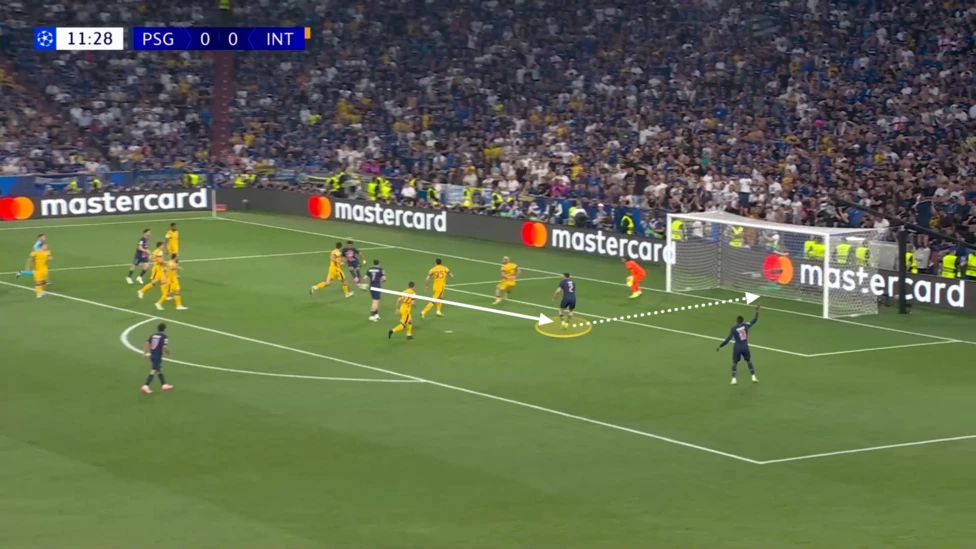
To the casual eye, it can look chaotic.
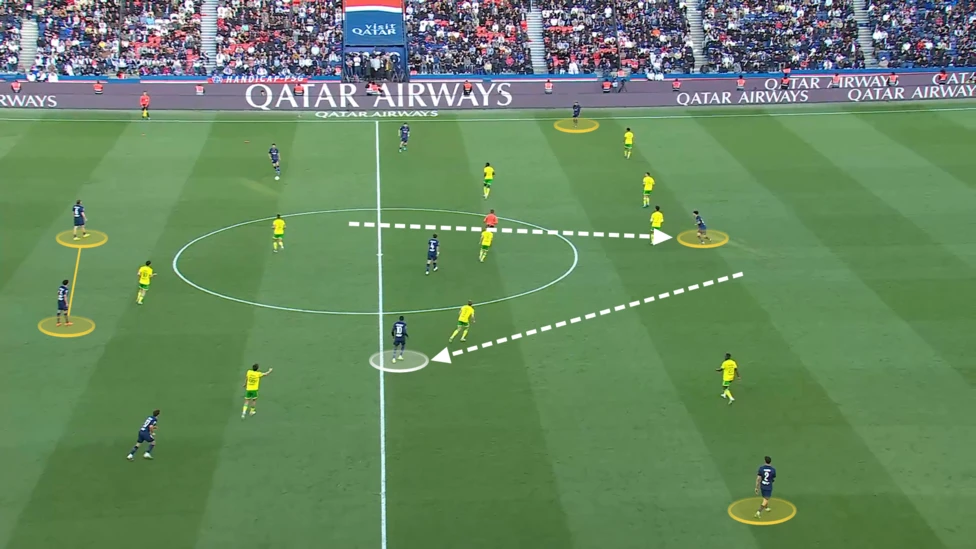
It is anything but.
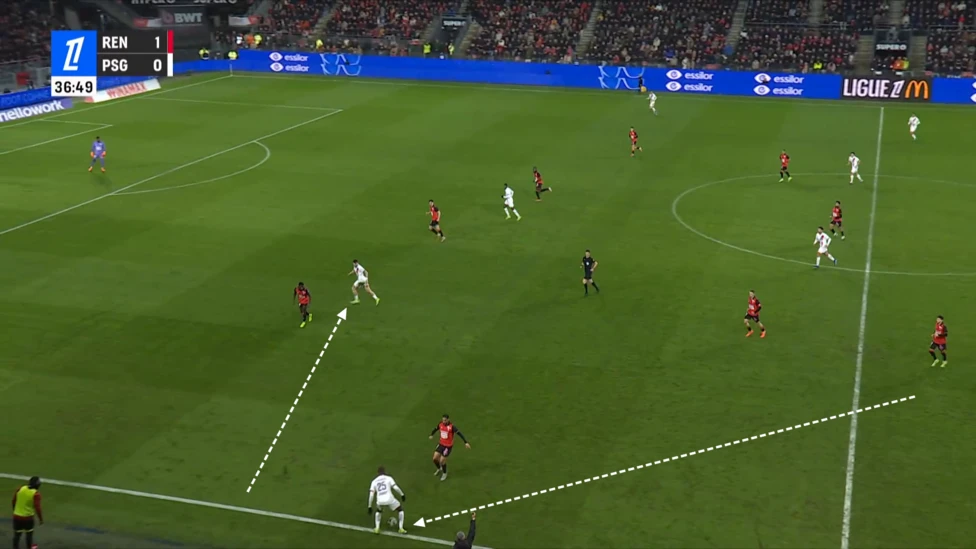
Behind the freedom is a clear structure. PSG do not move randomly. They move with purpose, guided by zones that must always be occupied and spaces that must always remain balanced.
That combination of discipline and liberty is what makes them so dangerous.
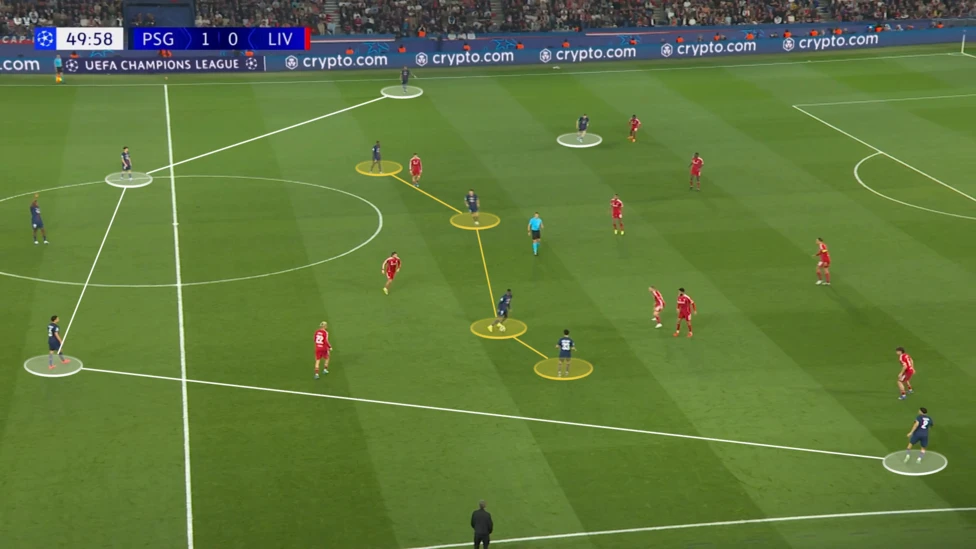
How Luis Enrique Balances Freedom With Structure
Every great fluid team still needs reference points. Luis Enrique understands that better than most.
At PSG, the two centre-backs usually provide the fixed base. While players around them rotate and exchange positions, those defenders often remain the anchors of the system. Their stability gives others permission to roam.
Think of it as organised improvisation.
Certain spaces on the pitch must always be occupied: wide lanes, central build-up zones and advanced attacking positions. If one player vacates an area, another immediately replaces him.
That means shape is preserved even while individuals move.
For example, if Khvicha Kvaratskhelia leaves the left wing and drifts inside, someone must stretch the pitch outside him. Often that responsibility falls to Nuno Mendes. If Mendes steps forward, another player may slide deeper to secure the back line.
The shirt changes. The function remains.
That is why PSG can look fluid without becoming vulnerable.
Zone Replacements: The Secret Behind PSG’s Movement
One of the most important ideas in this PSG team is what coaches often describe as zone replacement.
The principle is simple: positions matter more than names.
If a player leaves a zone, another must occupy it. That constant exchange keeps passing angles alive, maintains width and stops the team becoming crowded in one area.
It also makes defending PSG exhausting.
Opponents track one runner, only to find another arriving in the same lane moments later. Mark a winger tightly and suddenly a full-back is sprinting beyond you. Close central midfield and an attacker drops in to receive.
This is especially effective against man-marking teams.
Modern football has seen more sides use aggressive player-to-player pressing. Against PSG, that can become a trap. Defenders and midfielders are dragged into uncomfortable areas, and once shape breaks, Paris attack quickly.
That is when they become devastating.
Achraf Hakimi and Nuno Mendes Change Everything
No players embody PSG’s tactical identity more than Achraf Hakimi and Nuno Mendes.
Both full-backs are elite athletes. Both can defend space, recover quickly and attack with conviction. Most importantly, both are intelligent enough to know when to stay and when to go.
Hakimi often behaves like an extra midfielder or winger depending on the movement ahead of him. If the right-sided attacker drifts inside, Hakimi stretches wide. If that player holds width, Hakimi may underlap centrally.
That uncertainty causes endless problems.
Mendes offers similar value on the opposite side, though with slightly different references. He can help form a back three in build-up, then explode forward once cover is established.
Few teams in Europe can match two full-backs of that level operating within one system.
They are not just defenders. They are tactical weapons.
Vitinha Gives PSG Rhythm and Control
Fluidity only works if someone can control tempo. That responsibility often belongs to Vitinha.
The Portuguese midfielder has become one of Europe’s finest conductors. He receives under pressure, plays forward quickly and knows when to slow the game down. In a team full of movement, that calmness is priceless.
When defenders are rotating and attackers are exchanging positions, someone must connect the phases. Vitinha does exactly that.
He also helps trigger the next chain of movement. If he drops between centre-backs, others can push higher. If he stays central, full-backs may choose different runs.
He is not always the loudest name in the team, but he may be among the most important.
Without rhythm, fluid football turns messy.
Vitinha prevents that.
Ousmane Dembele and the Freedom to Create Chaos
Among all the structure, one player is given more freedom than the rest.
That player is Ousmane Dembele.
Luis Enrique understands some footballers should not be overcoached. Dembele is one of them. He can start wide, drift centrally, receive between lines or suddenly attack the box. His unpredictability is his greatest strength.
Defenders hate players they cannot locate.
Stay wide and Dembele comes inside. Follow him centrally and space opens outside. Show him one foot and he can beat you with the other.
Once he moves, others react around him. Midfielders burst forward, full-backs overlap, wingers attack half-spaces.
That chain reaction often ends in chances.
Dembele does not just create danger himself. He creates it for everyone else.
Is This Tactical Fluidity Possible in the Premier League?
In theory, yes. In practice, it is far more difficult.
The Premier League demands relentless intensity every week. There is less room to rotate heavily, fewer easy domestic matches and greater physical strain across the calendar.
PSG benefit from being stronger than most Ligue 1 opponents, which allows Luis Enrique to manage minutes carefully. Players such as Nuno Mendes can stay fresher for Champions League nights.
That matters because this style is demanding.
Full-backs make repeated long sprints. Midfielders must scan constantly. Attackers need discipline when pressing and intelligence when rotating.
It requires fitness, concentration and trust.
Could Premier League clubs do it? Some already borrow elements of it. Pep Guardiola and Mikel Arteta both value positional rotations and flexible structures.
But sustaining it across England’s brutal schedule is another challenge entirely.
Why This PSG Team Feels Different
Previous PSG sides often looked like collections of stars. This one looks like a team.
There is still elite talent, of course. But now it is blended with sacrifice, tactical clarity and collective purpose. Players defend. Players rotate. Players run for one another.
That is why they feel more convincing than some of the glamorous squads of the past.
And that is why Bayern Munich face such a difficult task in this semi-final.
PSG are not just talented. They are organised, fresh and tactically mature.
The Tactical Fluidity That Makes PSG So Impressive Could Win Them Another Crown
Champions League titles are rarely won by reputation alone. They are won by teams that solve problems under pressure.
Right now, PSG solve more problems than most.
Luis Enrique has built a side that can shift shape mid-match, dominate possession, counter quickly and defend transitions. They can hurt opponents through patterns or through pure instinct.
That tactical fluidity that makes PSG so impressive is no longer just an aesthetic talking point.
It may be the reason they lift the trophy again.


There are no comments yet. Be the first to comment!