


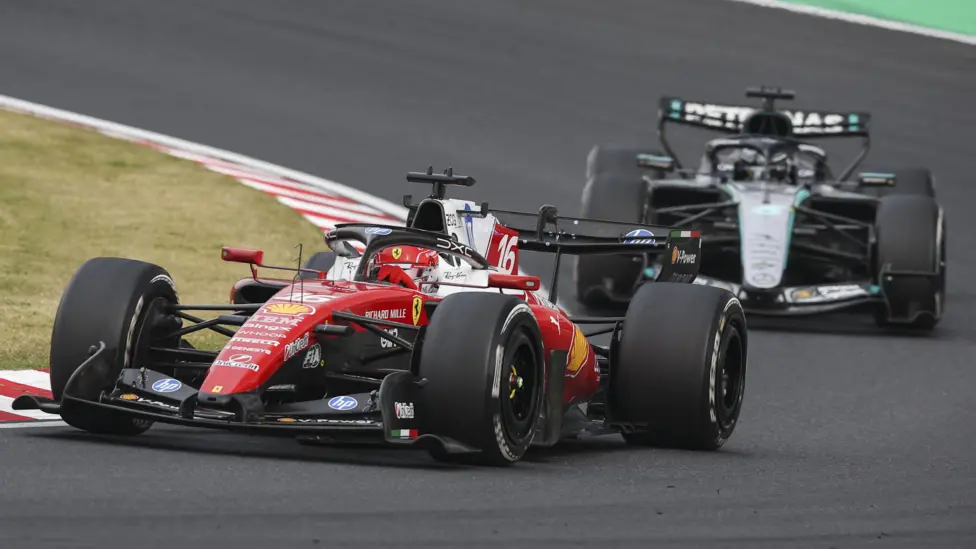
Will Rule Changes Make a Noticeable Difference in Miami? Inside F1’s Big Questions Before the Miami Grand Prix
Formula 1 returns this weekend with the Miami Grand Prix, and it does so carrying more intrigue than anyone expected after only three races. A five-week gap since the last round has given teams time to reset, refine, and debate a series of regulation adjustments aimed at easing concerns around the sport’s new power-unit era.
The championship picture is already unusual. Mercedes rookie Kimi Antonelli, still only 19, leads the standings ahead of team-mate George Russell. Red Bull are chasing answers, Ferrari are searching for consistency, and McLaren remain close enough to strike. Yet much of the pre-race conversation has centred not on drivers or team politics, but on whether Formula 1’s latest rule tweaks will make a noticeable difference in Miami.
That question sits at the heart of this weekend. But it is far from the only one.
Will Rule Changes Make a Noticeable Difference in Miami for Drivers and Fans?
The most immediate talking point in the paddock is the set of changes made to the regulations governing power-units. These modifications are designed to address complaints that surfaced during the opening phase of the season, especially around drivability and racing dynamics.
In simple terms, Formula 1 wants cars to feel more natural at the limit again.
Drivers had raised concerns about awkward throttle behaviour in qualifying and strange speed differentials on straights when one car was deploying electrical energy while another was harvesting it. That created situations where closing speeds became dramatic and, in some eyes, unnecessarily risky.
The sport has now responded.
The expectation is that there will be less reliance on “lift and coast” techniques in qualifying laps. There should also be fewer moments of aggressive battery charging at full throttle, a phenomenon engineers refer to as super-clipping. For fans, that often appeared as cars losing speed abruptly toward the end of long straights.
Red Bull team principal Laurent Mekies described the update as a positive move, and few inside the paddock disagree. McLaren boss Andrea Stella has echoed similar sentiments.
Still, nobody believes this is a complete fix.
One senior figure reportedly estimated the new package solves only around 20% of the broader issue. The remaining step, many believe, requires a hardware adjustment — specifically a change in fuel-flow rates from the internal combustion engine. That would tilt the current power balance away from its near 50-50 split between combustion and electrical systems toward something closer to 60-40.
That may come later. For now, Miami becomes the first real-world test.
Drivers are optimistic. McLaren’s Oscar Piastri suggested the revised deployment systems should make power delivery more predictable and manageable. That alone matters enormously when extracting tenths in qualifying.
For spectators, the changes may be subtler. Overtaking is still expected to remain frequent, and the newer style of multi-phase wheel-to-wheel battles should continue. But attentive viewers may notice smoother acceleration patterns and fewer dramatic drop-offs at the ends of straights.
So yes, there may be a noticeable difference in Miami — especially from behind the wheel.
Do F1 Teams Design Cars Around Their Drivers?
It is one of the oldest myths in Formula 1: that top teams build cars specifically for their star driver.
The reality is more complicated.
No team begins a season saying they will design a chassis purely for one individual. Engineers pursue the fastest package possible through simulation data, wind tunnel findings, suspension geometry, tyre modelling and aerodynamic efficiency.
But once the car reaches the track, human feedback becomes part of development.
That is where the confusion starts.
If one driver is consistently faster and more technically precise in describing the car’s behaviour, engineers naturally place greater weight on that feedback. Over time, updates may move in a direction that suits that driver’s preferences.
Max Verstappen is perhaps the clearest modern example. Like Michael Schumacher before him, he is known for preferring a sharp front end and aggressive turn-in response — what insiders often call a “pointy” car. That setup can create instability at the rear, especially on corner entry, but elite drivers can exploit it.
Others cannot.
Former Red Bull driver Alex Albon once explained that Verstappen’s preferred setup feels extraordinarily sensitive, almost exaggerated. The sharper the car becomes, the faster Verstappen seems to go. Team-mates then try to match him, often by taking increasing risks, and mistakes begin to multiply.
That spiral can be brutal.
So while teams do not intentionally design a car for one driver, they often evolve it in ways that naturally reward the quickest voice in the garage.
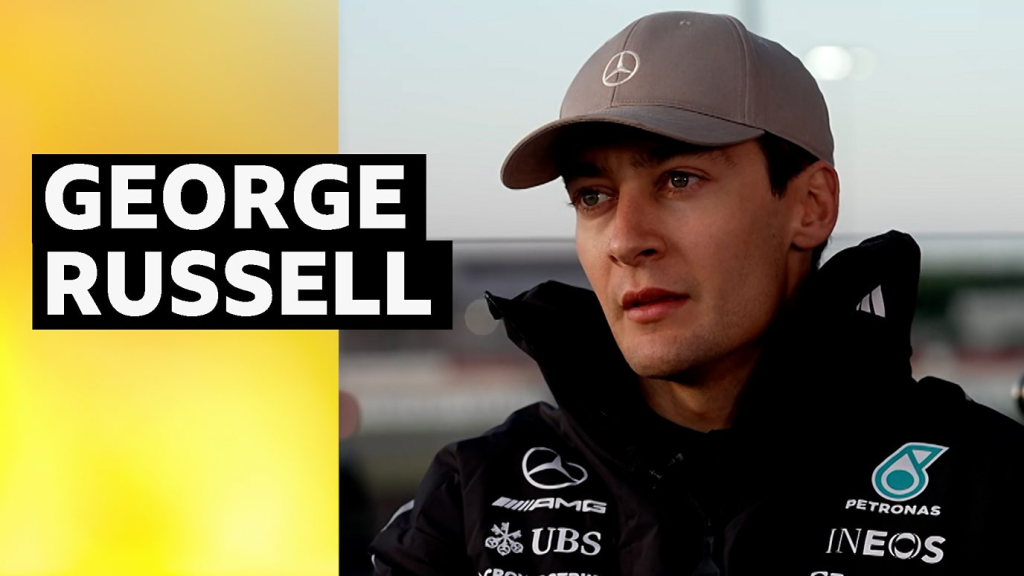
Would George Russell Be Fast in a Ferrari or Alpine?
The short answer is yes.
Truly elite drivers carry their speed wherever they go. George Russell has already shown enough across multiple machinery types to suggest he would be competitive in almost any car on the grid.
However, competitiveness and maximum performance are not always the same thing.
Every Formula 1 car has its own personality. Some demand confidence under braking. Others need patience on entry and commitment on exit. Some rotate naturally in slow corners; others are stronger through high-speed sections.
A driver may be fast in all of them, but exceptional only in one.
That is why certain transfers work instantly while others require months of adaptation. It is also why judging drivers purely by results can be misleading. Sometimes the gap is talent. Sometimes it is compatibility.
Russell in a Ferrari? Likely quick. Russell in an Alpine? Still quick. But whether he would be championship-level quick depends on the machine beneath him.
What Is a Driver-in-the-Loop Simulator?
Modern Formula 1 teams now rely heavily on driver-in-the-loop simulators, among the most important tools in the sport.
Think of it as a hyper-advanced racing simulator combined with engineering laboratory precision.
At team headquarters, drivers sit in a full cockpit mock-up mounted on hydraulic systems that recreate movement, bumps, pitch changes and braking sensations. Large screens or immersive projection systems replicate the circuit environment.
Engineers can test almost anything.
A new floor design. Different suspension settings. Brake migration maps. Aero balance changes. Even next year’s car concept.
The driver completes laps, gives feedback, and the team adjusts parameters in real time.
What simulators cannot reproduce perfectly is g-force. No machine can fully recreate the physical punishment of a real Formula 1 car through high-speed corners. That means some traits only reveal themselves once the car hits the circuit.
Still, these systems have become essential. Without them, development cycles would be slower and far more expensive.
What Does Race Day Look Like for Journalists in the Paddock?
From the outside, Formula 1 media life can seem glamorous. The truth is usually more practical than glamorous.
Most written journalists operate from the media centre, traditionally located inside or near the paddock. Ideally it offers a track view, though modern venues increasingly prioritise premium hospitality over press convenience.
Miami is a good example. Media facilities are spread across multiple rooms high above the paddock area inside the Hard Rock Stadium complex. Reaching ground level often means lifts, long walks or shuttle carts.
Las Vegas went further, devoting prime pit-building space to corporate guests while much of the media worked from a nearby hotel.
A race day often begins six hours before lights out, sometimes earlier for late evening starts. There are briefings to attend, sources to speak with, rumours to check and stories to build before engines even fire.
During the race, print journalists watch from the media centre while broadcasters head to commentary booths.
Then comes the real scramble.
After the chequered flag, drivers head to the mixed zone where broadcasters get priority access. Written media gather in tight circles hoping to catch quotes between television hits. Meanwhile team principals begin separate sessions, often overlapping with podium press conferences.
Miss one interview and you may lose a major story.
Once quotes are collected, writers turn immediately to filing race reports, analysis pieces and breaking news before heading back to hotels long after sunset.
A standard Formula 1 race day can easily stretch beyond 13 hours.
Miami Now Takes Centre Stage
So as Formula 1 lands in Florida, Miami offers more than another glamorous stop on the calendar. It is a live experiment for new regulations, an early title-race checkpoint, and another chance to understand how this fascinating season is taking shape.
Will rule changes make a noticeable difference in Miami?
Enough to matter, certainly. Enough to transform everything overnight? Probably not.
But in Formula 1, even small changes can alter the entire story.


There are no comments yet. Be the first to comment!