




















Kompany’s Bayern: Football After Guardiola?
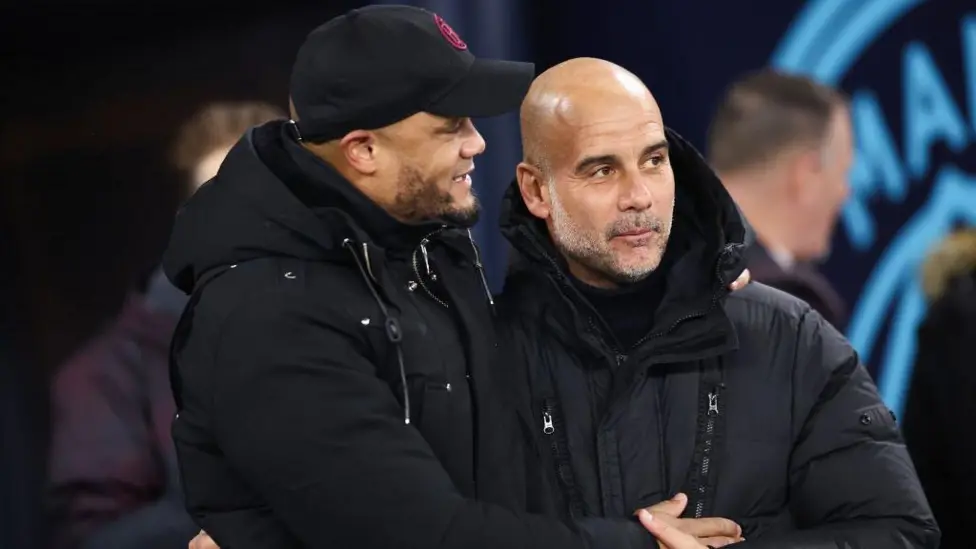
Vincent Kompany is rapidly redefining his managerial reputation at Bayern Munich, raising a compelling question across European football: could his system represent the next phase after Pep Guardiola?
After a surprising appointment in 2024 following Burnley’s relegation, Kompany has silenced critics in emphatic fashion. Bayern not only lifted the Bundesliga title last season but are on course to defend it, while also holding a crucial advantage over Real Madrid in the Champions League.
A High-Risk, High-Reward Philosophy
Unlike the increasingly cautious approach seen among elite clubs, Kompany’s Bayern embrace risk. His system is built on:
- Fluid positional rotations
- Aggressive off-ball movement
- Full-team involvement in build-up play
This philosophy was on full display against Atalanta, where Bayern dismantled man-marking tactics with constant positional switches, winning 10-2 on aggregate.
Midfielder Serge Gnabry frequently dropped into defensive zones, dragging markers out of position and creating chaos in Atalanta’s structure.
Tactical Flexibility Against Elite Opponents
Against Real Madrid, Kompany showcased another layer of tactical sophistication.
- Joshua Kimmich dropped into defence to create numerical superiority
- Full-backs inverted into midfield spaces
- Wide players like Michael Olise exploited central gaps
This movement forced Madrid’s compact shape to collapse inward, opening passing lanes and allowing Bayern to attack with pace and precision.
The Perfect Attacking Balance
Bayern’s attacking trio offers a complementary dynamic:
- Michael Olise – creativity and ball progression
- Luis Diaz – direct running and depth
- Harry Kane – finishing and link-up play
Kane’s ability to drop deep and shoot from distance was evident in Bayern’s second goal against Madrid, as space opened up through coordinated movement.
Pressing with Intelligence
Out of possession, Bayern operate a hybrid pressing system:
- High man-to-man pressing from goal-kicks
- Seamless transition into zonal structures
- Flexible defensive shapes (4-4-2 to 5-2-3)
Players adjust dynamically, with attackers even dropping into defensive lines when needed — a sign of tactical discipline rarely seen at this level.
Leadership Beyond Tactics
Kompany’s success is not just tactical. His leadership, shaped during his time at Manchester City, commands respect in a dressing room filled with elite talent.
Known for his intelligence and clarity, Kompany has long embraced responsibility, even studying leadership concepts such as When Teams Collide to improve team dynamics.
A Glimpse of Football’s Future?
At just 40, Kompany is emerging as one of the most innovative coaches in Europe.
His Bayern side combines Guardiola-inspired positional play with greater verticality, risk, and fluidity — potentially signaling a new tactical era.
With Guardiola’s long-term future uncertain, it is no surprise that Kompany is already being viewed as a natural successor in the modern game.


There are no comments yet. Be the first to comment!